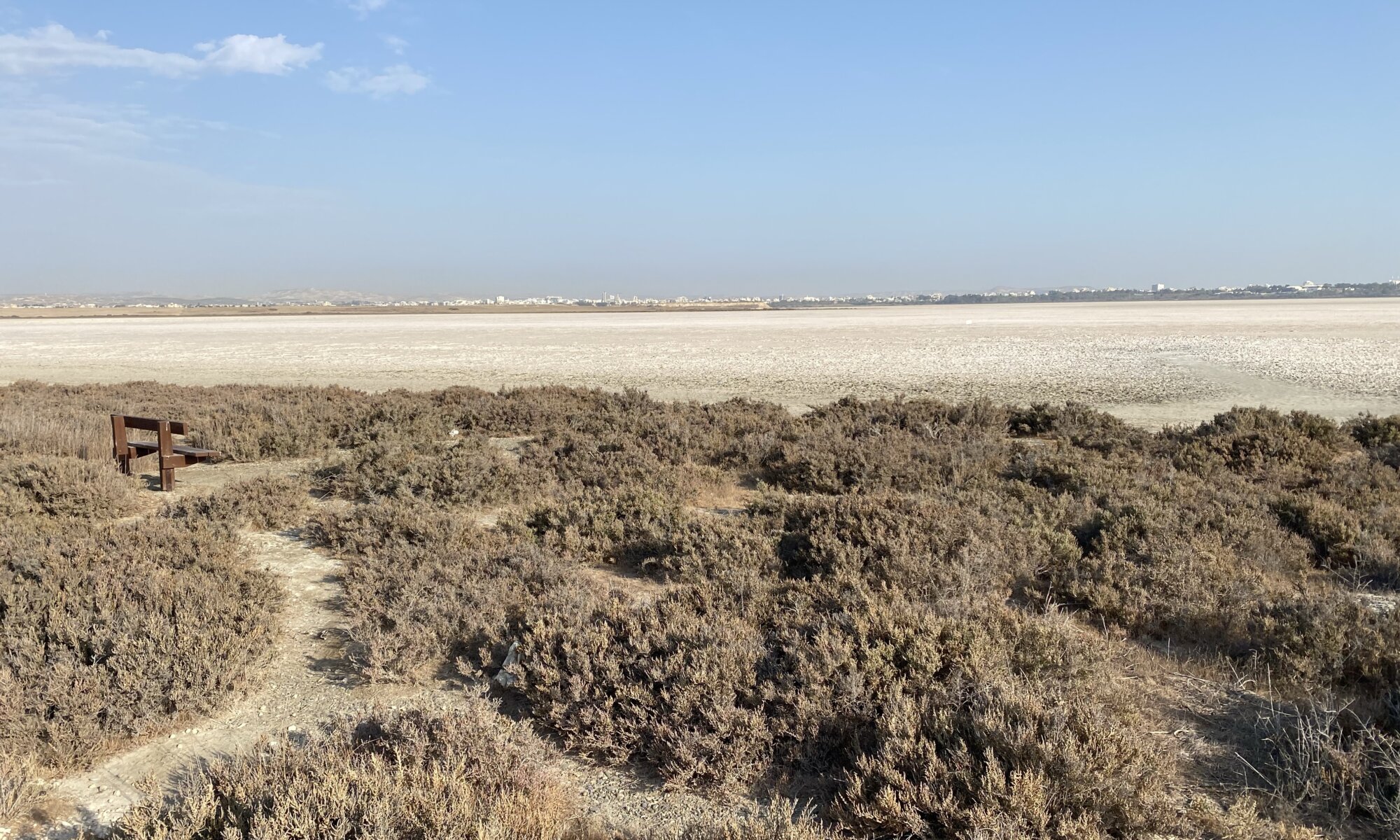
Close to Λάρνακα you can find a large salt lake. During some months it is completely empty and you can walk on the salt (which was exported in former times) like in a moon-like landscape. In other times the lake is filled with water and gives a home to pink flamingos. You can walk around the lake on a nice path with many picnic areas.
Continue reading “Salt of the earth”Fish tavern
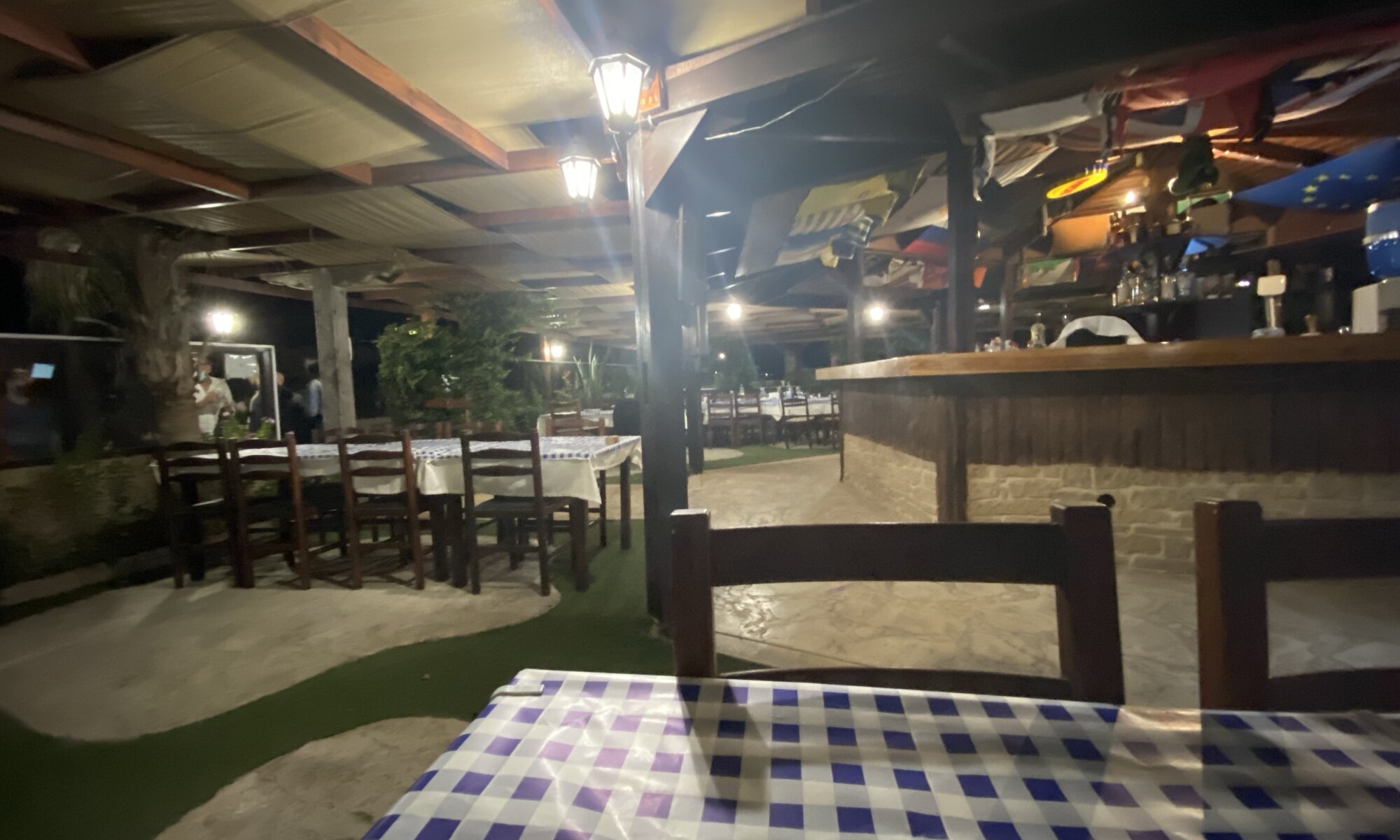
South of Λάρνακα you’ll find many nice hotels and apartment houses close to the sea. Especially in off-season you can get good prices here, but you’ll have a reduced amount of touristic infrastructure around you. If you’re hungry or thirsty the Cyprus Fish Tavern at Περβόλια is a traditional place that can rescue you.
Continue reading “Fish tavern”E-Hotel
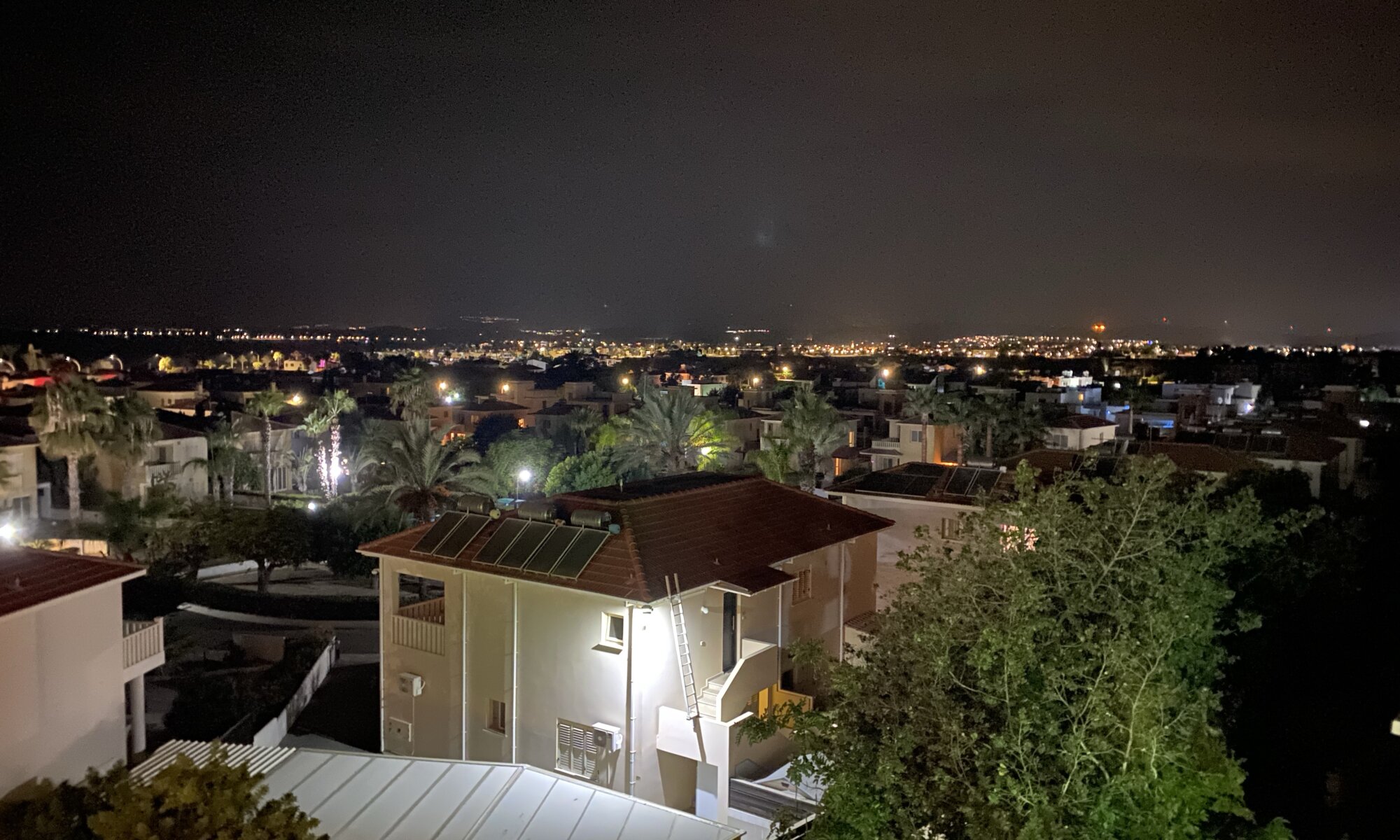
The island of Cyprus is a place that you can best explore by car. Many interesting places are far away from civilization and every city on the island can be explored within one day. Therefore, I planned a roundtrip in the Greek part of the island and booked a different hotel for each and every day. On the first day I arrived already in darkness, had to navigate while trying to stay on the left side of the road and I didn’t want to search for a car park after a long day of travelling. That’s why I booked a hotel at Λάρνακα that would normally never see me, the E-Hotel.
Continue reading “E-Hotel”Lárnaka International Airport
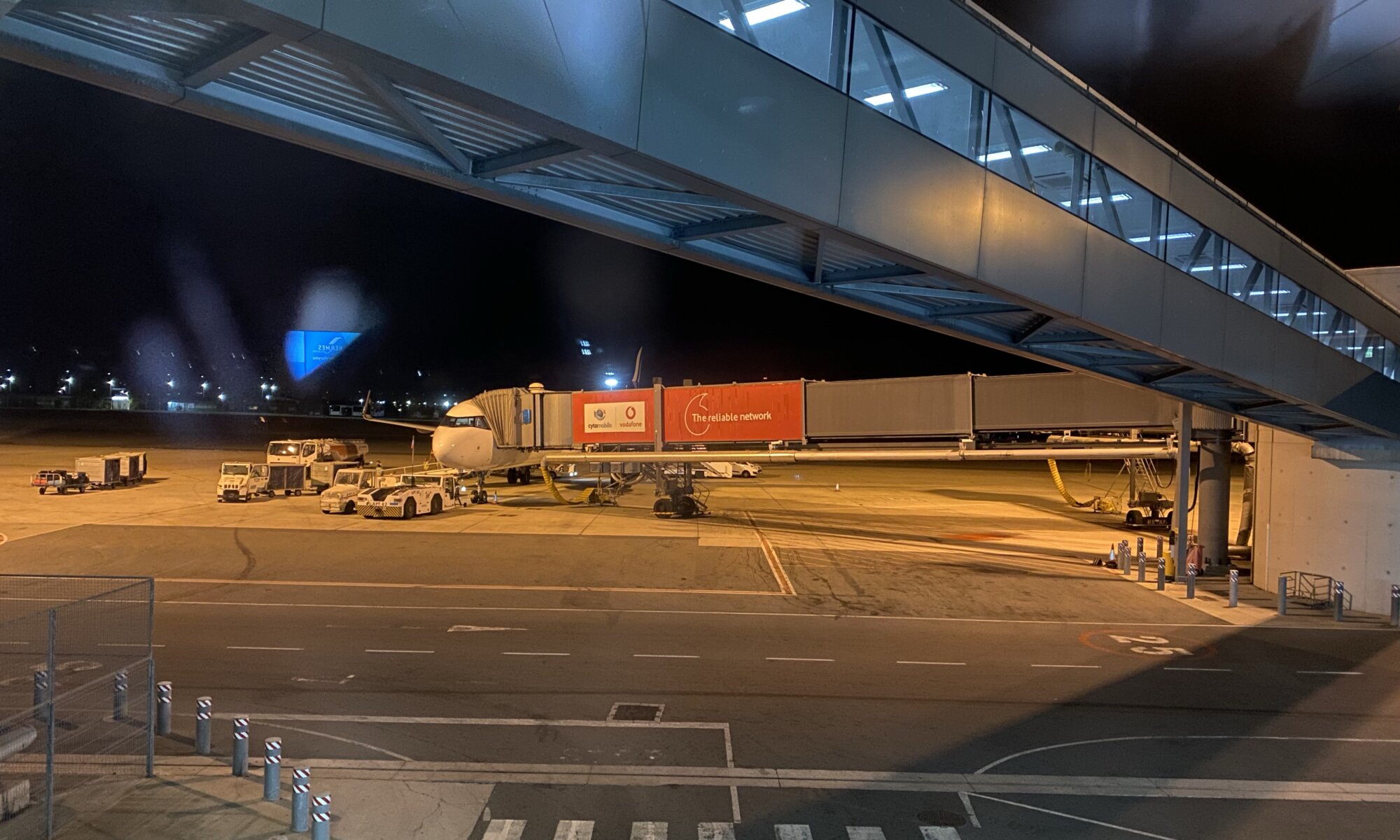
The island of Cyprus can be accessed via three airports: Lárnaka (LCA) and Paphos (PFO) in the Greek part of the country, Ercan (ECN) in the part occupied by Turkey (open only for flights from Turkey). The airport of the capital city Lefkosía (NIC) is closed since 1974 and can only be used by UN forces. The most important hub is LCA with around five million passengers per year.
Continue reading “Lárnaka International Airport”Ehrenmal
War and remembering the victims of war is still today a controversial topic at Kassel. The city was in the past and is still today a center of weaponry production. In World War II it was therefore a target of massive attacks. Even today you can find the traces in vast air-raid shelters and in the face of the city: the historic city center never returned to its former beauty after it was completely burned down in the last world war. In different areas memorials can be found for the victims of war and especially the victims of fascism. The memorial for soldiers which died in both world wars was closed for renovations for many years and vandalized directly after reopening: the Ehrenmal at the Karlsaue.
Continue reading “Ehrenmal”Piața Obor
In the past the main market of București was located on Piața Unirii and attracting the farmers of the region to sell their products. If you want to find something similar today, you need to get to Obor, an area in the northeast of the city (belonging to sector two). There you’ll find a vast area with indoor and outdoor market stalls selling vegetables, fruit, meat, and every kind of goods.
Continue reading “Piața Obor”Grădina zoologică
At the beginning of the 20th century animals were living in the parks of București. It was like having multiple micro-zoological gardens. Then in 1955 the 5,8 hectares large central zoo at the city quarter Băneasa (sector 1) was founded. Today it is educating visitors by showing them many local and exotic animals.
Continue reading “Grădina zoologică”Hanu’ lui Manuc
If I could only recommend one restaurant at București it would definitely be the Hanu’ lui Manuc. They call themselves the oldest inn of Europe and that might be true. It is an old caravanserai used by the merchants and visitors of the market on the vast square today called Piața Unirii. ,
Continue reading “Hanu’ lui Manuc”Microrezervație
Zoological gardens often reflect the state of a civilization. Only if society is advanced enough and economic stability has been reached also the animals have a good life. I’ve seen many not-so-good zoos around the world and the zoo of Constanța positions in the mid-tier. Around a lake many small areas filled with animals, the Microrezervație, line up.
Continue reading “Microrezervație”Marea Neagră
Bulgaria, Romania, Ukraine, Russia, Georgia and Turkey surround the Black Sea. For the Romanians it is the Marea Neagră, for the Turkish the Karadeniz – all meaning the same. It is suspected that the name refers to earlier ideas of connecting colors to the cardinal direction: green = east, white = west, red = south and black = north. That also explains why the red sea received its name.
Continue reading “Marea Neagră”