
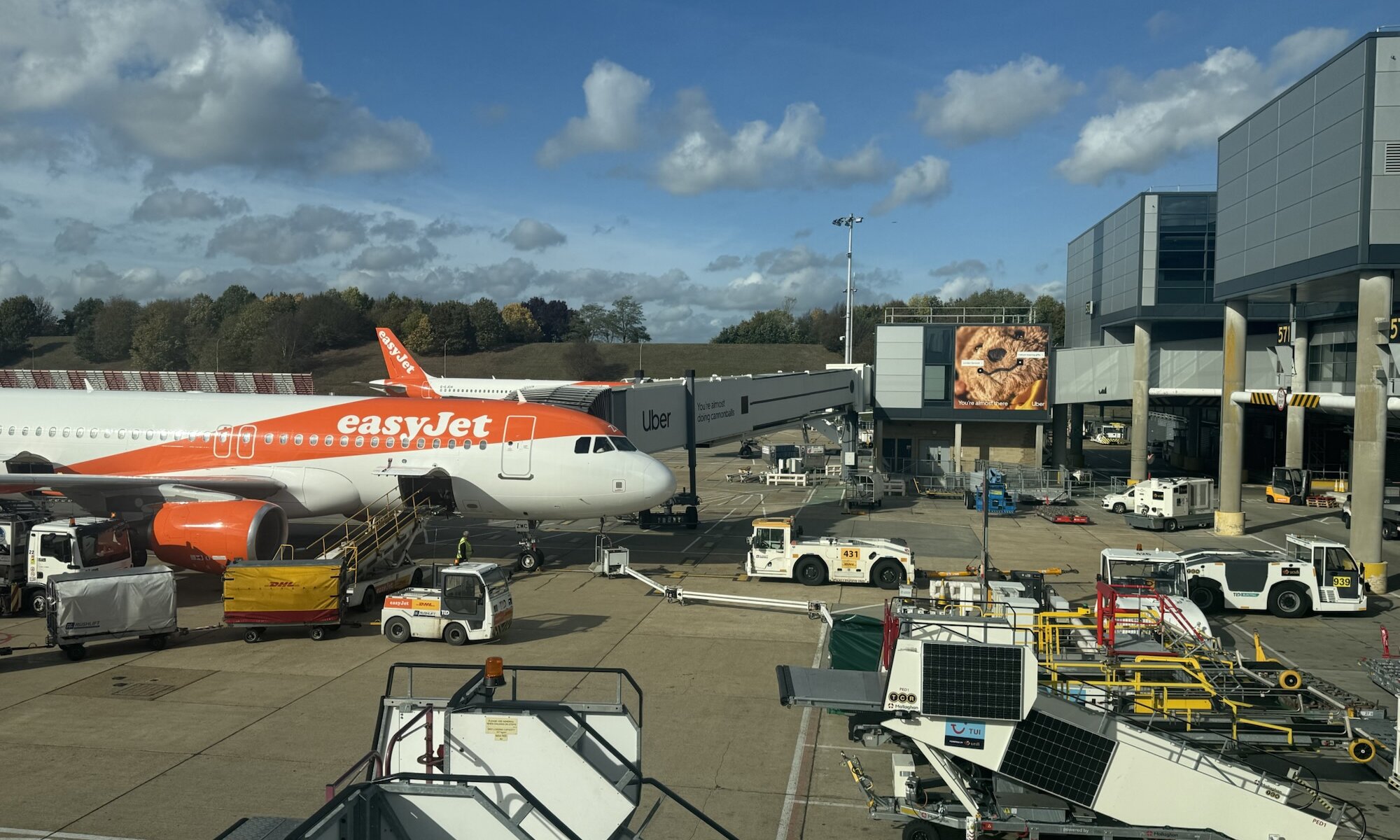
London Gatwick Airport is one of the capital’s two major international gateways, sitting roughly 30 miles south of central London. It handles a mix of short-haul European flights and a growing number of long-haul services, and for many travellers it feels less chaotic than Heathrow while still offering a solid range of shops, cafés and lounges. The airport operates from two terminals, North and South, linked by a frequent, free shuttle that makes switching between them straightforward.
Its history goes back much further than the modern terminals suggest. The name “Gatwick” appears in medieval records, and by the late 19th century the site was home to a racecourse with its own railway station. In the 1930s the adjacent land became a small civil airfield, complete with an art‑deco circular terminal known as the “Beehive”. During the Second World War the airfield was taken over for military use, and after 1946 it gradually evolved into a commercial airport. In the 1950s it was redeveloped as London’s second airport and, in 1958, the Queen officially opened the new Gatwick, notable for being the first airport in the world with a direct rail link into the city.
Over the following decades Gatwick expanded steadily. A second runway was added in the 1980s, primarily for taxiing, and the North Terminal opened to cope with rising passenger numbers. Ownership changed hands several times, and in the late 2000s the airport was sold to a private infrastructure group that embarked on a substantial investment programme. Through all of this, Gatwick has positioned itself as a base for both traditional carriers and low‑cost airlines, becoming a key hub for leisure travel and, increasingly, for transatlantic routes as well.
Getting into central London from Gatwick is straightforward, with the train being the most efficient option. The Gatwick Express runs non‑stop to London Victoria in about half an hour, while Thameslink and Southern services offer slightly slower but often cheaper routes to Victoria, London Bridge, Blackfriars and St. Pancras, from where you can connect to the Underground. Coaches such as National Express provide a budget alternative to Victoria Coach Station, though the journey takes closer to two hours. Taxis and private transfers are available door‑to‑door but are considerably more expensive, so for most visitors the combination of rail and Tube offers the best balance of speed, cost and convenience.
London Gatwick Airport
Horley
Gatwick
England
United Kingdom
https://www.gatwickairport.com
Loading map...
