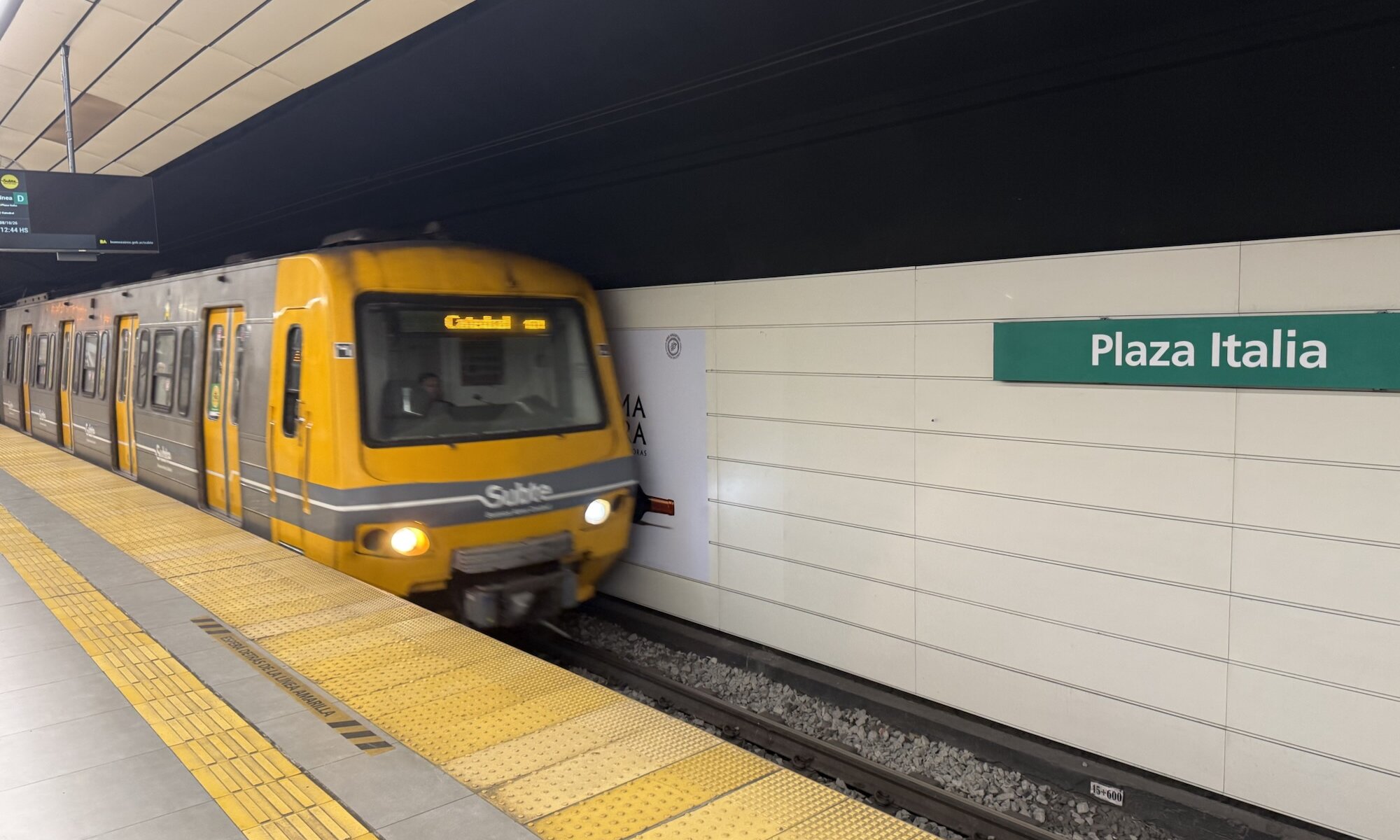
The Subterráneo de Buenos Aires, universally known as the Subte, is the city’s underground railway and one of the most practical ways of moving around the central districts. It links major railway terminals, commercial streets, government areas and neighbourhoods such as Palermo, Recoleta, Belgrano, Caballito, San Telmo and Constitución. For visitors, it is often quicker than travelling by taxi or bus when traffic is heavy, although the trains can be particularly busy during the morning and evening rush hours.
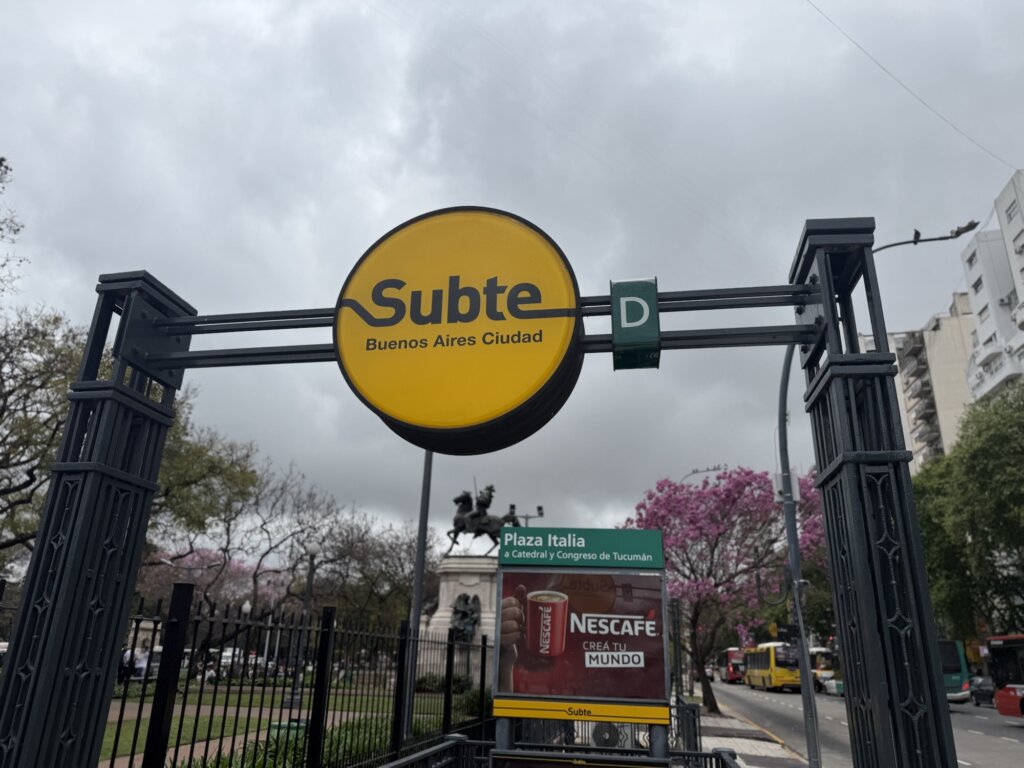
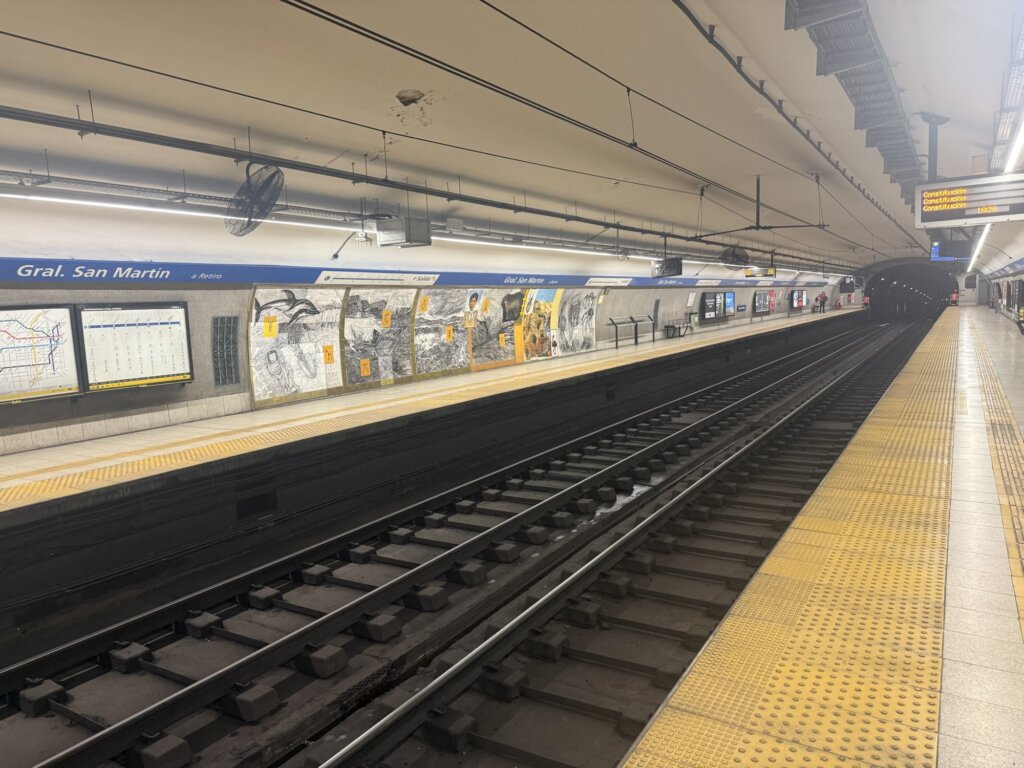
Its history gives it a special place in the city. Line A opened on December 1st, 1913, making Buenos Aires the first city in Latin America – and in the Spanish-speaking world – to operate an underground railway. The original route connected Plaza de Mayo with Plaza Miserere, following a corridor that remains central to the network today. Over the following decades, Lines B, C, D and E were added, while Line H, the newest route, began service in 2007. The older stations, especially on Line A, retain a distinctive early twentieth-century character and form part of the experience of travelling through the city.
The present network consists of six lines: A, B, C, D, E and H. Line A runs from Plaza de Mayo westwards to San Pedrito; Line B follows the Corrientes Avenue corridor towards Villa Urquiza; Line C provides the useful north-south link between Retiro and Constitución; and Line D connects the city centre with Palermo and Belgrano. Line E runs between Retiro and Plaza de los Virreyes, while Line H joins Hospitales in the south with Facultad de Derecho beside Recoleta. Together, these routes make the Subte particularly convenient for reaching the principal sights and for changing between long-distance and suburban rail services.
Using the Subte has become much easier for short-term visitors. At a contactless-enabled gate, simply tap a contactless credit or debit card – an international card is accepted – or an NFC phone or watch, and the fare is charged directly. This makes the purchase of a physical SUBE transport card superfluous if the Subte is all that is needed; look for the turnstiles marked for contactless payment. A SUBE card can still be useful for wider travel on buses and certain rail services, but it is no longer essential merely to use the underground.
Subterráneo (Subte)
Buenos Aires
Argentina
Loading map...
