Buenos Aires’ oldest public square and Argentina’s most important civic and political meeting place. Its name commemorates the May revolution of 1810, which began the process leading to independence from Spanish rule. Since then, the square has witnessed celebrations, demonstrations, political speeches and moments of national crisis, making it a place where Argentina’s history remains unusually visible in everyday city life.
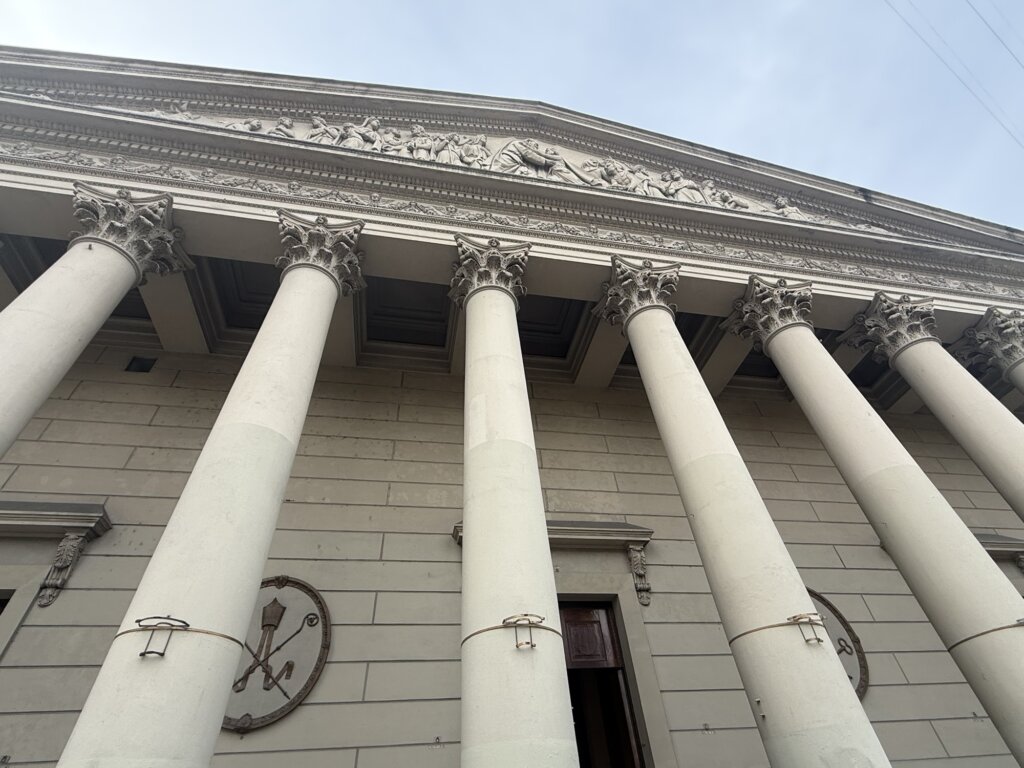
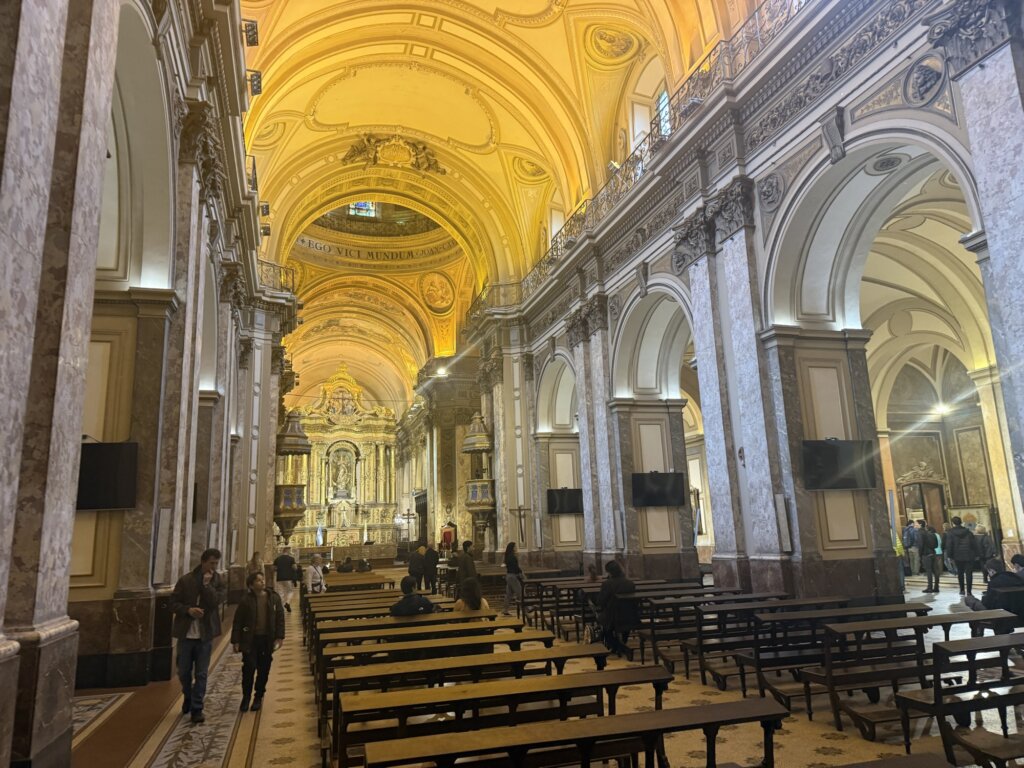
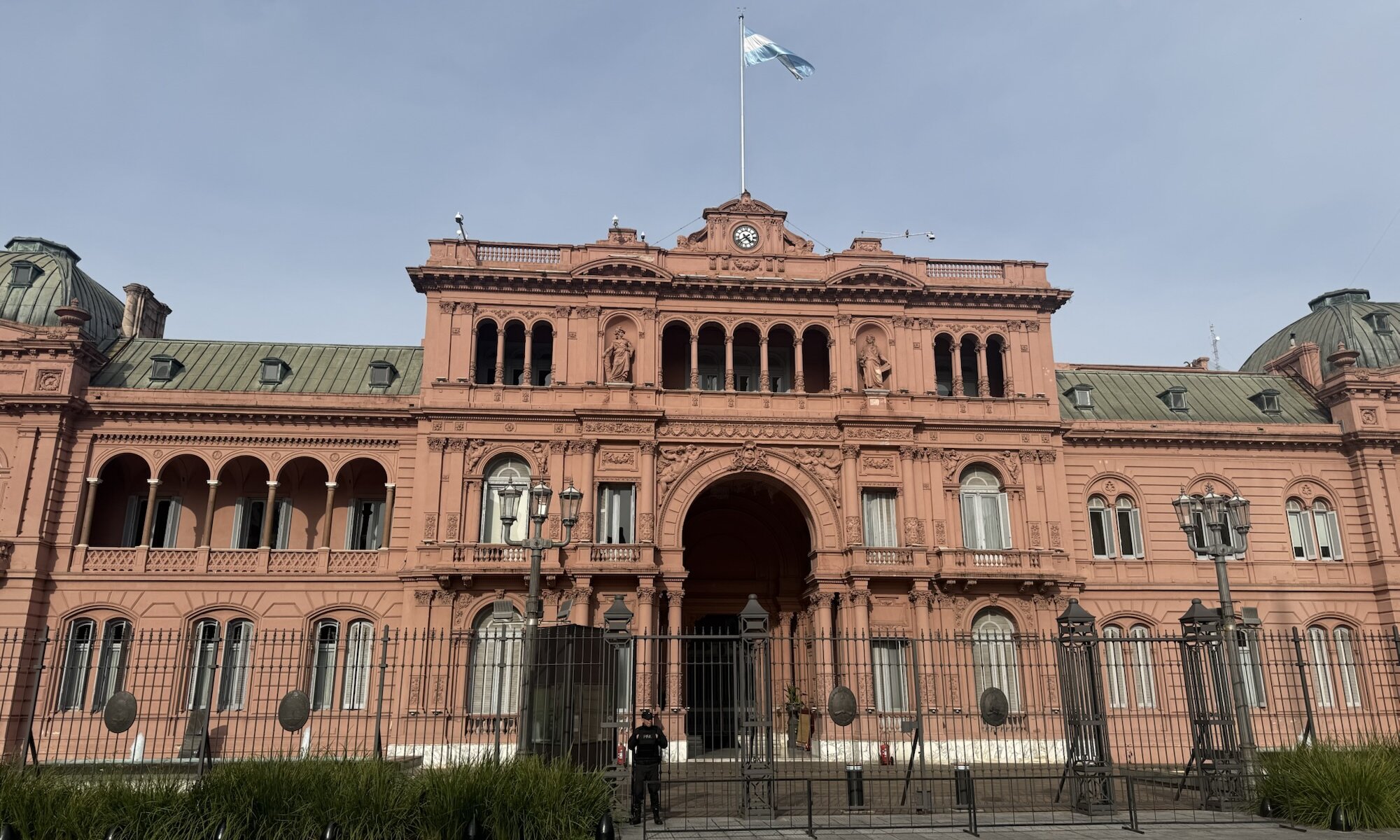
The square is framed by several buildings that explain its importance. The pink Casa Rosada is the seat and working office of Argentina’s president, and its balcony has become closely associated with Juan and Eva Perón and other major political speeches. The Catedral Metropolitana, with its imposing neoclassical façade, is the city’s principal Catholic cathedral and was the church of Jorge Mario Bergoglio before he became Pope Francis. Opposite it stands the Cabildo, the former colonial town hall and the setting for important events during the May revolution; today it houses a museum devoted to that period.
Plaza de Mayo also carries the memory of one of Argentina’s darkest episodes before the later military dictatorship. On June 16th, 1955, aircraft from rebellious sectors of the Navy and Air Force bombed and strafed the square and the area around the Casa Rosada in an attempt to overthrow president Juan Domingo Perón. The attack killed at least 308 identified victims and wounded more than 1,200 people, most of them civilians, and became a direct prelude to the coup that removed Perón three months later.
Since 1977, the square has also been identified with the Madres de Plaza de Mayo. These mothers began gathering there to demand information about their children, who had been forcibly disappeared during Argentina’s military dictatorship of 1976–1983. Wearing white headscarves and marching around the May pyramid, they transformed the square into an internationally recognised symbol of human-rights activism. Their presence explains why Plaza de Mayo is more than a historic attraction: it is a living place of memory, protest and democratic expression.
José de San Martín
José de San Martín was born in Yapeyú in 1778, in what is now Argentina, but spent much of his youth and early military career in Spain. After fighting in the Spanish army, including against Napoleon’s forces, he returned to Buenos Aires in 1812 and joined the movement for South American independence. He organised the Regiment of Mounted Grenadiers and soon became one of the most capable leaders of the revolutionary forces.
His greatest strategic achievement was the creation of the Army of the Andes. Rather than attacking the Spanish stronghold in Peru directly through Upper Peru, San Martín led his army across the Andes into Chile in 1817, securing victories at Chacabuco and Maipú. He then continued the campaign by sea to Peru, entered Lima in 1821 and helped proclaim Peruvian independence. After meeting Simón Bolívar at Guayaquil in 1822, San Martín withdrew from public life and spent his final years in Europe, dying in Boulogne-sur-Mer in 1850.
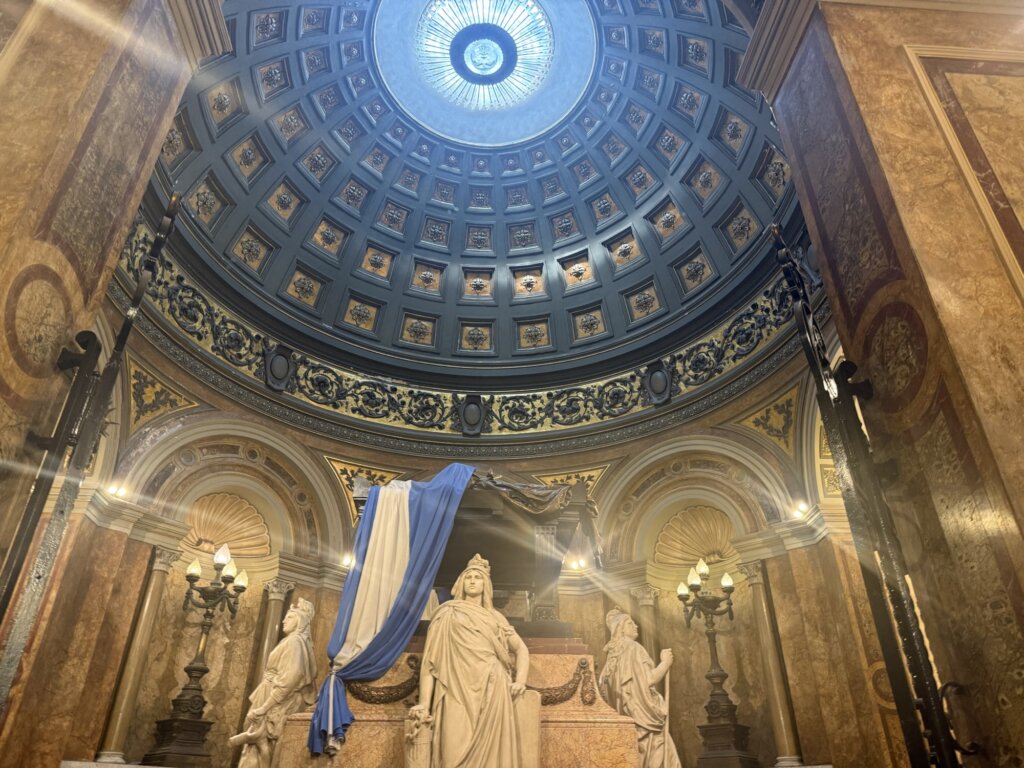
San Martín is important to Argentina because he helped transform the struggle for autonomy into a wider campaign that secured independence across the southern part of South America. His military vision protected the newly emerging Argentine state from Spanish power, while his victories helped liberate Chile and Peru as well. He is remembered not merely as a successful general, but as a figure associated with discipline, sacrifice and the decision to place continental freedom above personal political ambition. His remains were returned to Buenos Aires in 1880 and rest in a mausoleum inside the Metropolitan Cathedral beside Plaza de Mayo, guarded ceremonially by the Mounted Grenadiers.
Plaza de Mayo
Buenos Aires
Argentina
Loading map...
