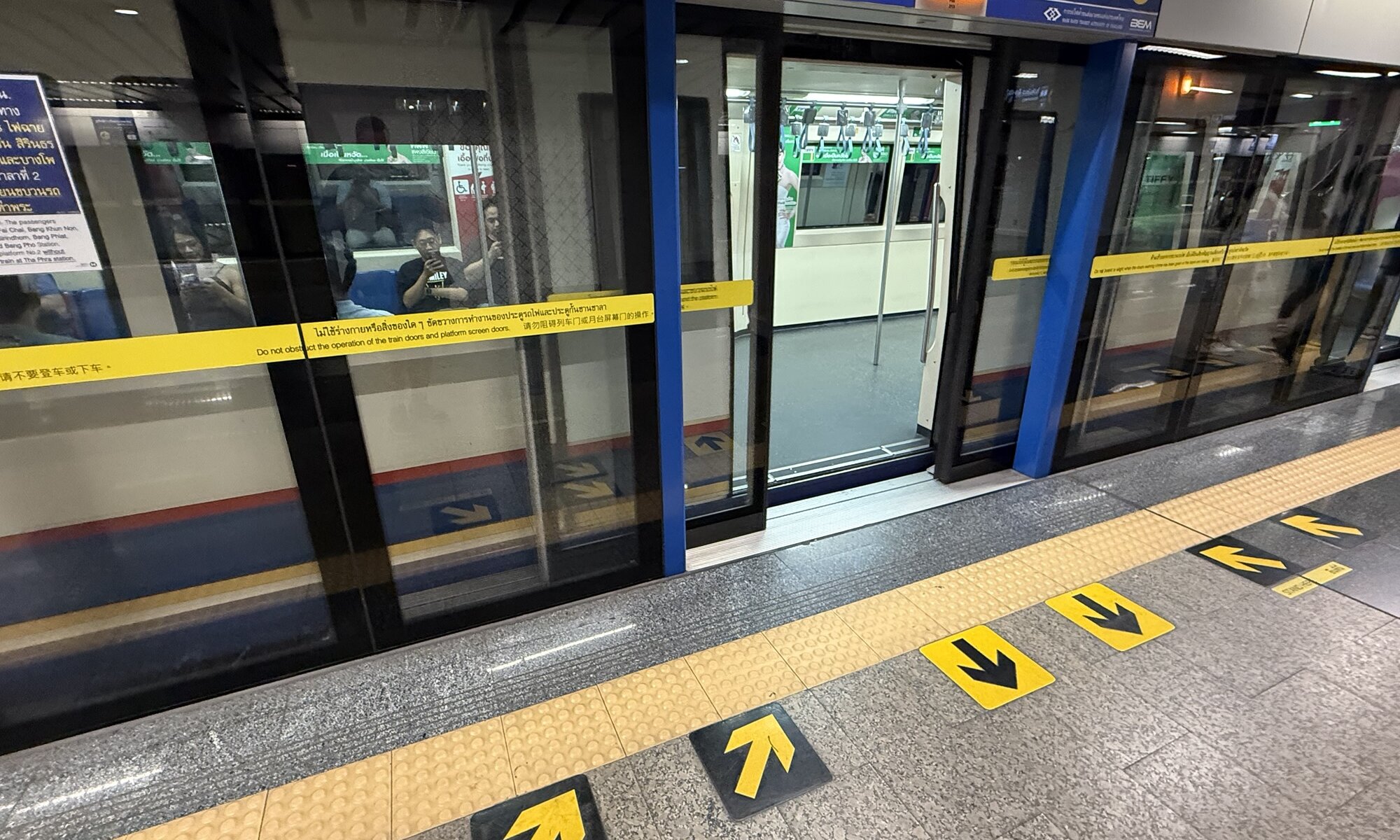
Rotfai taidin

Metropolitan Rapid Transit (MRT), กรุงเทพฯ

กรุงเทพฯ’s MRT system is a vital part of the city’s urban transport landscape, offering an efficient alternative to the city’s notorious road traffic. The network was inaugurated in 2004, marking a significant step towards modernising public transportation in Thailand’s bustling capital. With its clean, air-conditioned trains and stations, the MRT provides a welcome relief from the heat and congestion above ground, connecting key districts and supporting the daily commute of thousands of residents and tourists alike.

Continue reading “Rotfai taidin”

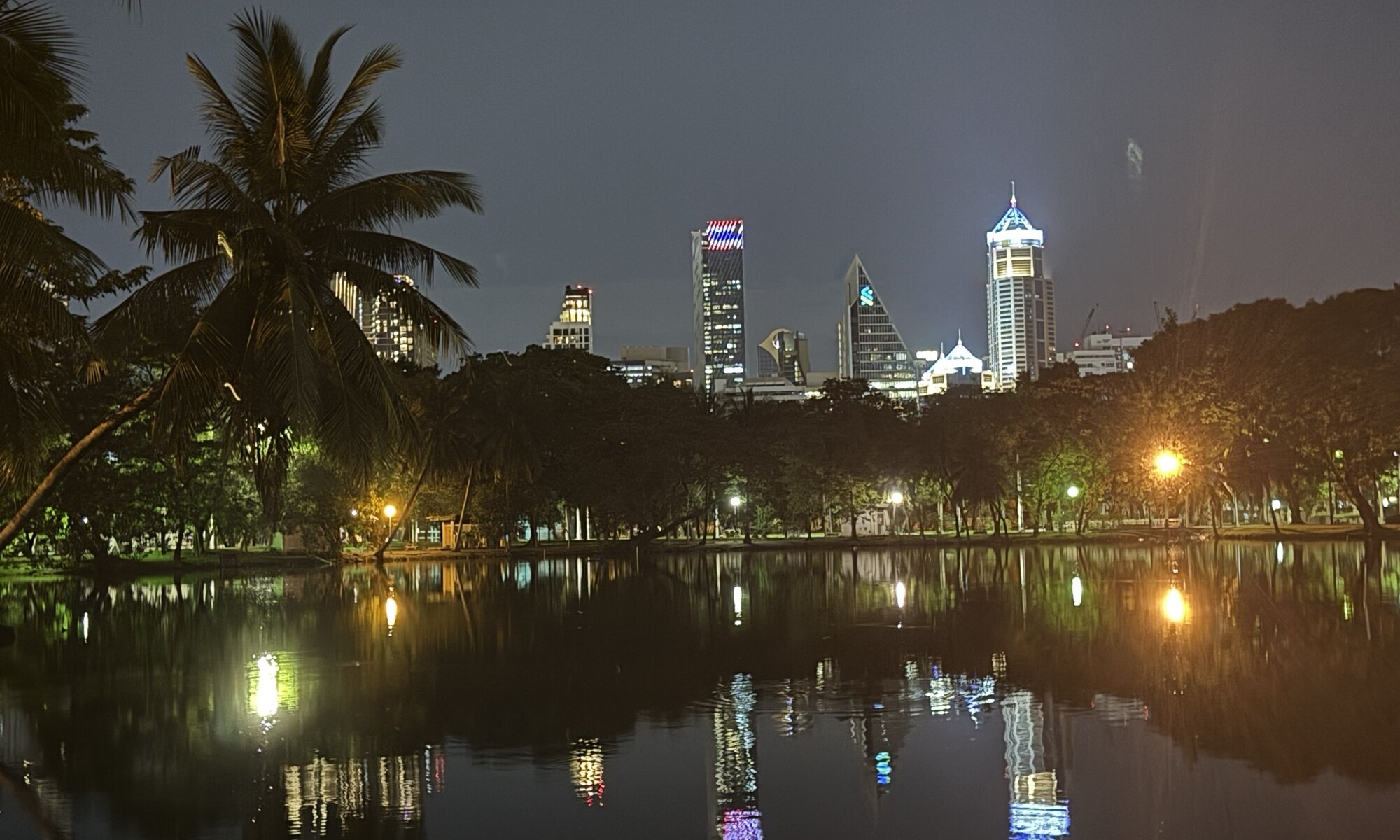
Lumphini park

Lumphini Park, กรุงเทพฯ

Lumphini Park in กรุงเทพฯ is a sprawling urban oasis and the city’s first public park, offering a verdant retreat in the midst of กรุงเทพฯ’s bustling central business district. The park’s history is deeply tied to King Rama VI, who in 1925 donated the land, originally his royal property, for the public good. The park was named after Lumbini, the birthplace of the Buddha in Nepal, symbolising prosperity and peace. Initially planned as a fairground to promote Thai industry, the vision transformed into a space devoted to recreation and community, a modernising gesture that has since endured almost a century.

Continue reading “Lumphini park”

Baht

Baht, Thailand

The currency of Thailand is the Baht, abbreviated as THB. It serves as the official medium of exchange in the country and is widely used across all sectors of the Thai economy. The baht has a long-standing history dating back to the Siamese era, with its origins rooted in traditional silver currency units. Over time, it has evolved into a modern currency managed by the Bank of Thailand, featuring both coins and banknotes in various denominations, adapted to serve the needs of a rapidly developing country with a bustling tourism industry and vibrant local markets.

Continue reading “Baht”

Suvarnabhumi

Suvarnabhumi International Airport, กรุงเทพฯ

Suvarnabhumi International Airport, located to the east of กรุงเทพฯ, is one of the busiest and most important air hubs in Southeast Asia. Designed to handle vast numbers of passengers and flights each day, it is a strikingly modern gateway into Thailand, with its wide concourses, soaring glass façades, and impressive steel structures reflecting the country’s ambition to position itself as a regional transport leader. From the moment one arrives, the sheer sense of scale, efficiency, and constant movement is immediately evident, giving travellers a glimpse of how central this airport is to global connectivity.

Continue reading “Suvarnabhumi”

East Germany

DDR-Museum, Berlin

The DDR-Museum in Berlin offers a vividly immersive journey into life behind the Iron Curtain, capturing the everyday experiences of citizens in the former East Germany. Unlike many traditional museums, it favours interactivity, encouraging visitors to open cupboards, sit in reconstructed living rooms, or even take the wheel of a Trabant car in a simulated drive. Its design brings history to life not only as political or military events but also through the objects, fashions, and domestic routines that defined existence in the German Democratic Republic. The museum’s central character lies in its hands-on approach, inviting curiosity and participation rather than passive observation.

Continue reading “East Germany”

GenZ history

Varusschlacht, Deutschlandmuseum, Berlin

The Deutschlandmuseum at Potsdamer Platz in Berlin is a relatively new addition to the city’s diverse museum landscape, yet it distinguishes itself by its unusual approach. Unlike the grand and expansive historical museums that line Unter den Linden or the halls of Museumsinsel, this is a small, multimedia-driven space that condenses centuries of German history into a compact and fast-paced format. It has been designed very much with a young, digitally oriented audience in mind, offering the story of the nation in a style that is compared to a ‘fast-food’ experience of history – quick, accessible, and instantly engaging. Visitors step into an environment where the line between exhibition and entertainment blurs, experiencing history as a walk-through spectacle rather than as a quiet study.

Continue reading “GenZ history”

GDR art

Kunsthalle, Rostock

The Kunsthalle at Rostock stands as a remarkable testament to both architectural ambition and artistic vision from the days of the former GDR. Conceived in the mid-1960s and officially opened in 1969, it was intended as a showpiece of East German cultural policy, being the first and only purpose-built art museum constructed in the German Democratic Republic. The original plan was to provide a home for the Biennale of Baltic Sea countries, but thanks to the foresight of its founding director, Horst Zimmermann, it quickly began accruing its own significant collection, soon establishing itself not just as an exhibition hall but as a true museum with a focus on collecting, preserving, and researching art.

Continue reading “GDR art”

IGA-Park

Parkbühne, IGA-Park, Rostock

The IGA-Park in Rostock is a wide expanse of green and waterfront leisure created out of the grounds of the International Garden Exhibition held in 2003. Once an industrial harbour area, it was completely transformed into a landscaped park that combines themed gardens, modern art installations, and broad lawns along the Warnow river. Today it stands as one of the city’s most attractive recreational spaces, linking Rostock’s maritime heritage with a contemporary vision of open urban living.

Continue reading “IGA-Park”

Lenbachhaus

Städtische Galerie im Lenbachhaus, München

Located in the vibrant heart of München, the Lenbachhaus is a true gem for anyone with an appreciation for art and history. Originally, the building was the villa of Franz von Lenbach, a prominent 19th-century painter, who designed his home in a Tuscan style reminiscent of Italian Renaissance villas. In the early 20th century, the city of München acquired the property and transformed it into a museum, aiming to preserve and showcase Lenbach’s legacy and the city’s rich artistic heritage. Over the years, the Lenbachhaus underwent several expansions and updates, allowing it to evolve into one of Germany’s most esteemed art institutions.

Continue reading “Lenbachhaus”

Green oasis

Botanischer Garten Nymphenburg, München

The Botanischer Garten Nymphenburg in München, nestled adjacent to the famed Schloß Nymphenburg, is a serene oasis with a rich legacy dating back to the early 20th century. Originally founded in its current location in 1914, the botanical garden replaced the city’s older botanical garden near Karlsplatz. Its development was strongly shaped by a desire to create a thriving centre of horticultural education and research, one that would also serve the public as a place for enjoyment and tranquillity.

Continue reading “Green oasis”