Palio

Piazza del Campo, Siena

The Palio di Siena is a vivid, centuries-old horse race held in the shell-shaped Piazza del Campo, the civic heart of Siena. Rather than a sporting event in the modern sense, it is a communal and ritual spectacle where contrade – the city’s historic neighbourhood wards – compete fiercely for honour and prestige. The race itself is a short, intense sprint around the piazza, ridden bareback by jockeys who often ride horses they barely know. The atmosphere is theatrical: flags, banners, medieval costumes and drumming transform the city into a living pageant, so the Palio reads as much as a public celebration of Sienese identity as it does a competition.

Continue reading “Palio”

Via Francigena

Strada biancha, Toscana

The Via Francigena is an ancient pilgrimage route that links Canterbury with Roma, with the option of continuing further south into Italy. It was created to provide a safer and more practical overland path for pilgrims, traders and travellers moving through medieval Europe, and it later became a major cultural itinerary rather than just a religious one.

Continue reading “Via Francigena”

Brockenaufstieg

Brocken, Wernigerode

Each June, the Brockenaufstieg turns Braunlage into a lively base camp for long-distance hikers heading up into the Harz, with the town’s central square filling before dawn with rucksacks, trekking poles and a mix of nervous energy and quiet anticipation. The atmosphere is friendly rather than competitive, more about testing stamina and sharing a long day in the hills than chasing times, and you notice quickly how mixed the field is: seasoned ultra‑walkers alongside office workers who have been training on forest tracks at weekends. Once the start bell goes and the crowd strings out towards the first climbs, Braunlage drops away behind you and the focus shifts to settling into a rhythm for many hours on your feet.

Continue reading “Brockenaufstieg”

Cycling on Rügen

Cycling on Rügen, Germany

Exploring the island of Rügen by bike is an absolute pleasure and, in my experience, one of the best ways to see its varied landscapes. The island offers around 800 kilometres of cycling tracks, though their quality does vary from smooth asphalt paths to more uneven stretches. Despite Rügen’s reputation for being relatively flat, I found it more undulating than expected, with some climbs that certainly get the heart rate up. The ascents to the Jagdschloss Granitz and the famous chalk cliffs at the Königsstuhl, in particular, can be surprisingly sweaty affairs.

Continue reading “Cycling on Rügen”

Tour d‘Energie

Tour d’Energie 2026, Göttingen

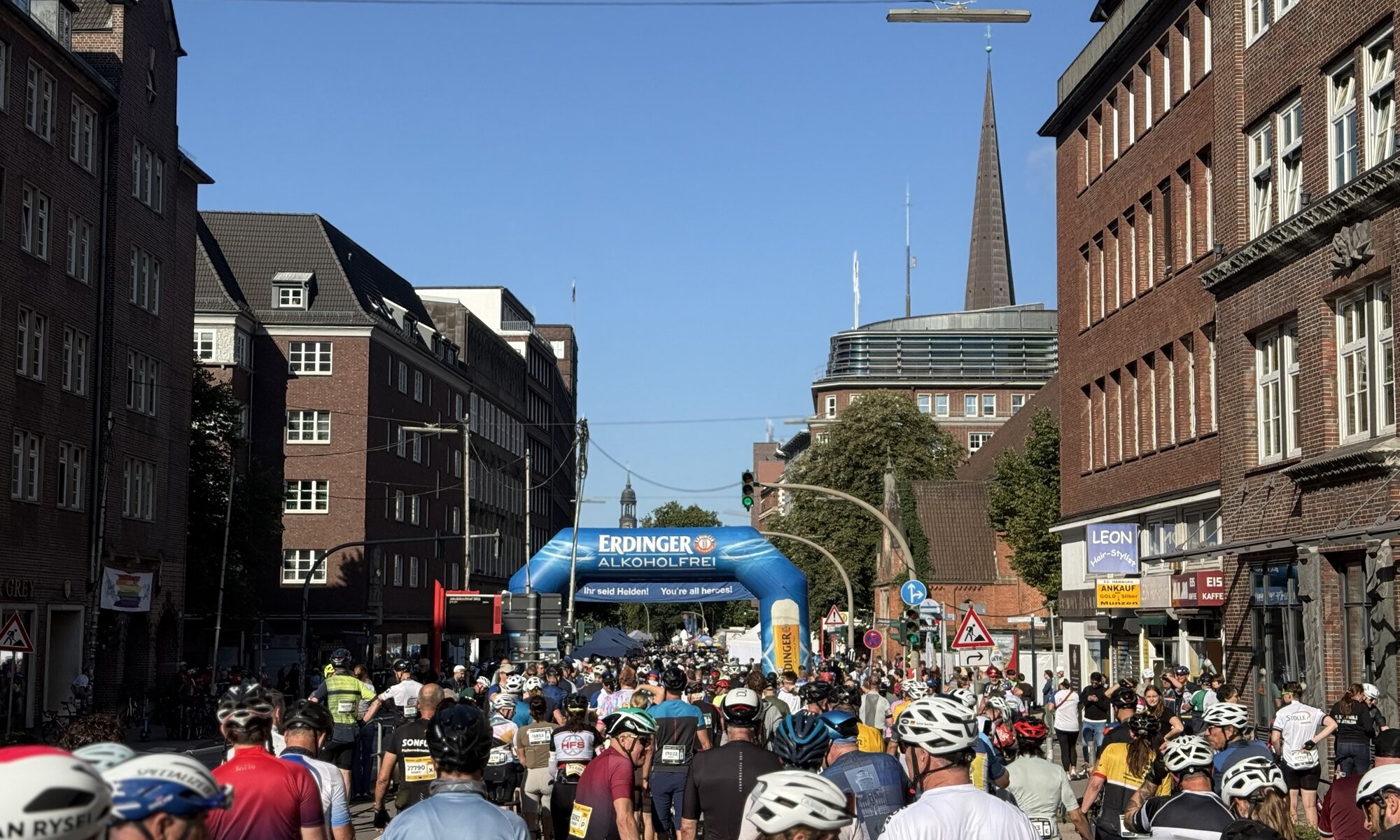
The Tour d’Energie in Göttingen has grown into one of the most prominent cycling events in central Germany, renowned for its lively atmosphere and excellent organisation. As a Jedermann-Rennen – meaning an event open to all – it attracts a diverse field of cyclists, from ambitious amateurs to seasoned enthusiasts. 5,500 people were attending this year. What makes the race particularly endearing is the sense of community surrounding it. Entire families line the streets, cheering participants on. It’s as much a festival of cycling as it is a test of endurance.

Continue reading “Tour d‘Energie”

Mammutmarsch

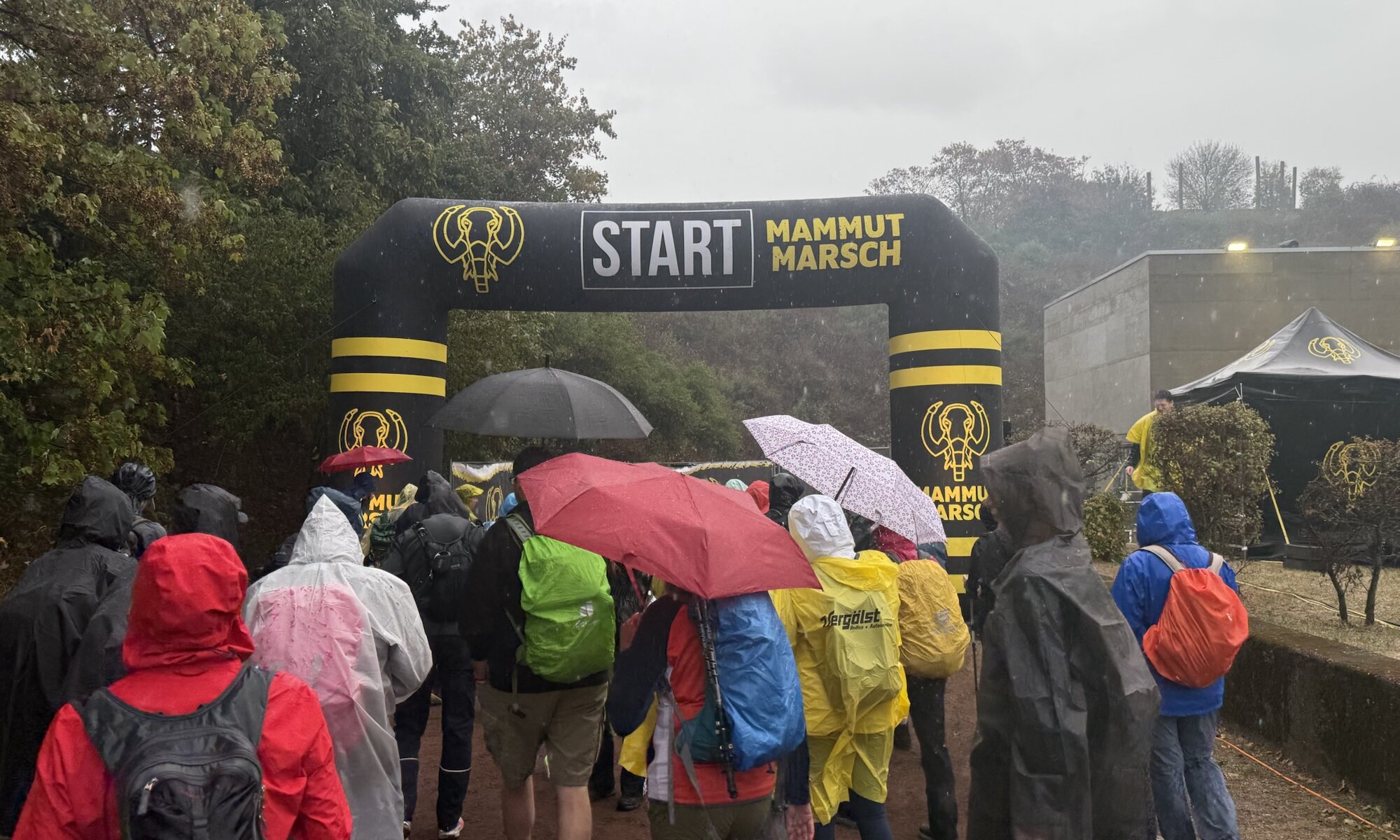
Mammutmarsch 2026, Leipzig

The Mammutmarsch is an endurance hiking event designed to push participants to their physical and mental limits. It’s not a race in the traditional sense but rather a personal challenge – the goal is simply to complete the course within the set time. The concept originated in Germany and has since grown into a movement that attracts thousands of outdoor enthusiasts each year. Participants walk through urban areas, forests, and countryside, often experiencing dramatic changes in terrain and weather along the way.

Continue reading “Mammutmarsch”

Lavorare a Milano

View from Duomo, Milano

Last year my employer introduced a scheme that allows me to work twenty days mostly anywhere in the world. Something which feels like being made for me, but I decided to try it out first in an easy location and at a time when workload isn’t soaring high. That’s why I decided to work the week after Christmas at Milano, a city I had only briefly explored so far. It also gave me the chance to finally see the L’Ultima Cena (I always failed to get tickets) and the chance to explore the surroundings, including Bergamo, Brescia, Torino and a long-awaited return to Como.

Continue reading “Lavorare a Milano”

Torino

View from Monte dei Cappuccini, Torino

The city of Torino, or Turin in German and English, lies elegantly at the foot of the Alps where the Po river flows through the wide plains of northern Italy. It was the first capital of unified Italy in the 19th century and long before that, the seat of the powerful House of Savoy. The city carries itself with a regal grace, visible in its Baroque palaces, arcaded boulevards, and grand piazzas that reflect both French and Italian influences. Its grid-like street layout, unusual for an Italian city, owes much to 17th-century urban planning, which lends Torino a sense of order and grandeur reminiscent of Paris rather than Roma.

Continue reading “Torino”

Trasporto pubblico

Metro, Milano

Milano is a compact city where you can comfortably walk between many of the main sights, especially in and around the centre between Duomo, Brera, Navigli and Porta Nuova. That said, distances can add up over a full day, and for getting out to areas like CityLife, the San Siro zone, or the airports, public transport suddenly becomes very useful. The system is run mainly by ATM and links metro, tram and bus into one integrated network, so you can switch between them on a single ticket within the time limit.

Continue reading “Trasporto pubblico”

Neroberg

City view, Neroberg, Wiesbaden

Neroberg rises gently above Wiesbaden, offering one of those classic hillside viewpoints where city, river and forest seem to knit together in a single panorama. On a clear day the view stretches across the elegant Kurhaus quarter towards Mainz and the wider Rhein-Main region. The hill has long been treated as the city’s local ‘house mountain’, and even today the mix of woodland paths, vineyards and historic architecture gives it a distinctly cultivated, almost park-like character rather than a wild, rugged feel.

Continue reading “Neroberg”