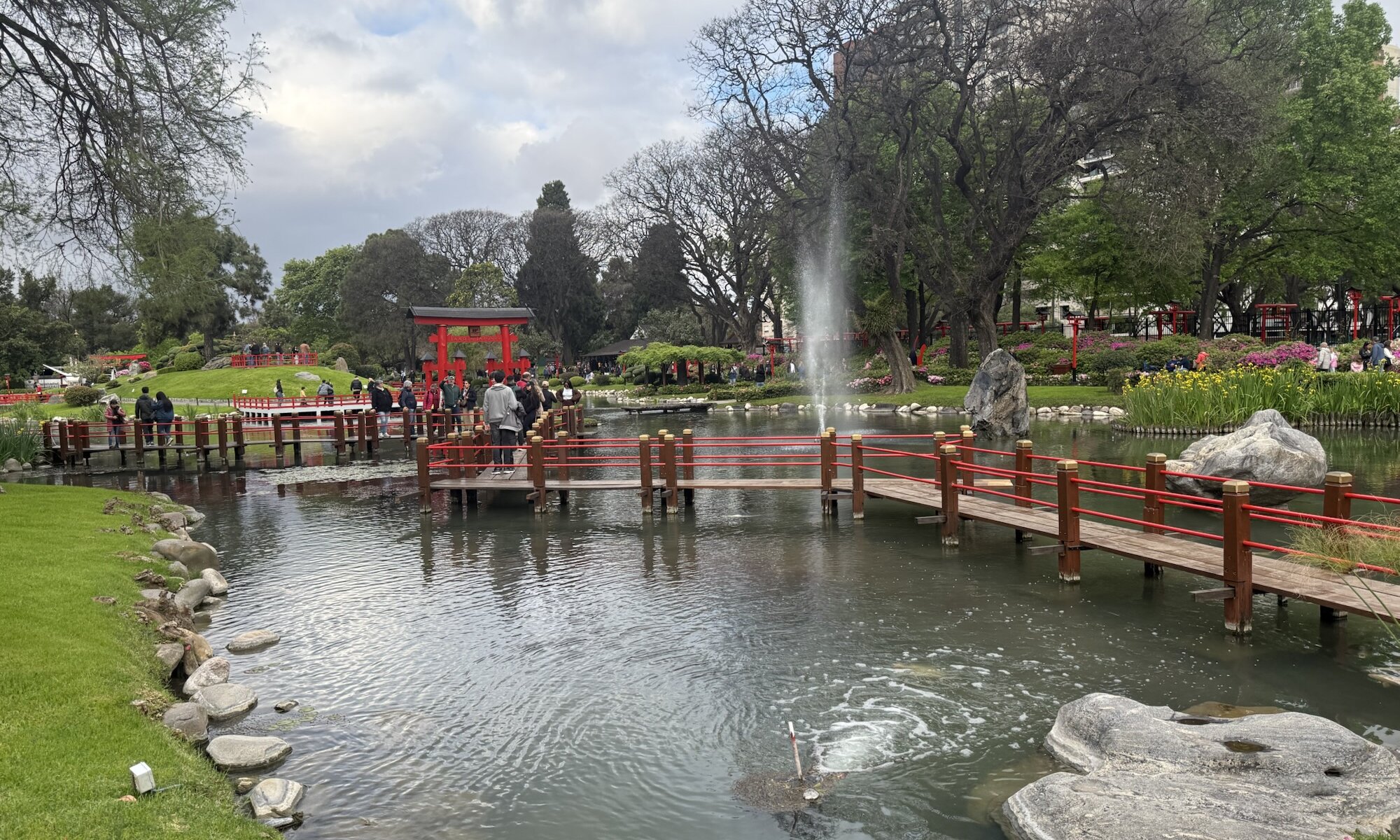
Tucked into the green expanse of Parque Tres de Febrero in Palermo, the Jardín japonés is one of Buenos Aires’ most unexpectedly serene places. It was created in 1967 by the Japanese community in Argentina to mark the visit of Crown Prince Akihito and Princess Michiko, and was later donated to the city as a gesture of gratitude for Argentina’s welcome to Japanese immigrants. A major redesign in the late 1970s, led by landscape engineer Yasuo Inomata, gave the garden much of its present Zen-inspired character.
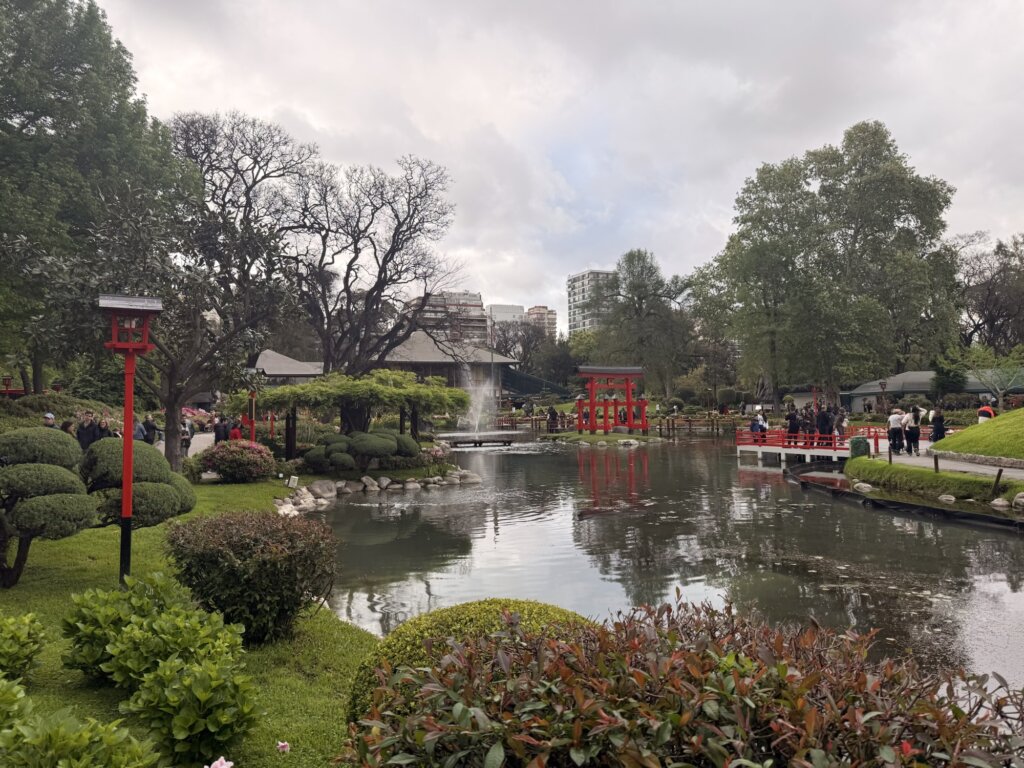
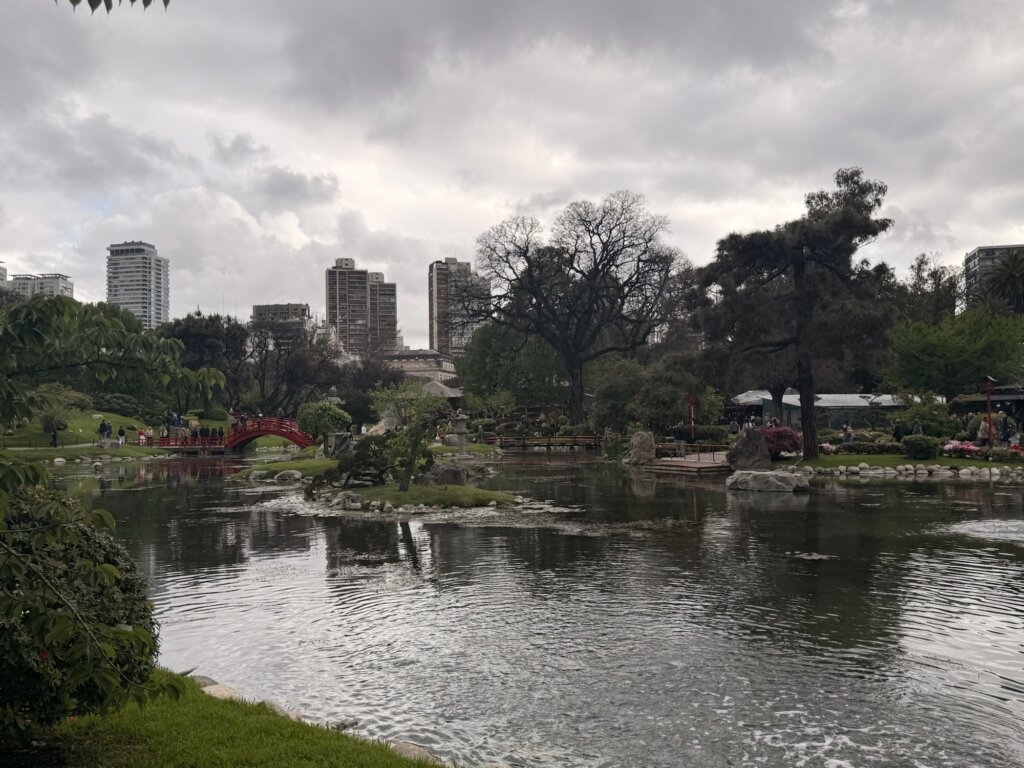
What strikes you first is the deliberate sense of balance. Water is central: a broad lake populated by colourful koi carp, crossed by several bridges, including the striking red Puente de Dios. The paths wind around rocks, waterfalls, stone lanterns and carefully placed trees, encouraging you to slow down and look at the composition rather than simply walk through it.
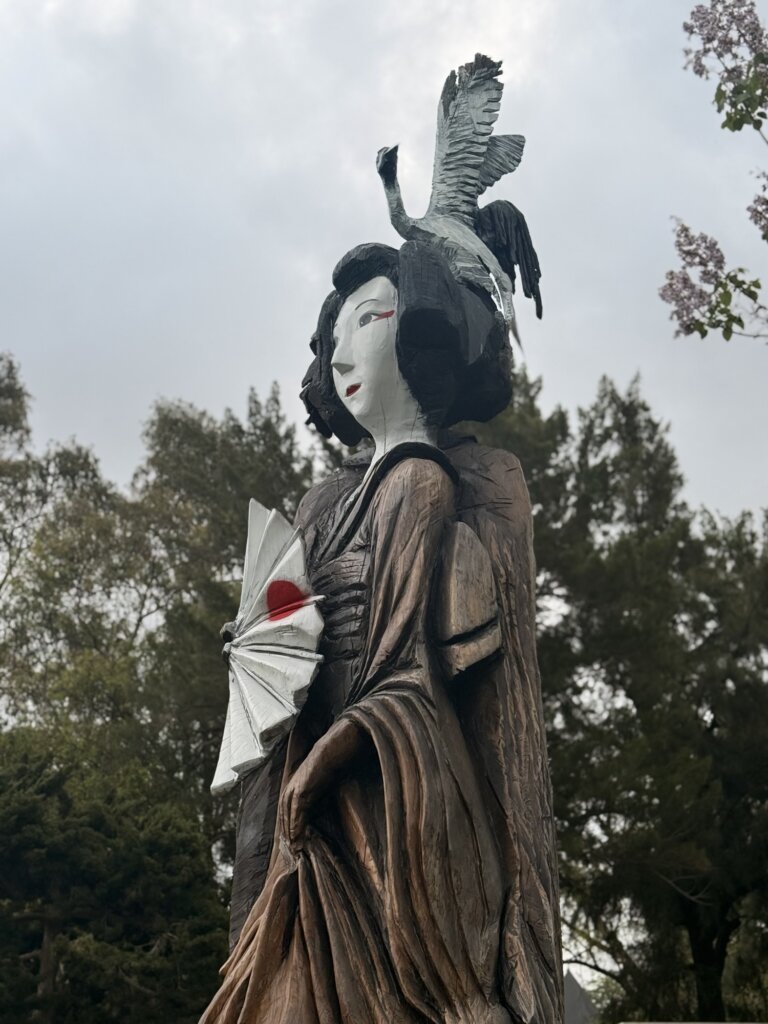
The planting changes beautifully with the seasons. Azaleas, Japanese maples, cherry trees and other ornamental species bring colour at different times of year, while bonsai and orchids add more intimate details to the visit. There is also an island reached by bridges, traditionally associated with medicinal herbs, and a collection of sculptures and traditional ornaments that reinforce the garden’s cultural identity.
Beyond the gardens themselves, the complex works as a small cultural centre. Visitors can see a tea house used for the Japanese tea ceremony, browse a nursery known for bonsai, and stop at the shop or Japanese restaurant. It is a rewarding contrast to the bustle of Palermo: compact enough for a relaxed hour or two, yet rich enough to feel like a genuine change of place.
Jardín japonés
Buenos Aires
Argentina
Loading map...
