
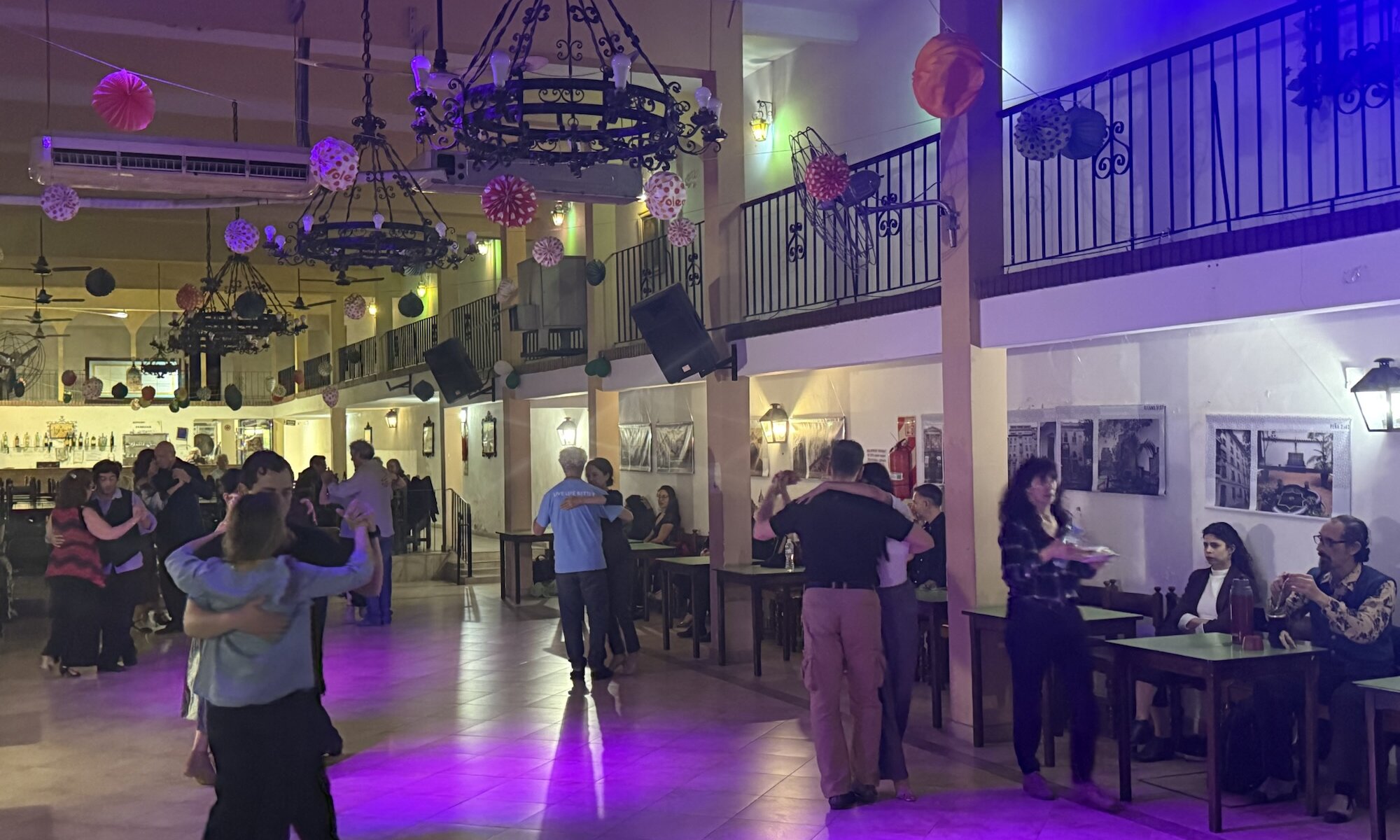
Tango argentino is far more than a dance: it is a living expression of Buenos Aires, shaped by the city’s immigrant neighbourhoods, port districts, and cosmopolitan character. Its close embrace, dramatic pauses, and intricate footwork create an atmosphere that feels both intimate and theatrical, while the music carries a distinctive mixture of longing, pride, melancholy, and humour.
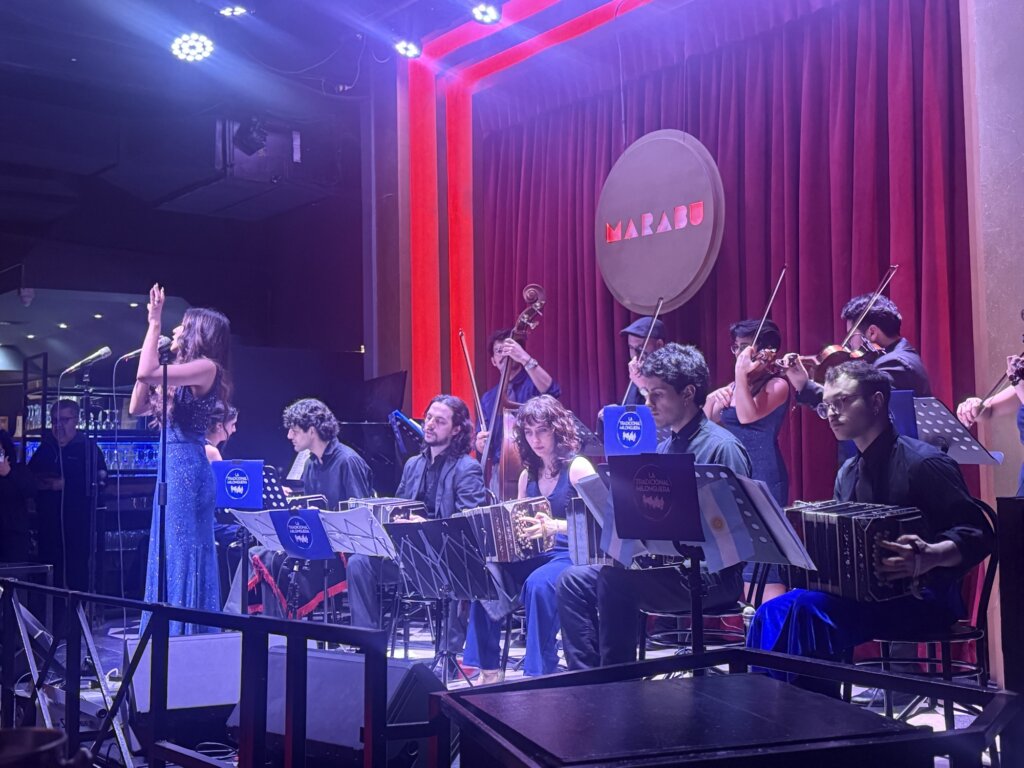
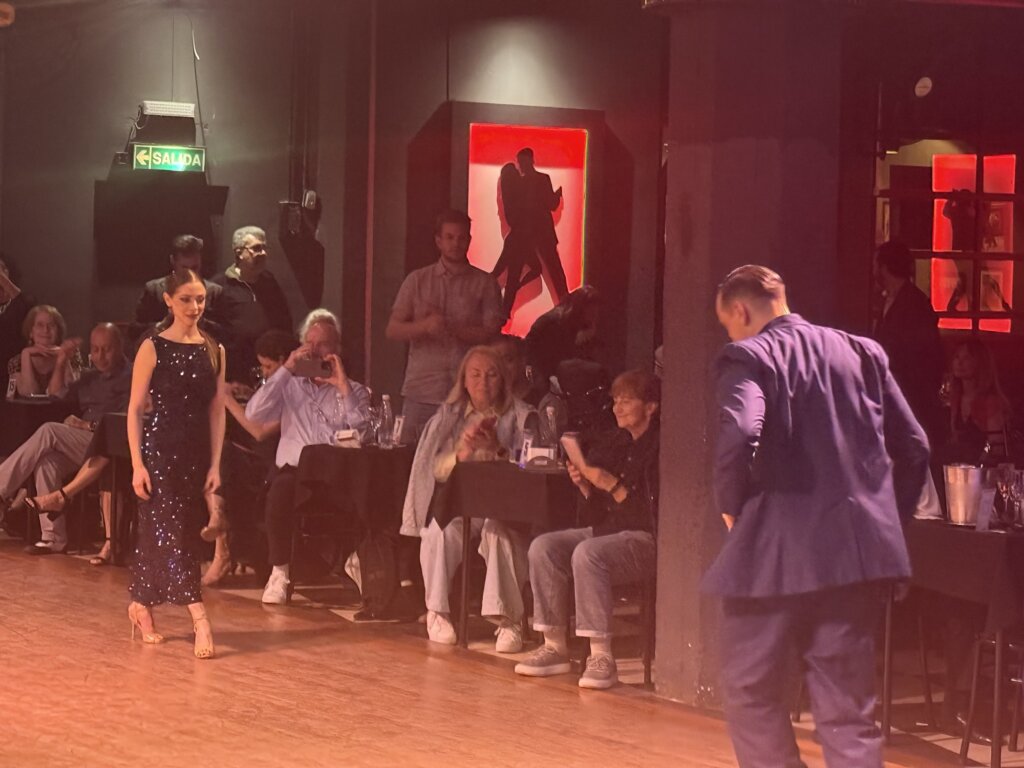
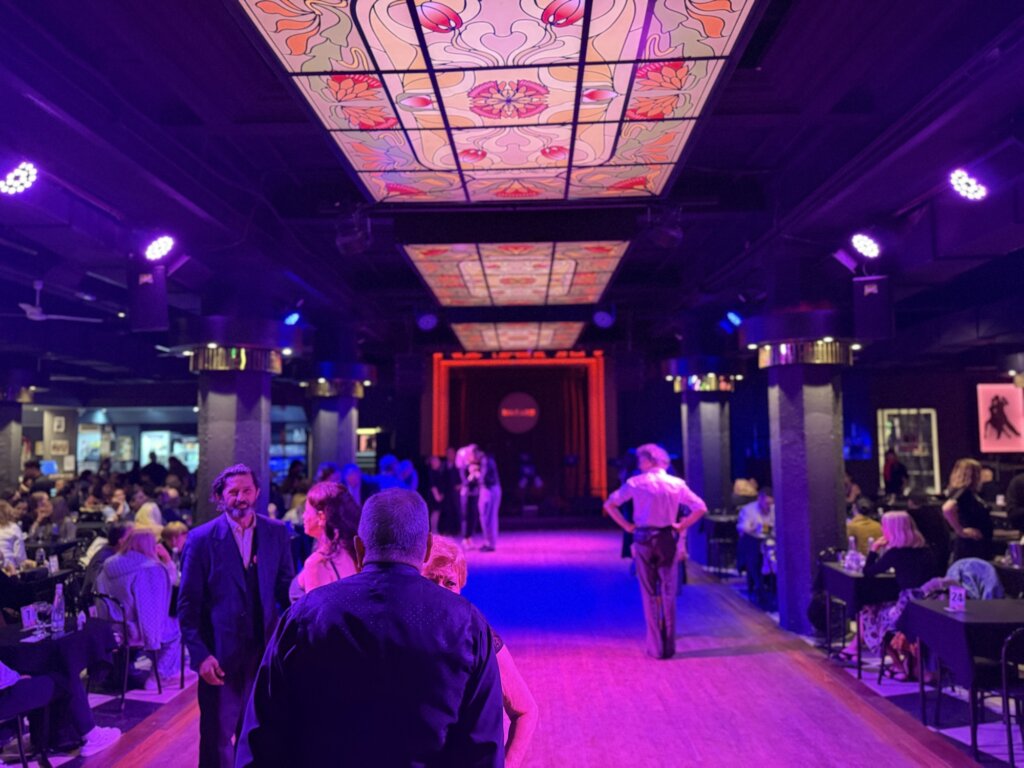
The best place to experience this tradition is often a milonga, the social gathering where people meet to dance tango. Milongas take place in historic halls, cultural centres, neighbourhood clubs, and elegant salons across Buenos Aires. Some attract experienced local dancers, while others are welcoming to visitors and offer introductory classes, making it possible to participate even without extensive experience.
A typical evening follows a familiar rhythm, with music arranged in sets known as tandas and short intervals called cortinas. Dancers generally invite one another through subtle eye contact and a slight nod, a custom known as the cabeceo. Observing these conventions helps visitors join the dance floor respectfully and understand that a milonga is a social ritual as much as a performance.
For travellers, the most rewarding approach is to combine a beginner’s lesson with an evening milonga and, if possible, to visit more than one venue. Each neighbourhood has its own atmosphere, from intimate and traditional to lively and contemporary. Even when you remain an observer, spending an evening among the music, polished floors, and quiet concentration of the dancers offers one of the most memorable ways to encounter Buenos Aires.
Milongas
Buenos Aires
Argentina
Loading map...
