
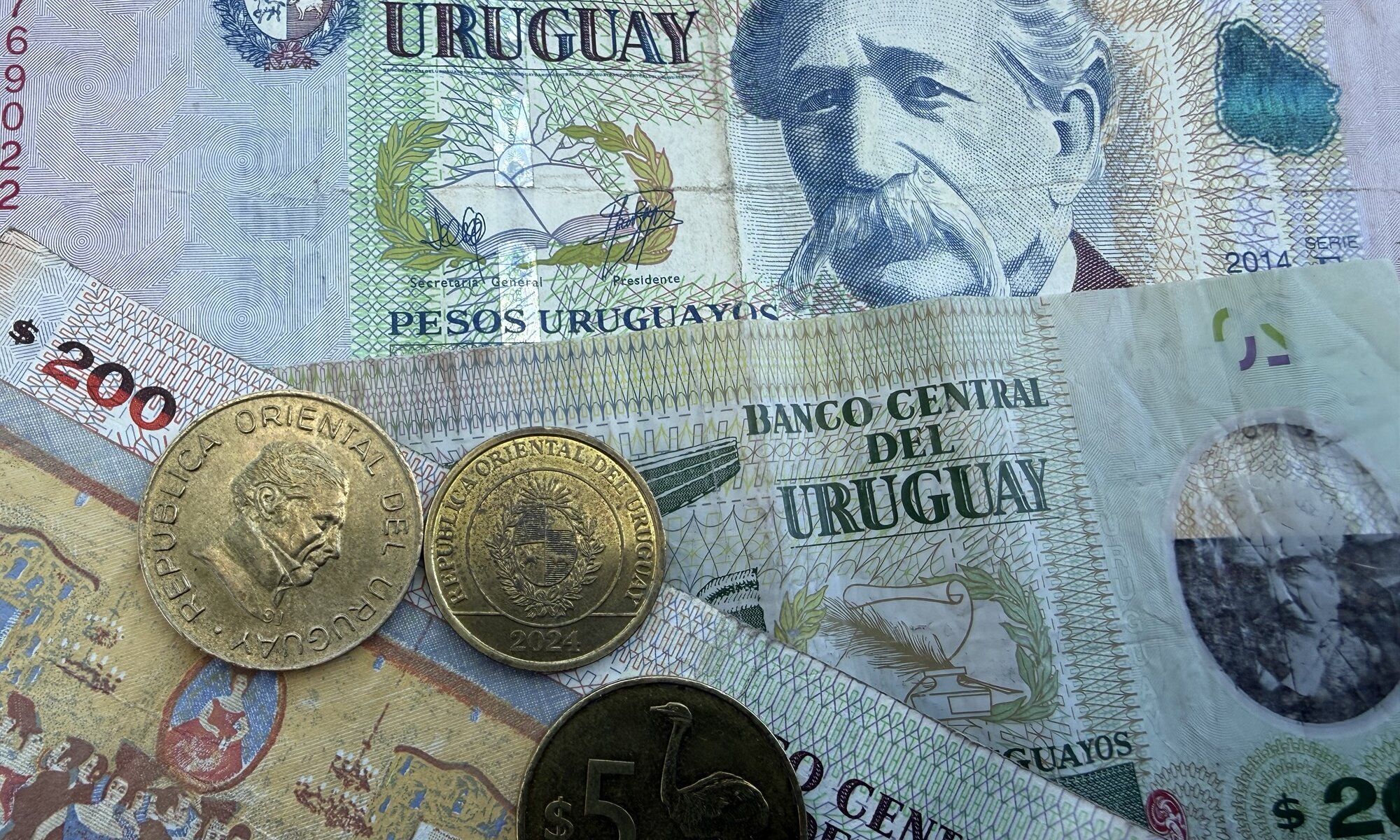
The peso uruguayo (UYU), usually written as $ or $U , is Uruguay’s official currency. The present peso was introduced on March 1st, 1993, replacing the nuevo peso at a rate of 1 peso uruguayo for 1,000 nuevos pesos. It is divided into 100 centésimos, although centésimo coins are no longer commonly used.
Uruguayan banknotes combine national history with cultural symbols. The current series includes denominations from 20 to 2,000 pesos and portrays figures such as poet Juan Zorrilla de San Martín, educator José Pedro Varela, artist Pedro Figari, composer Eduardo Fabini, writer Juana de Ibarbourou and scientist Dámaso Antonio Larrañaga. Their reverse sides show monuments, artworks and other references to Uruguay’s intellectual and cultural heritage, while José Gervasio Artigas, the country’s independence hero, appears prominently in Uruguay’s currency tradition.
Visitors should carry some cash, even though cards are widely accepted in hotels, supermarkets, larger restaurants and many shops in Montevideo and popular coastal resorts. Cash remains useful for small cafés, local buses, markets, modest family-run establishments, public toilets, tips and places where card terminals are unreliable. It is also sensible to keep small notes rather than relying entirely on 1,000- or 2,000-peso bills.
For most travellers, the best practical option is to withdraw pesos from a reputable bank ATM after arrival, preferably inside a bank branch or shopping centre and during daylight. ATMs may offer pesos or US dollars, but choose pesos for everyday spending and decline dynamic currency conversion if the machine offers to charge your home currency. Exchange offices and banks can also be useful, whereas changing money at an airport, hotel or informal street counter is usually less attractive; check your bank’s foreign-cash fees and daily withdrawal limits before travelling.
Peso Uruguayo
Uruguay
Loading map...
