
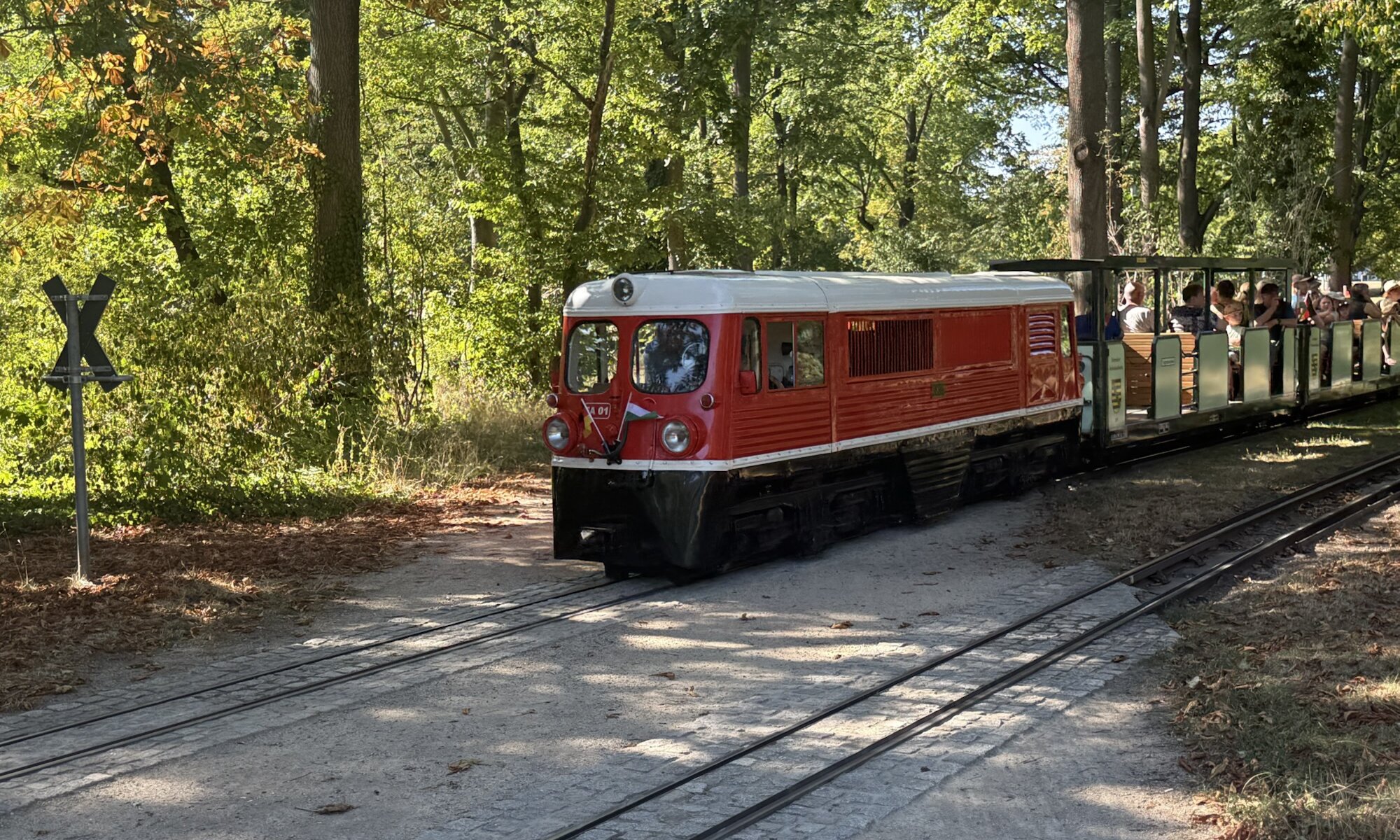
The Dresdner Parkeisenbahn is a charming miniature railway running through the Großer Garten, Dresden’s large historic park. Its origins date back to June 1st, 1950, when a temporary children’s railway was opened between the Zoo and what is now Straßburger Platz. Although it was initially intended to operate for only one season, its popularity led to a permanent service; the line was extended in 1951 and reached its present circular route of approximately 5.6 kilometres.
A Pioniereisenbahn was a narrow-gauge railway in the former Eastern Bloc that was operated, at least in part, by children and young people. In East Germany, members of the communist Young Pioneers organisation received practical training in railway duties such as dispatching trains, checking tickets and assisting passengers, under the supervision of adult railway professionals. Dresden’s railway became the first Pioniereisenbahn in the German Democratic Republic and retained this educational role for several decades.
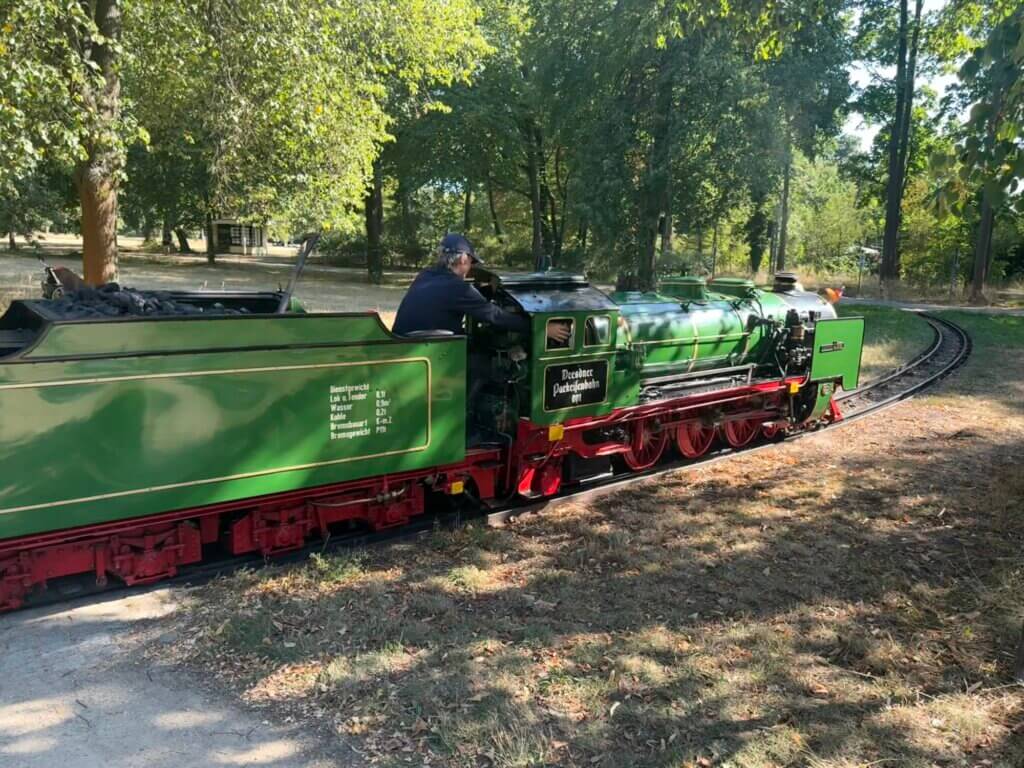
Following German reunification, the name was changed from Pioniereisenbahn to Dresdner Parkeisenbahn, while the railway’s character as a children-and-family attraction was preserved. The route passes through leafy sections of the Großer Garten and calls at stations including Zoo, Carolasee, Karcherallee and Palaisteich; depending on the service, passengers may see steam locomotives as well as battery-electric locomotives. A complete circuit takes roughly half an hour, making it an easy way to explore the park without a long walk.
Today, you can simply buy a ticket and enjoy a leisurely ride, combine the journey with a visit to Dresden Zoo, or stop near the park’s ponds and palace grounds for a walk or picnic. The railway also offers a glimpse into Dresden’s industrial and social history, particularly through its historic locomotives and the continuing involvement of young railway enthusiasts. Before setting out, it is sensible to check the official timetable, as operating days, locomotive types, special events and ticket arrangements vary during the season.
Großer Garten
The Großer Garten is Dresden’s largest and most important urban park, situated just south-east of the historic city centre. Covering roughly 1.8 square kilometres, it combines broad avenues, spacious lawns, mature trees, ornamental gardens and quiet paths, making it suitable both for a leisurely stroll and for escaping the bustle of the city. Its formal, almost geometric layout still reflects its Baroque origins, although later redesigns gave parts of the park a more natural, English landscape character.
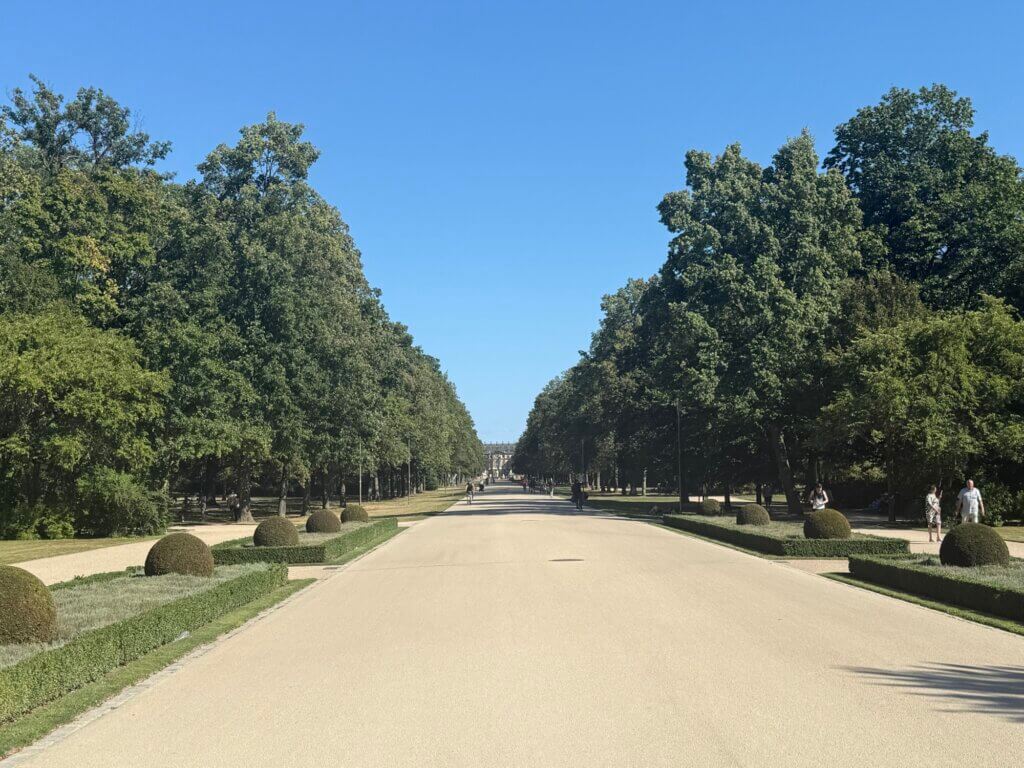
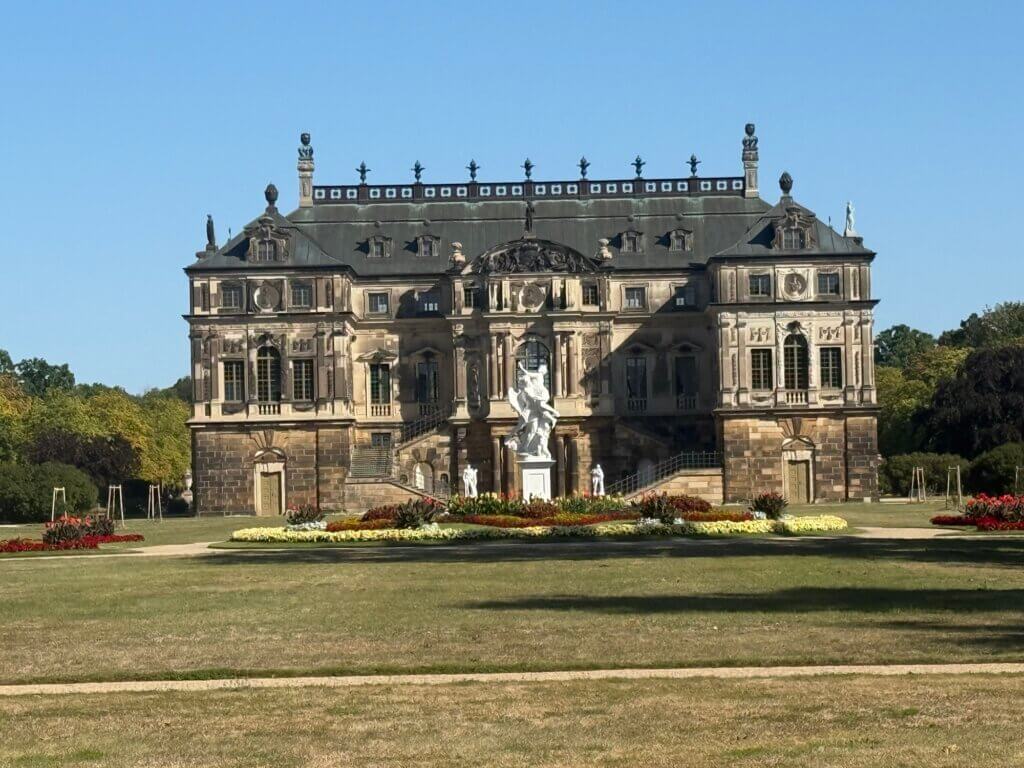
The park was created from 1676 onwards on the orders of the future Elector Johann Georg III as a princely hunting and pleasure garden outside Dresden’s city walls. At its heart stands the Palais, built between 1678 and 1683 and regarded as one of the earliest major Baroque buildings in Saxony. The grounds suffered serious damage during the Seven Years’ War and the battles around Dresden in 1813; after repairs, the garden was opened to the public in 1814 and gradually developed into the recreational park known today.
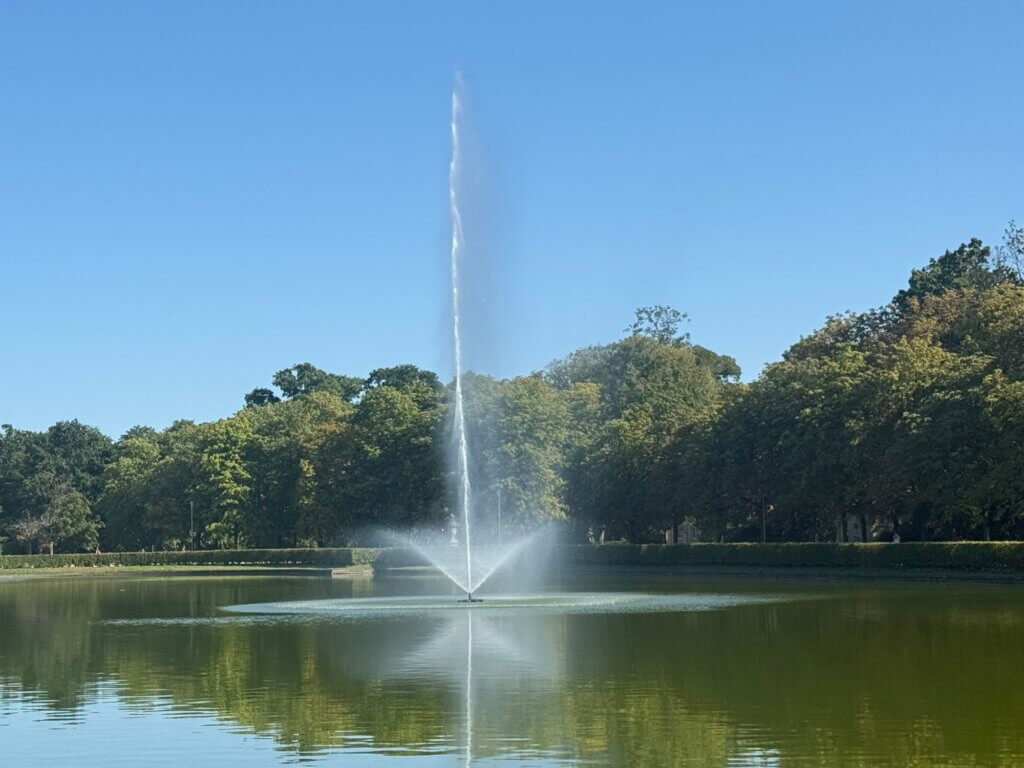
Visitors can see the elegant Palais and its pond, formal flower beds, fountains, sculptures and several themed gardens, including the Dahlia Garden and the White Garden. At the edge of the park are Dresden Zoo and the Botanical Garden, while the open-air theatre Junge Garde provides a cultural venue during the warmer months. The combination of historic architecture, seasonal planting, tree-lined walks and extensive green space makes the Großer Garten one of Dresden’s most appealing places for a relaxed afternoon.
Dresdener Parkeisenbahn
Dresden
Germany
https://www.grosser-garten-dresden.de/de/grosser-garten-dresdner-parkeisenbahn/dresdner-parkeisenbahn/
Loading map...
