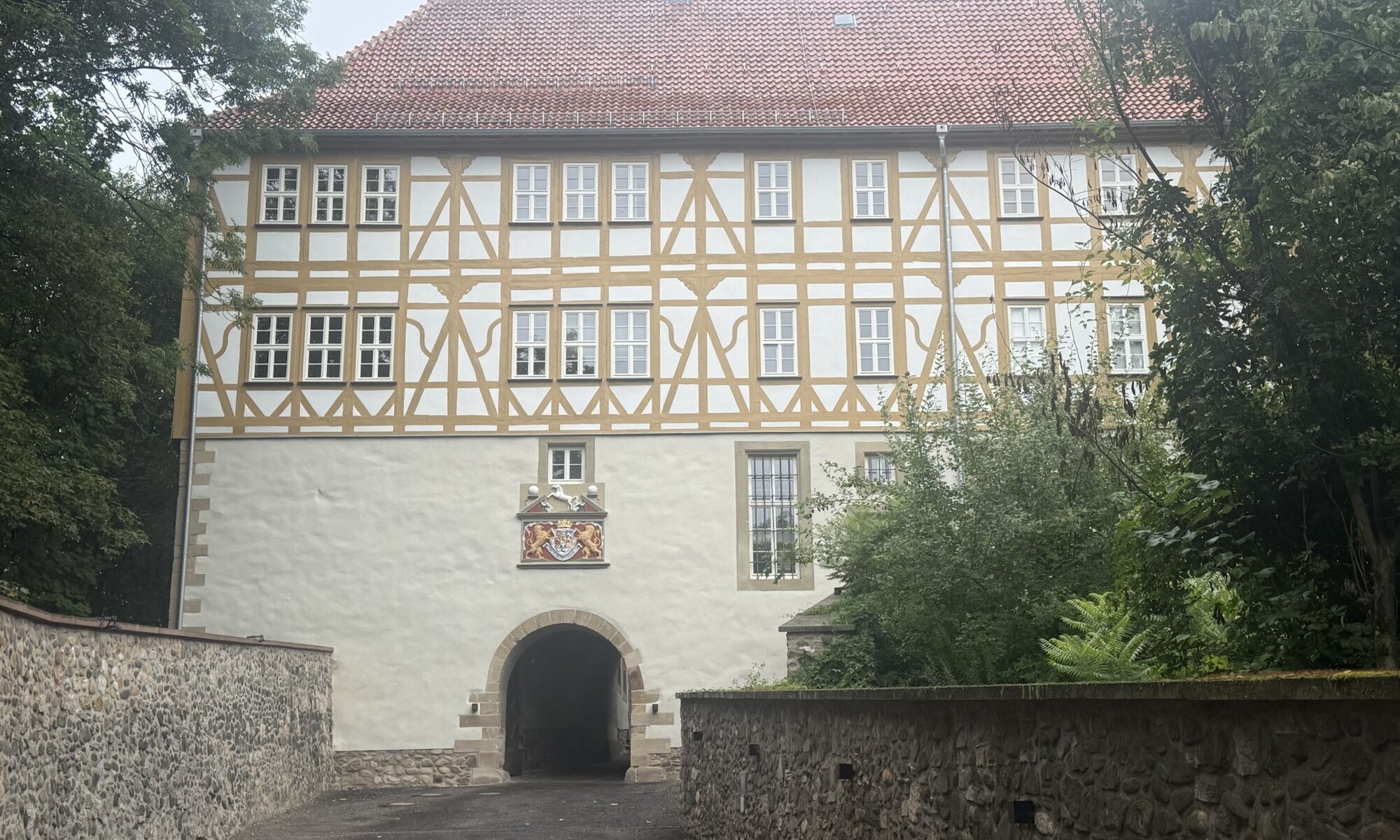
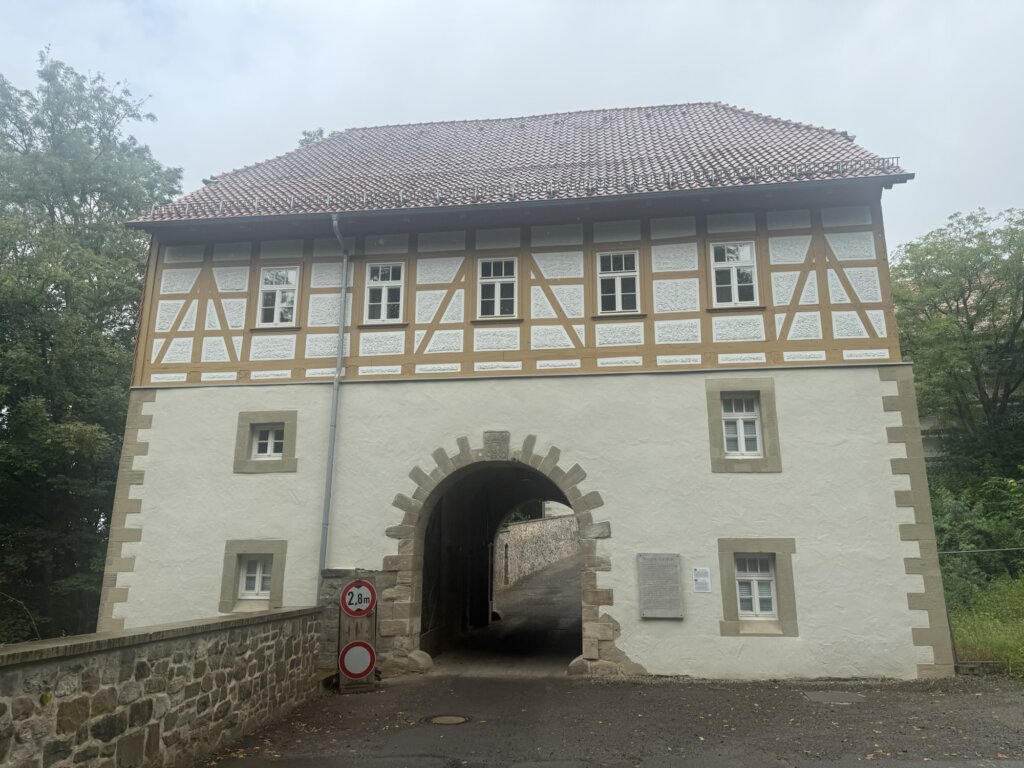
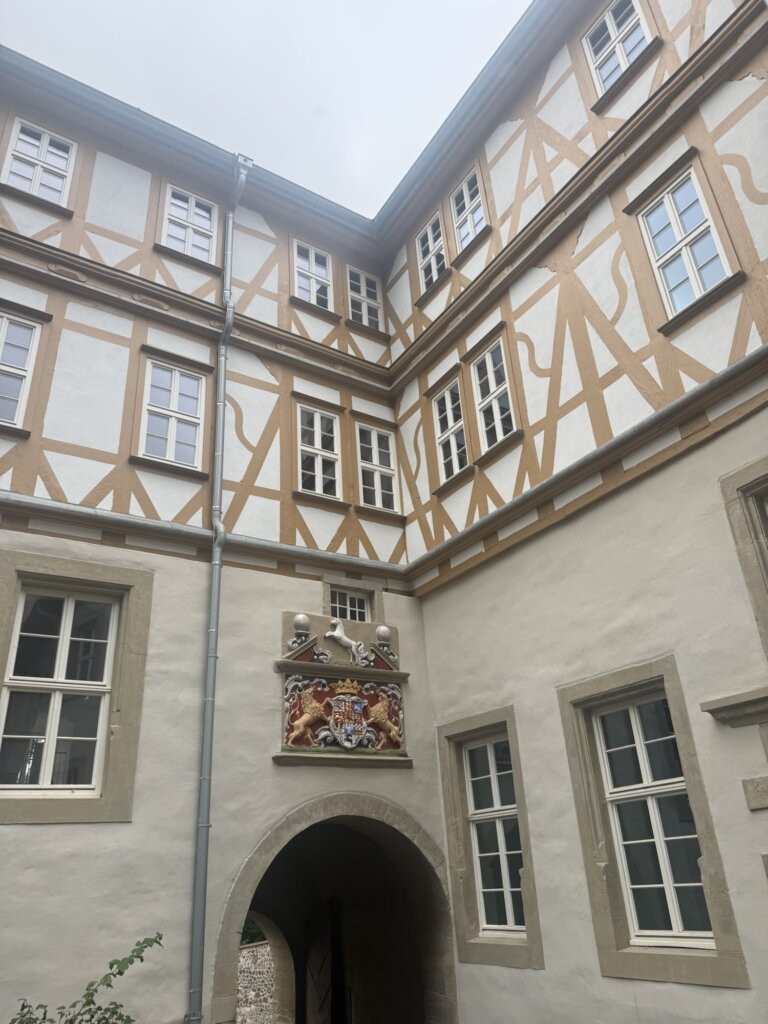
Often referred to as the Welfenschloss, Schloss Herzberg crowns a wooded hill above the town of Herzberg am Harz and is today regarded as one of the largest Renaissance castle complexes in timber‑frame construction in Niedersachsen. Its origins go back to a medieval hunting lodge and fortifications that were first mentioned in the 12th century, and the site came early into the possession of the Welf dynasty, whose rule left a lasting mark on the region. After a devastating fire in 1510 destroyed the earlier buildings, the complex was rebuilt in the 16th century as a four‑winged Renaissance palace: lower levels in sandstone and the upper storeys largely in elaborate half‑timbered architecture, which gives the ensemble its distinctive appearance today. For centuries it served as a residence and administrative centre for various lines of the Welfs, including the dukes of Braunschweig‑Grubenhagen, making the castle a political and cultural focal point for the southern Harz.
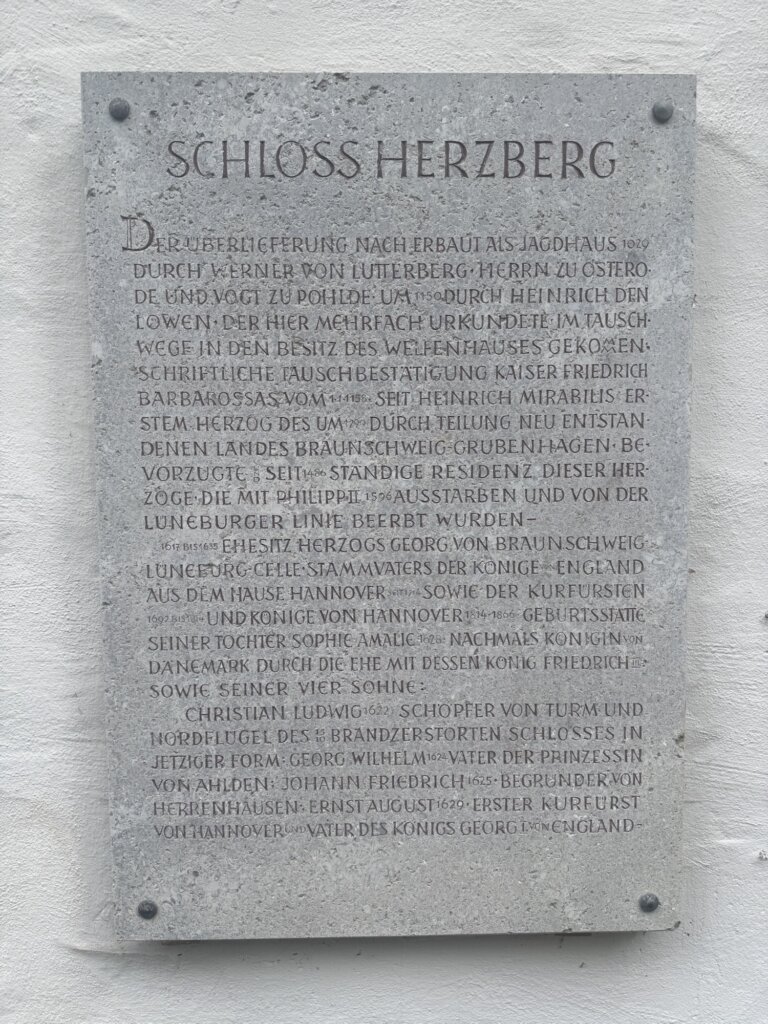
The castle’s history is closely intertwined with figures who played roles far beyond the Harz itself, and this is one of the aspects that makes a visit particularly rewarding. Herzberg was a preferred and later permanent residence of the dukes of Braunschweig‑Grubenhagen, and in the early 17th century Herzog Georg von Calenberg – ancestor of the later electors and kngs of Hannover – had his residence here for years, from 1617 to 1636. Through the Hanoverian line of the Welfs that emerged from this family branch, Schloss Herzberg is seen as a ‘cradle’ of both the Hanoverian and, via personal union, the English royal house, a connection that the museum and local historians emphasise quite strongly. Portraits of Welf rulers and exhibits around their European role underline that this seemingly provincial hilltop castle actually stood at the crossroads of wider dynastic history.
From the 19th century onwards the function of the castle shifted from noble residence to state and civic uses, reflecting broader political changes in the region. After the Welf territories fell to Preussen in 1866, parts of the complex were adapted for administrative purposes, and the local Amtsgericht (district court) has been housed in the castle since the 1880s. Over time, further sections were converted into cultural spaces, notably the impressive Rittersaal, which today serves as a venue for concerts, exhibitions, lectures and even wedding ceremonies, giving the historic architecture a contemporary role without stripping it of character. Walking through the grounds, you can sense how layers of medieval, early modern and modern history coexist: timber‑frame façades with ornate details, the massive tower, and wings named Stammhausflügel, Grauer Flügel, Sieber‑Flügel and Marstall all still define the layout.
Today Schloss Herzberg is open to visitors and houses the Museum Schloss Herzberg, which uses the historic rooms to present both castle and regional history in a pleasantly compact way. The permanent exhibitions cover the Welf dynasty and its European links, the development of the town and its crafts – from the Herzberg rifle manufactory to organ building by the Engelhardt family – as well as forestry, mining and everyday life in the southern Harz, so you gain a rounded picture of how people lived and worked around the castle. A highlight for many is the replica of the Evangeliar Heinrichs des Löwen and the so‑called Welfenwiege, which visually anchor the site’s claim as a dynastic birthplace, while special exhibitions and guided tours add more detail for those inclined to dig deeper.
Schloss Herzberg
Herzberg am Harz
Germany
Loading map...
