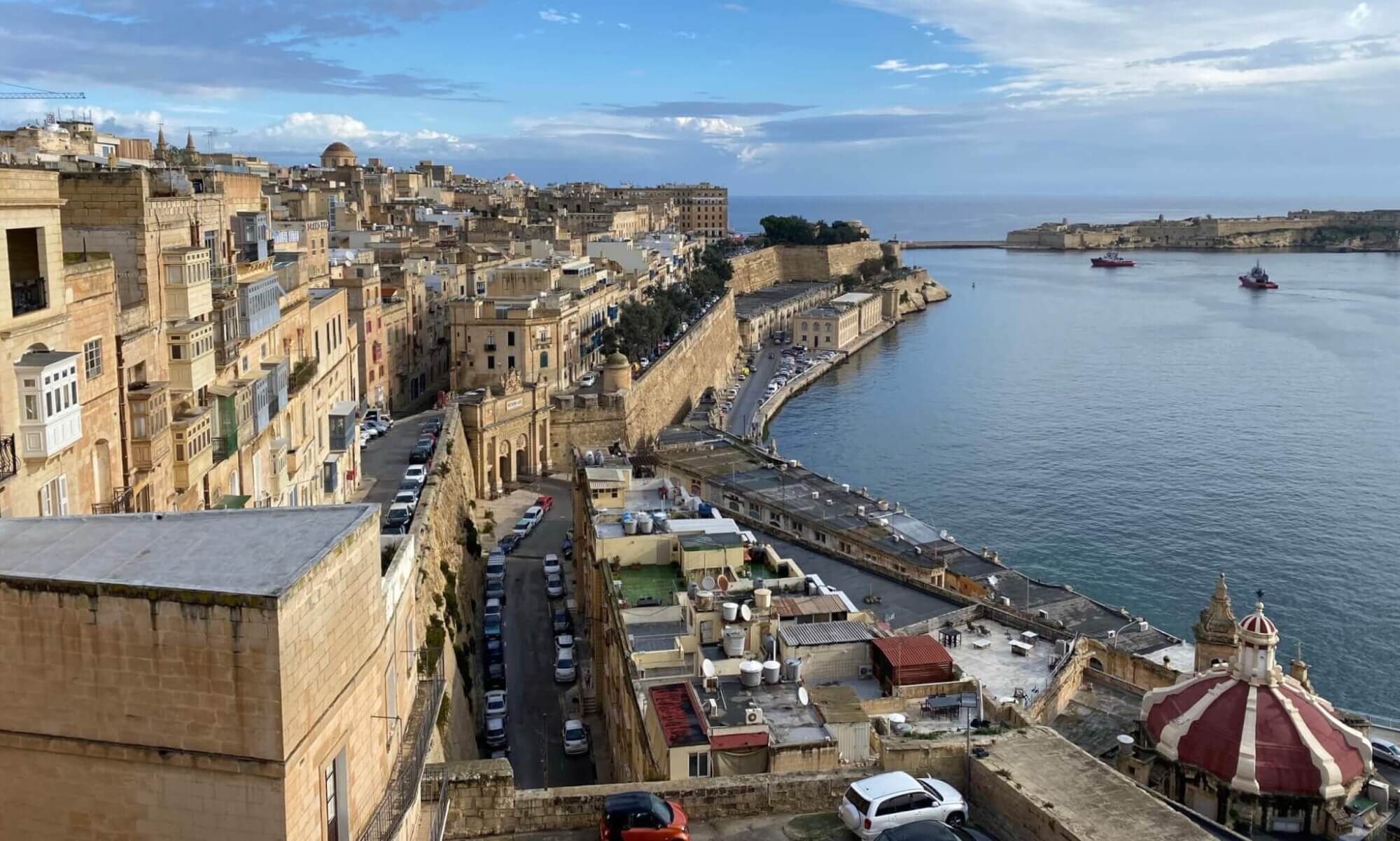
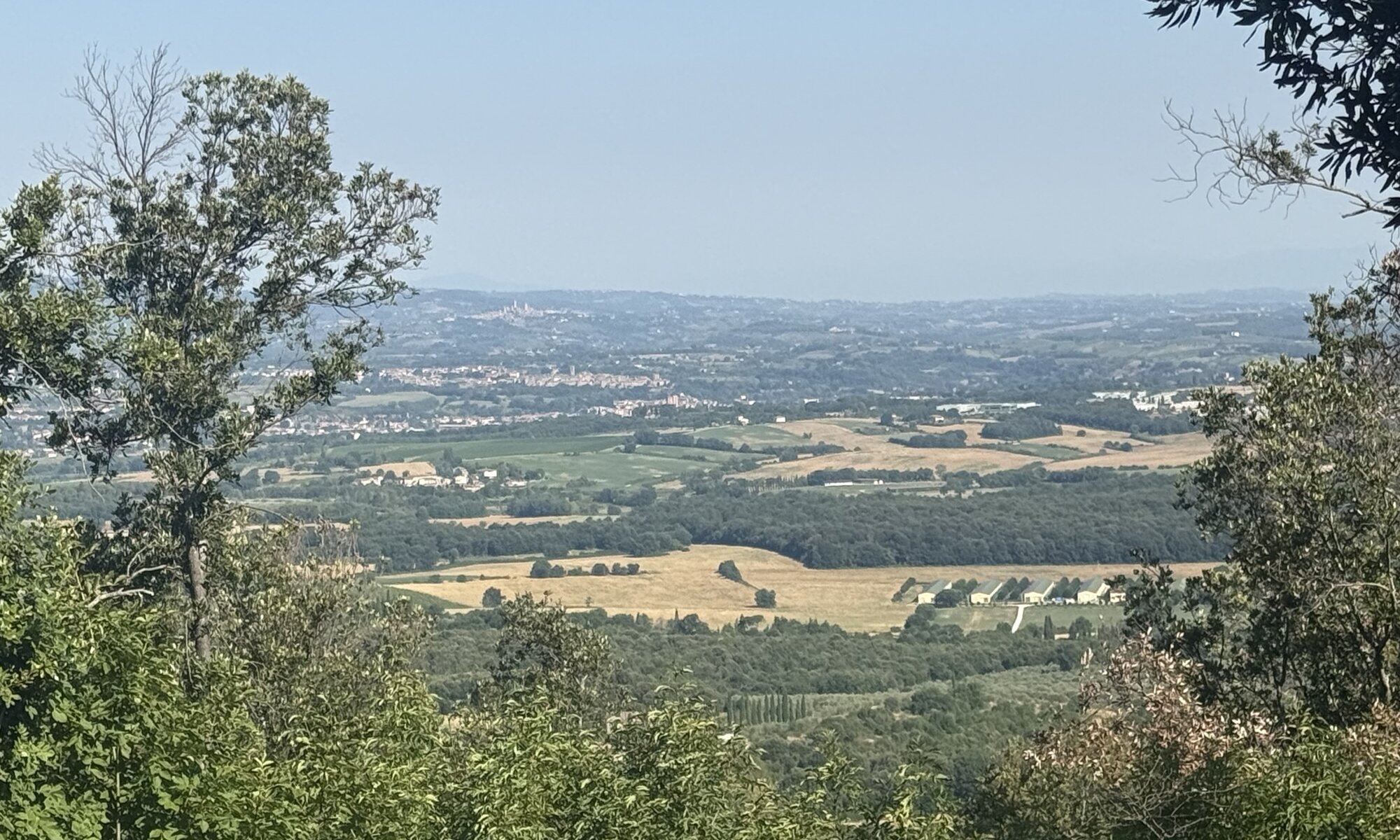
Montemaggio is a rounded, wooded hill in the Montagnola Senese, rising to roughly 670 metres above sea level in the municipality of Monteriggioni, north of Siena in central Tuscany. The hill forms one of the higher points of the gentle, rolling landscape between Siena and Colle di Val d’Elsa, and is reached by country lanes and forest tracks that thread through chestnut, oak and holm-oak woodlands. From its slopes you get the classic patchwork views of Chianti – vineyards, olive groves and hamlets punctuating the soft folds of the countryside – while the summit area includes an old farmhouse known as Casa Giubbileo and small karst features and caves in the limestone that give a hint of the hill’s geological variety.
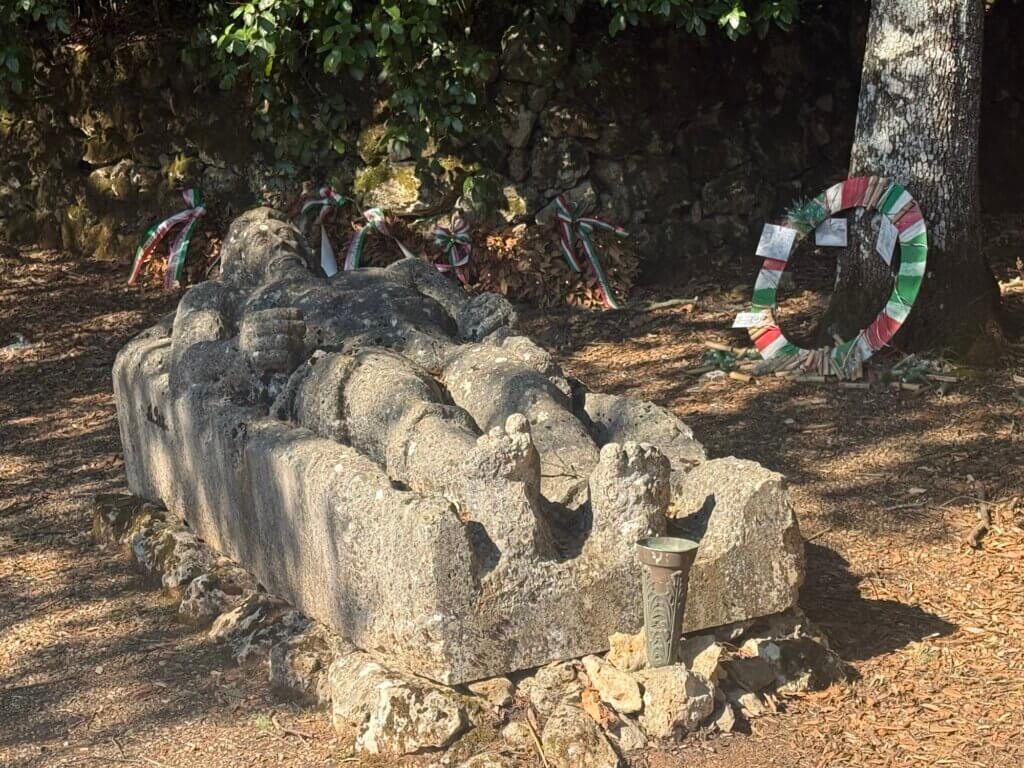
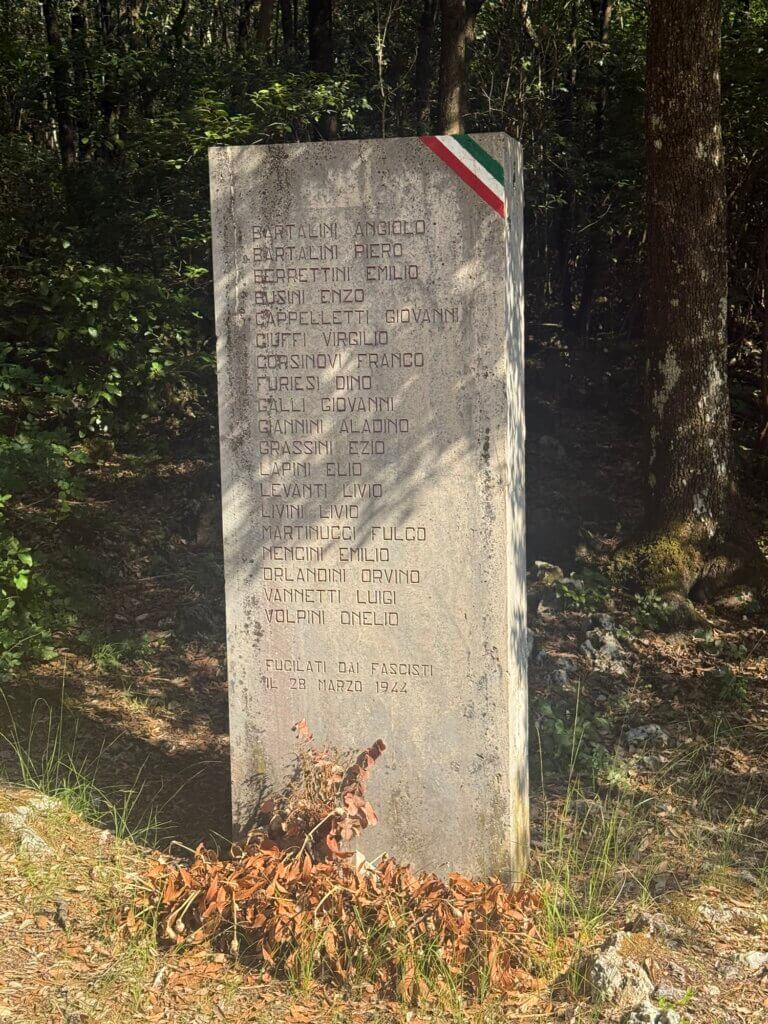
The place has a sombre history from the Second World War: in late March 1944 a group of young partisans had gathered at Casa Giubbileo to organise actions against fascist and German lines of communication, and they were surrounded by a fascist unit the following morning. After running out of ammunition many surrendered; several were killed on the spot while others were transported a short distance and executed in a place locally called La Porcareccia. Nineteen members of those bands lost their lives in the episode, a violent episode remembered locally as the massacre of Montemaggio; only a very few managed to escape into the woodland, carrying the memory of what happened with them.
Today the site of Casa Giubbileo and the Porcareccia area are marked by memorials and interpretative panels, and there is a small local museum space that preserves documents and tells the story of the Resistance in the Siena area. Near the farmhouse there are plaques and two graves marking those who fell where they were shot, and further along the route a sculptural work commemorates the group executed after surrender; the landscape itself is threaded with a marked path, the Via Giubbileo, which serves both walkers and those wishing to pay respects. Local history associations and the regional Institute for the History of the Resistance look after the material memory and guide visitors who want a deeper understanding of the events and their wider historical context.
Remembrance in the present day combines solemn commemoration with community events: each year there is a local commemorative ceremony on the anniversary in March – often including speeches, readings and oral testimonies – while in recent years the site has also become the focus for a broader cultural gathering, the Montemaggio festival of memory, which mixes walking on partisan trails, talks and music to keep the story alive for younger generations. Additionally, the lanes around Montemaggio are used by cyclists and local clubs stage an amateur bike race up and around the hill as part of the region’s sporting calendar, an event that blends athletic challenge with a quieter, respectful acknowledgement of the past. These combined practices – formal remembrance, educational activities and community sporting life – ensure that Montemaggio remains both a lived landscape and a place of memory.
Montemaggio
Tuscany
Italy
Loading map...
