Montjuïc is Barcelona’s great green hill above the harbour, a place where gardens, museums, sports venues and a fortress combine into one of the city’s most rewarding areas to explore. It is more than a single landmark: its slopes contain reminders of Catalonia’s artistic, political and military history, while its elevated position provides some of the finest views over the city and the Mediterranean. For a visitor with a little time to spare, it rewards a slow walk as much as a quick sightseeing visit.
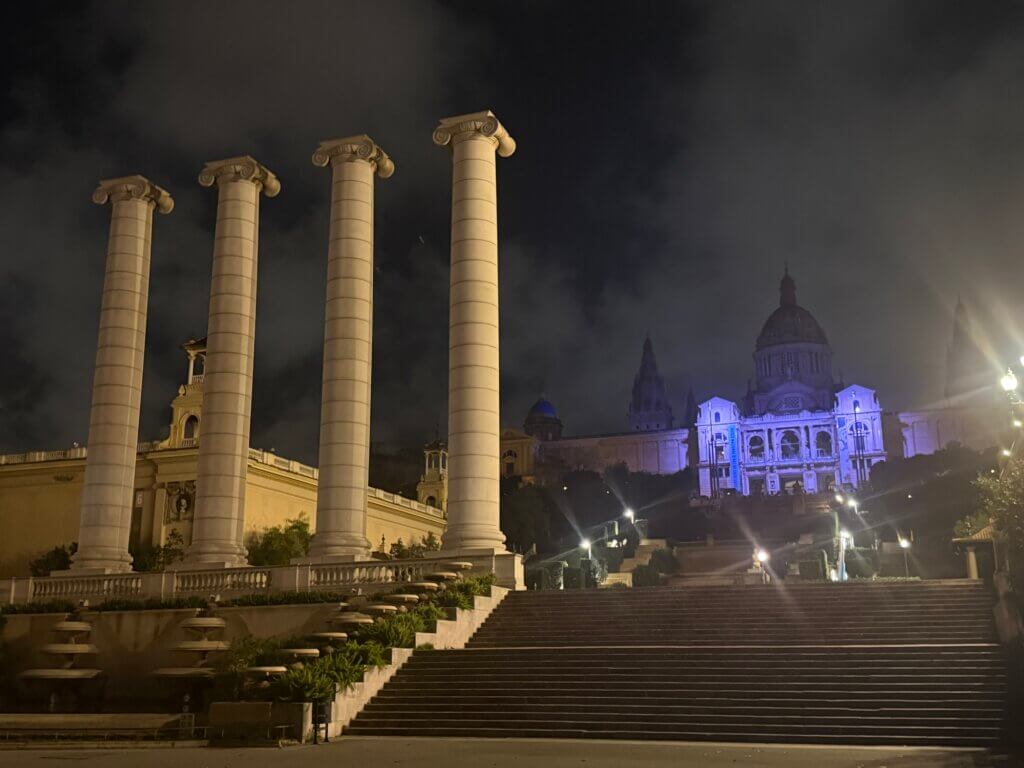
The hill’s modern appearance owes much to the Exposició Internacional de Barcelona 1929, the international exhibition that transformed Montjuïc into a showcase for industry, art and architecture. Its most enduring legacy is the MNAC, the Museu Nacional d’Art de Catalunya, housed in the imposing Palau Nacional at the top of the grand approach from Plaça d’Espanya. The museum is particularly celebrated for its Romanesque collections, but it also presents Gothic, Renaissance, Baroque and modern Catalan art. Nearby, the Font Màgica was created for the same exhibition; today its illuminated water-and-music displays remain one of Barcelona’s most atmospheric evening experiences.
Getting up the hill is part of the experience, and Montjuïc has two cable transport systems that are easily confused. The Funicular de Montjuïc, opened in 1928 for the exhibition, links Paral·lel with the upper part of the hill and is part of the public transport network. From there, the Telefèric de Montjuïc is a separate aerial cable car that continues towards the castle, offering sweeping views on the way. The original harbour cable car, the Telefèric del Port, is a third aerial route and connects the waterfront with the hill, but it is distinct from the mountain cable car.
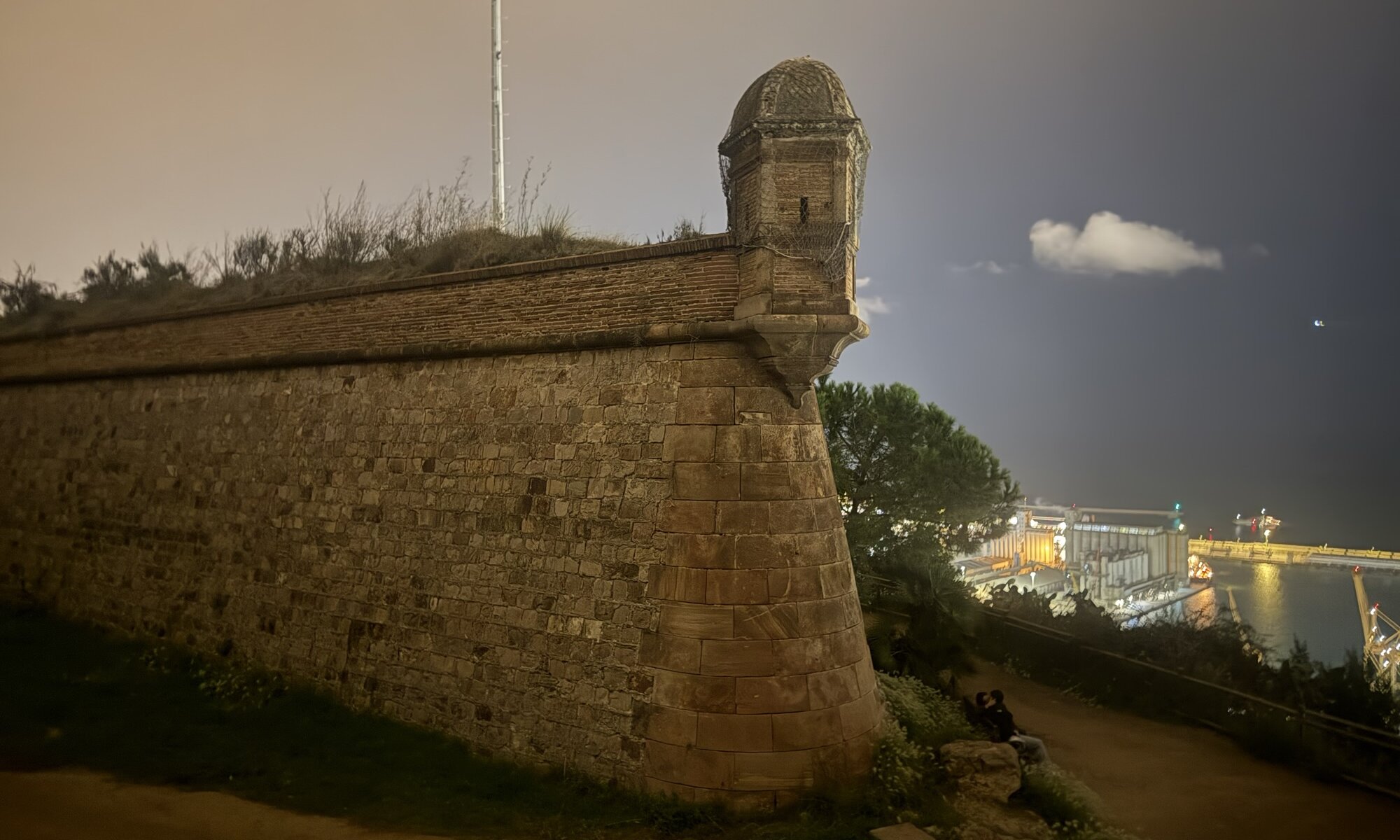
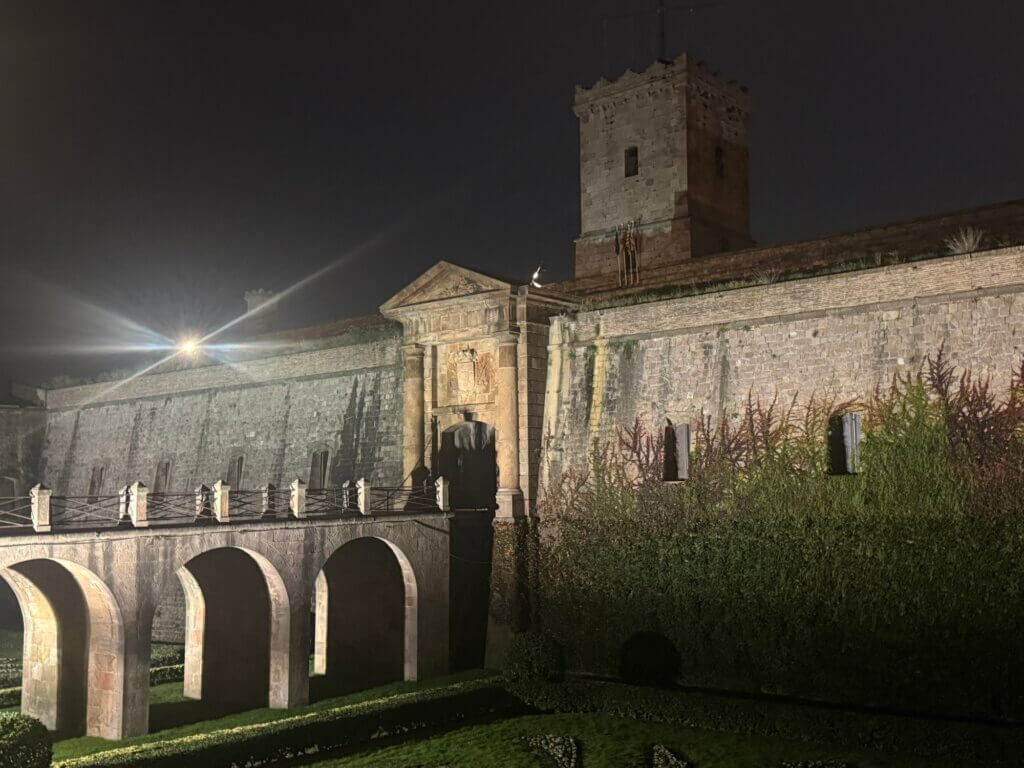
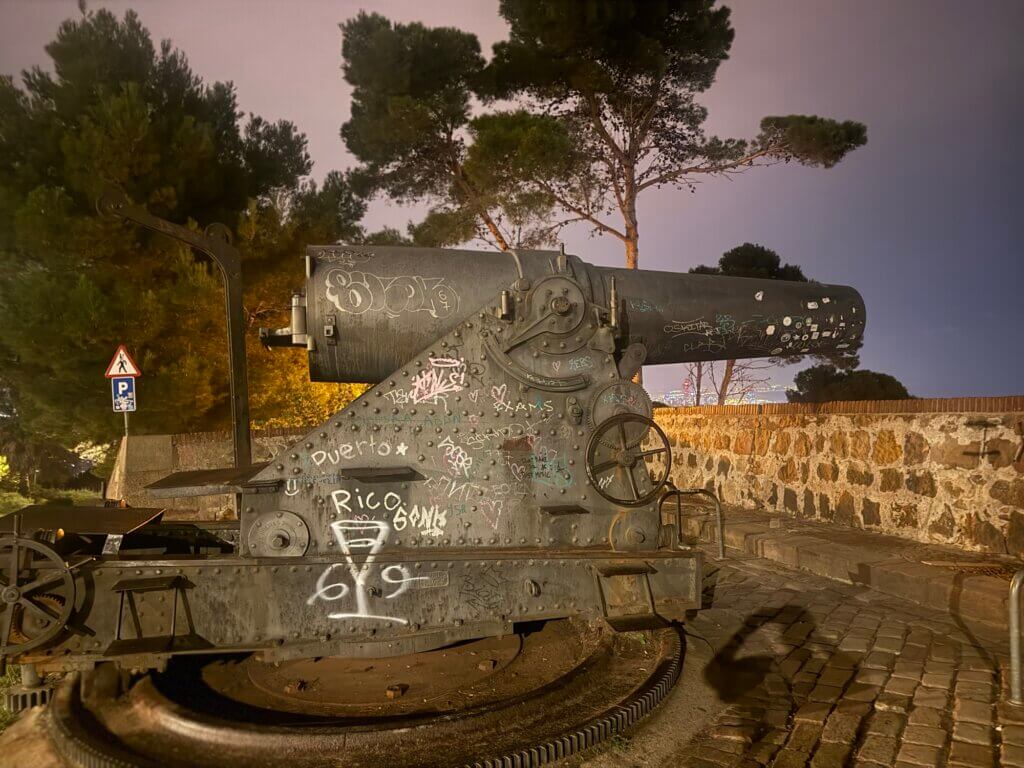
At the summit stands the Castell de Montjuïc, a fortress whose history is far darker than its panoramic terraces suggest. After Barcelona’s defeat in 1714, it became a symbol of control over the city, and under the Franco dictatorship it served as a prison and place of repression. Lluís Companys, President of the Generalitat de Catalunya, was executed there in 1940 after being handed over to the Franco regime by German Gestapo. Today the castle is a cultural site and viewpoint, allowing visitors to confront that history while looking across the port and city.
Elsewhere on Montjuïc, the Fundació Joan Miró is one of the hill’s essential cultural stops. Designed by Josep Lluís Sert and opened in 1975, it presents a major collection of Miró’s paintings, sculptures, drawings and prints, with terraces that frame both the art and the city below. Together with the gardens, the Olympic facilities, Poble Espanyol and the MNAC, it makes Montjuïc a place where Barcelona’s artistic ambition, turbulent past and contemporary life are unusually visible in one compact landscape.
Montjuïc
Barcelona
Spain
Loading map...
