The Argentine peso (ARS) has been Argentina’s national currency since 1881, although the country has repeatedly redenominated it after periods of severe inflation and economic crisis. The current peso dates from 1992, when it replaced the austral at a rate of 10,000 to 1. Since then, inflation, currency controls and sharp devaluations have repeatedly reduced its purchasing power, making exchange rates a practical concern for visitors rather than a mere financial detail.
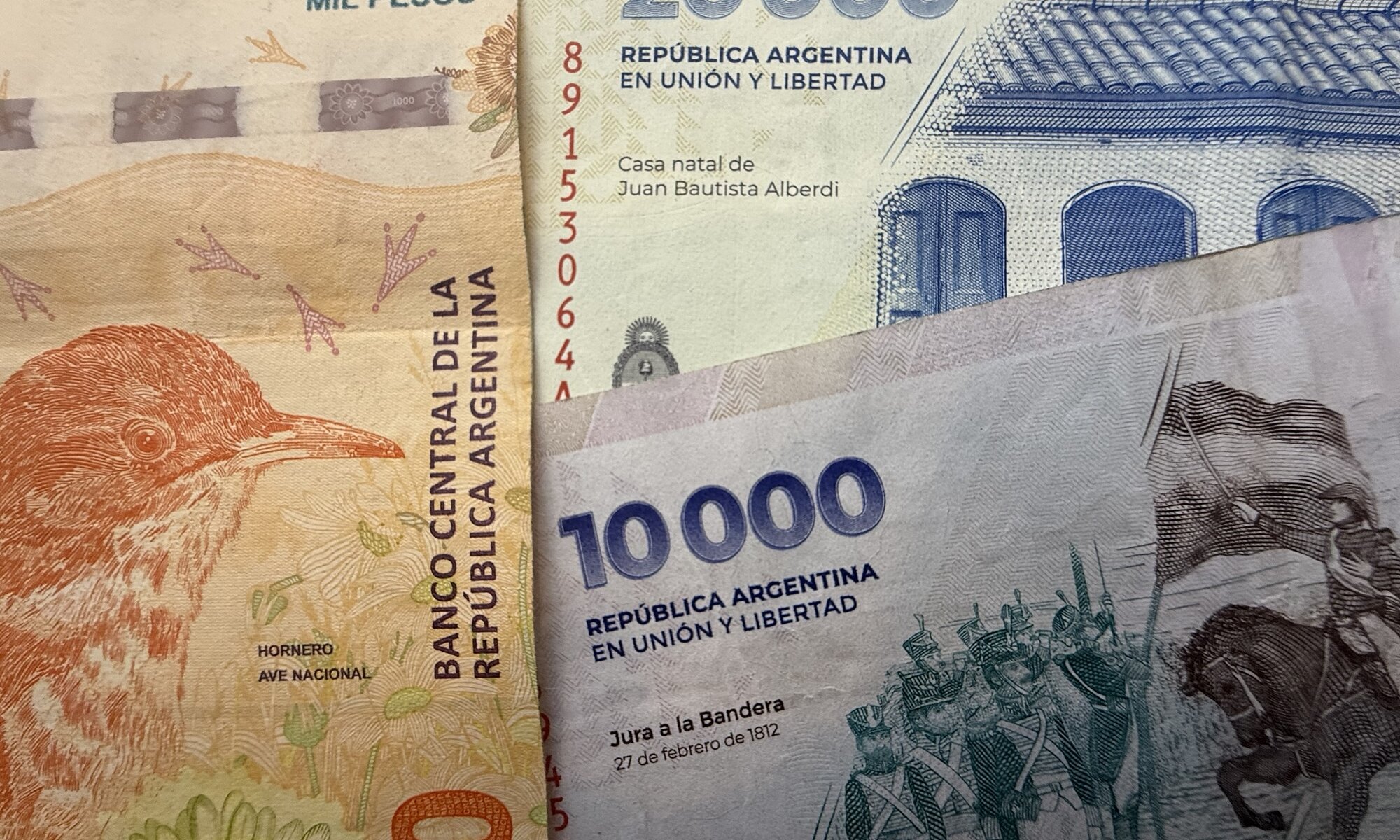
Argentine banknotes combine portraits from the country’s political and cultural history with native wildlife. Earlier notes featured figures such as José de San Martín, Manuel Belgrano, Domingo Faustino Sarmiento and Eva Perón, while the newer fauna series depicts animals including the rufous hornero, jaguar, southern right whale, taruca, Andean condor and guanaco. The notes are therefore quite easy to recognise once you know the designs: they present Argentina through both its national story and its landscapes.
Tourists do not need to carry large amounts of cash. International Visa and Mastercard payments are widely useful in hotels, restaurants, shops and museums, and in 2026 foreign-card transactions generally receive an exchange rate close to the MEP or financial rate. Nevertheless, keep a modest supply of pesos for taxis, small cafés, public transport, markets, tips and smaller establishments, particularly outside Buenos Aires. Exchange-rate conditions change quickly, so check the current rate shortly before travelling rather than relying on an old guide.
For cash, the most sensible approach is usually to withdraw a small amount from a reputable bank ATM or exchange euros or US dollars at a registered casa de cambio. ATMs can involve fixed fees and withdrawal limits, while exchanging cash through informal street dealers or cuevas carries both legal and personal-security risks; moreover, the former advantage of the so-called blue-dollar market has narrowed considerably in 2026. Use a card for larger payments, carry only what you need for the day, and keep reserve funds separately – especially in crowded areas of Buenos Aires.
Peso
Argentina
Loading map...
