
Montevideo’s principal civic square: a broad urban space that forms the threshold between the colonial streets of Ciudad Vieja and the more modern city centre. It is important because much of Uruguay’s national story is concentrated here, in a setting where government, culture, memory and everyday city life meet. The square occupies the site of the former Spanish citadel, whose fortifications once defended the colonial settlement; after independence, the walls were removed and the area was reshaped to connect the old town with the expanding capital.
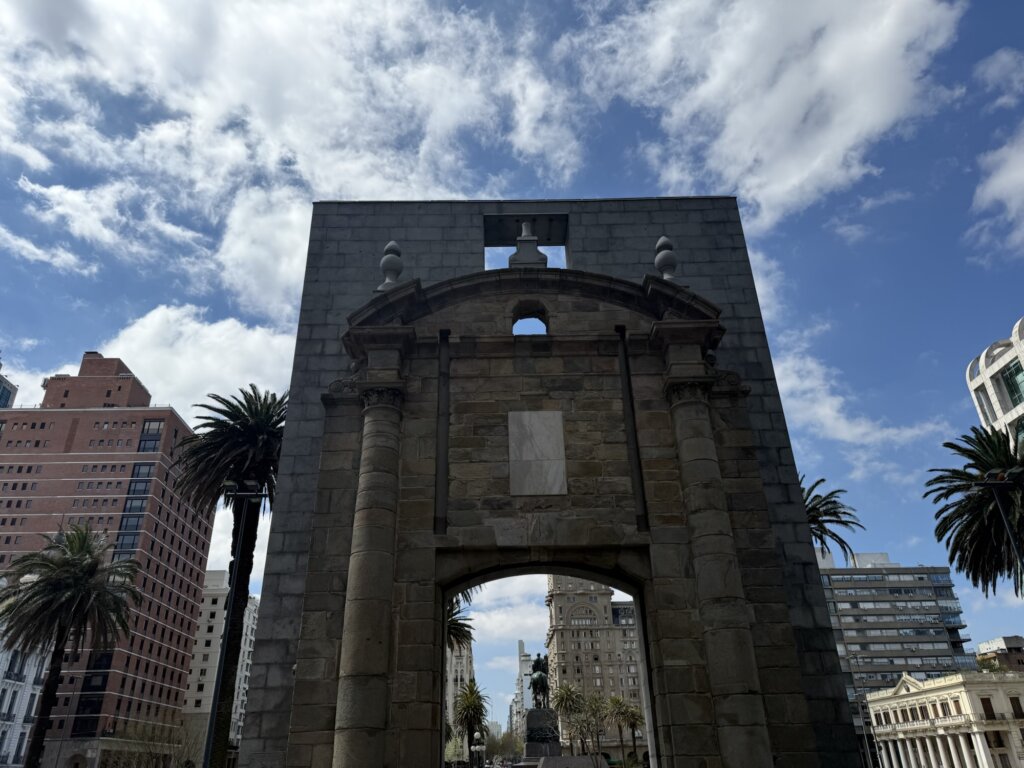
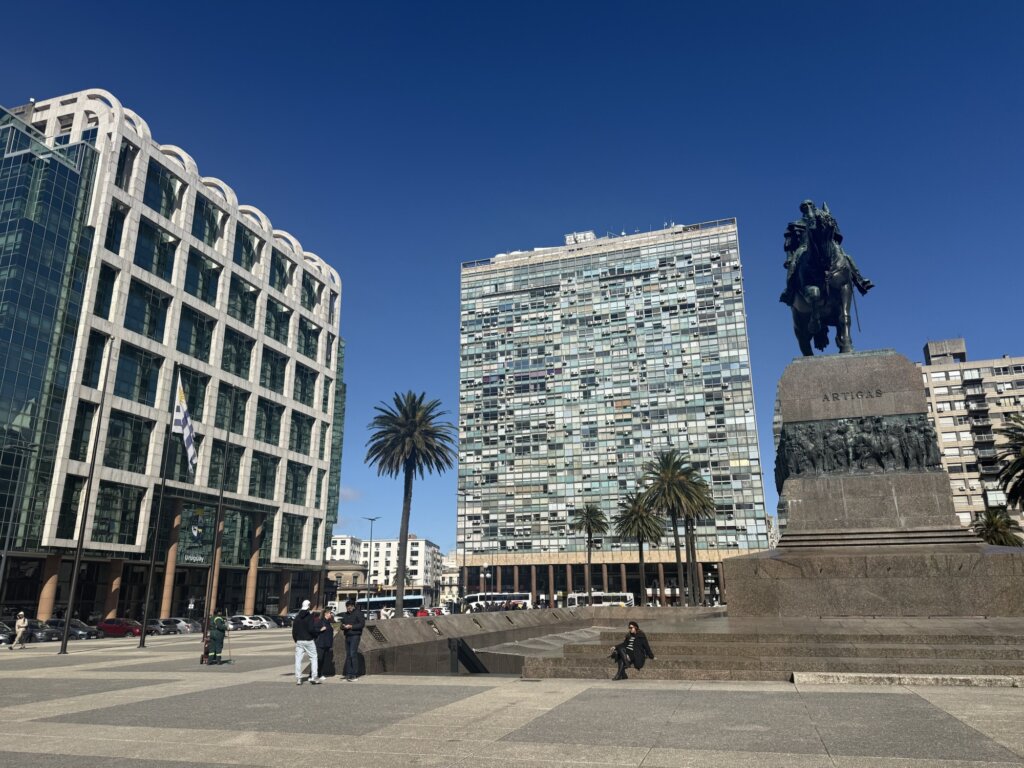
At the Ciudad Vieja end stands the Puerta de la Ciudadela, or Citadel Gate, one of the most tangible remnants of the old fortress. Passing beneath it provides a particularly clear sense of the transition from the enclosed colonial city to the open square beyond. At the centre rises the imposing Artigas monument, dedicated to José Gervasio Artigas, Uruguay’s foremost independence figure. Beneath the statue lies his mausoleum and grave, making the plaza not simply a landmark but a place of national commemoration.
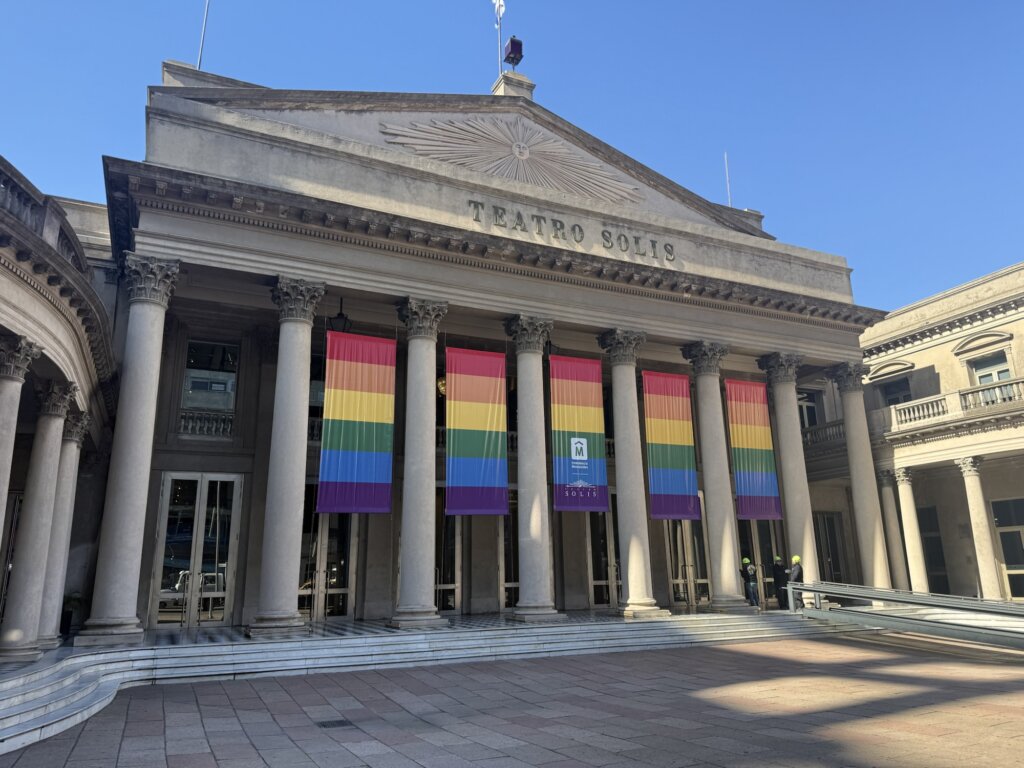
The square is also closely associated with Montevideo’s cultural life through the Teatro Solís, immediately beside it. Opened in 1856, this grand neoclassical theatre is Uruguay’s leading historic performance venue and reflects the city’s nineteenth-century ambition to establish itself as a cultivated capital on the Río de la Plata. Its position beside the plaza gives the area a special character: a short walk can take you from the physical traces of Spanish colonial rule to a theatre built for opera, drama, music and public cultural life.
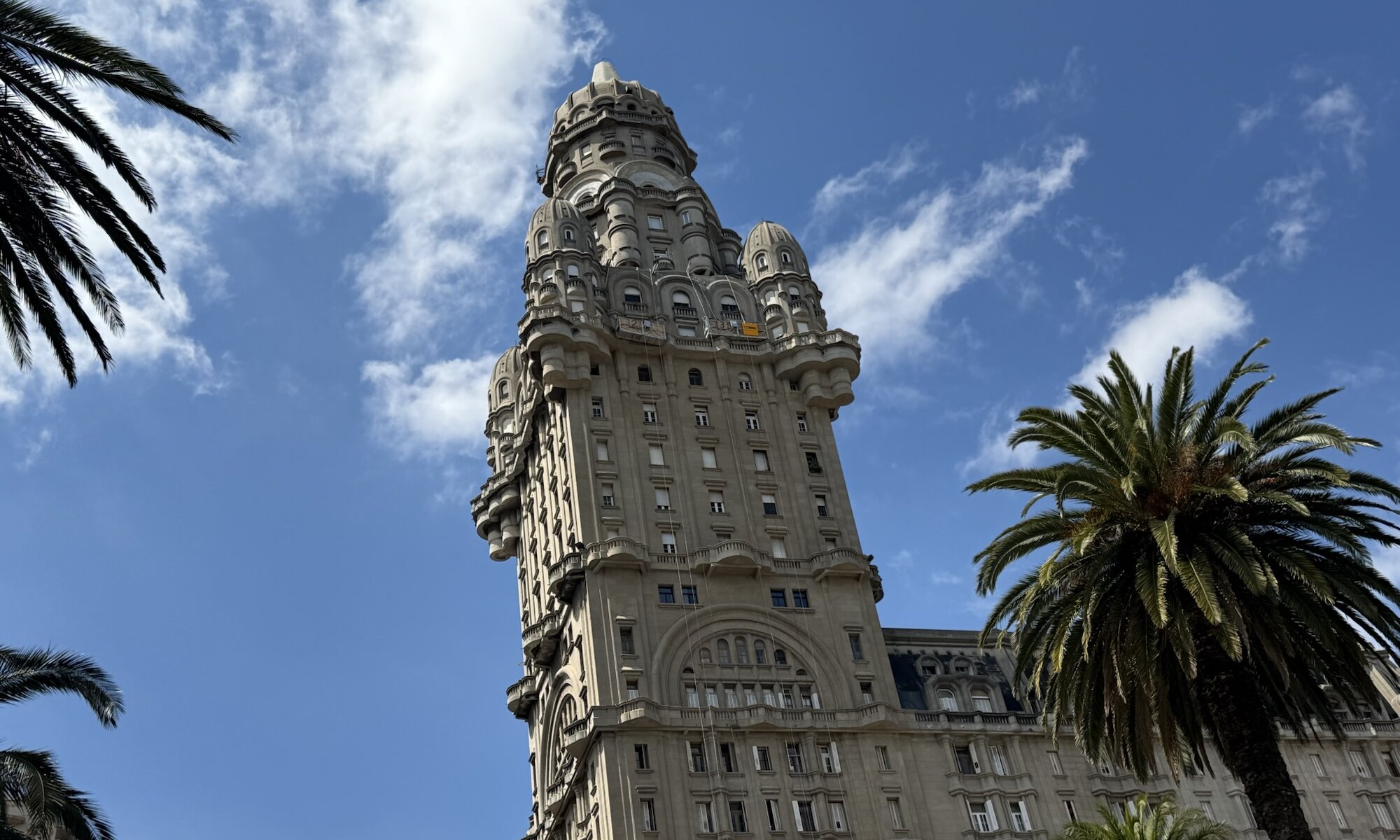
At the opposite end, the extraordinary Palacio Salvo dominates the skyline with its richly ornamented tower. Completed in 1928, it was briefly the tallest building in Latin America and remains one of Montevideo’s defining images. It has an architectural twin across the Río de la Plata in Buenos Aires: the Palacio Barolo, designed earlier by the same Italian architect, Mario Palanti. The intended relationship between the two buildings gives Plaza Independencia an appealing wider connection with Buenos Aires, while the Salvo itself anchors the square as a bold symbol of Montevideo’s twentieth-century confidence.
José Gervasio Artigas
José Gervasio Artigas was born in Montevideo in 1764 and became the central figure in the struggle for self-government in the Banda Oriental, the territory that would later become Uruguay. After gaining practical knowledge of the countryside and military experience in the Spanish colonial forces, he joined the revolutionary movement against Spanish rule in 1811. His victory at Las Piedras that year made him the leading military voice of the eastern province, while the long march of civilians and followers known as the Éxodo del Pueblo Oriental helped establish his extraordinary bond with ordinary rural people.
Artigas was more than a commander: he was a political thinker who resisted the idea that the region should simply be controlled from Buenos Aires. He promoted federalism, meaning that provinces should govern themselves within a wider union, and he led the Federal League, an alliance of provinces in the Río de la Plata region. His programme also included far-reaching ideas for the period, notably land redistribution and greater protection for rural and Indigenous communities. These principles put him in conflict both with centralist political leaders and with powerful landowning interests.
Although Portuguese forces invaded from Brazil and his movement was ultimately defeated, forcing Artigas into exile in Paraguay in 1820, his importance to Uruguay endured. He did not live to lead the independent republic that emerged in 1828, but he supplied much of its moral and political foundation: independence, republican self-rule, local autonomy and social justice. For that reason Uruguayans regard him as the father of the nation; his name, flag, monuments and mausoleum remain prominent features of public life, particularly in Montevideo.
José “Pepe” Mujica
José “Pepe” Mujica was Uruguay’s president from 2010 to 2015, with the presidential offices at Plaza Independencia forming part of the setting from which he led the country. His path to the presidency was unusually turbulent: as a young man he belonged to the left-wing Tupamaros movement, was imprisoned for many years during the era of military rule, and later entered democratic politics after Uruguay’s return to civilian government. His presidency became associated with progressive social reforms and with a direct, plain-spoken political style that made him recognisable far beyond Uruguay.
What most captured public attention was the contrast between his office and his personal life. Rather than moving into the official presidential residence, Mujica remained at his modest flower farm outside Montevideo with his wife, Lucía Topolansky. He was often seen in informal clothes, drove an ageing Volkswagen Beetle, and gave away much of his presidential income to charitable and social causes. He did not describe himself as poor; instead, he saw voluntary simplicity as a way to retain time, independence, and freedom from possessions.
That consistency made him popular with many Uruguayans and turned him into an international symbol of political humility. Mujica’s unpolished manner, fondness for mate, and willingness to live much as he had before taking office made him appear accessible in a profession often associated with privilege and ceremony. He died in May 2025, aged 89, but his legacy remains especially visible in Montevideo: a leader remembered less for grandeur than for an insistence that public service should remain close to ordinary life.
Plaza Independencia
Montevideo
Uruguay
Loading map...
