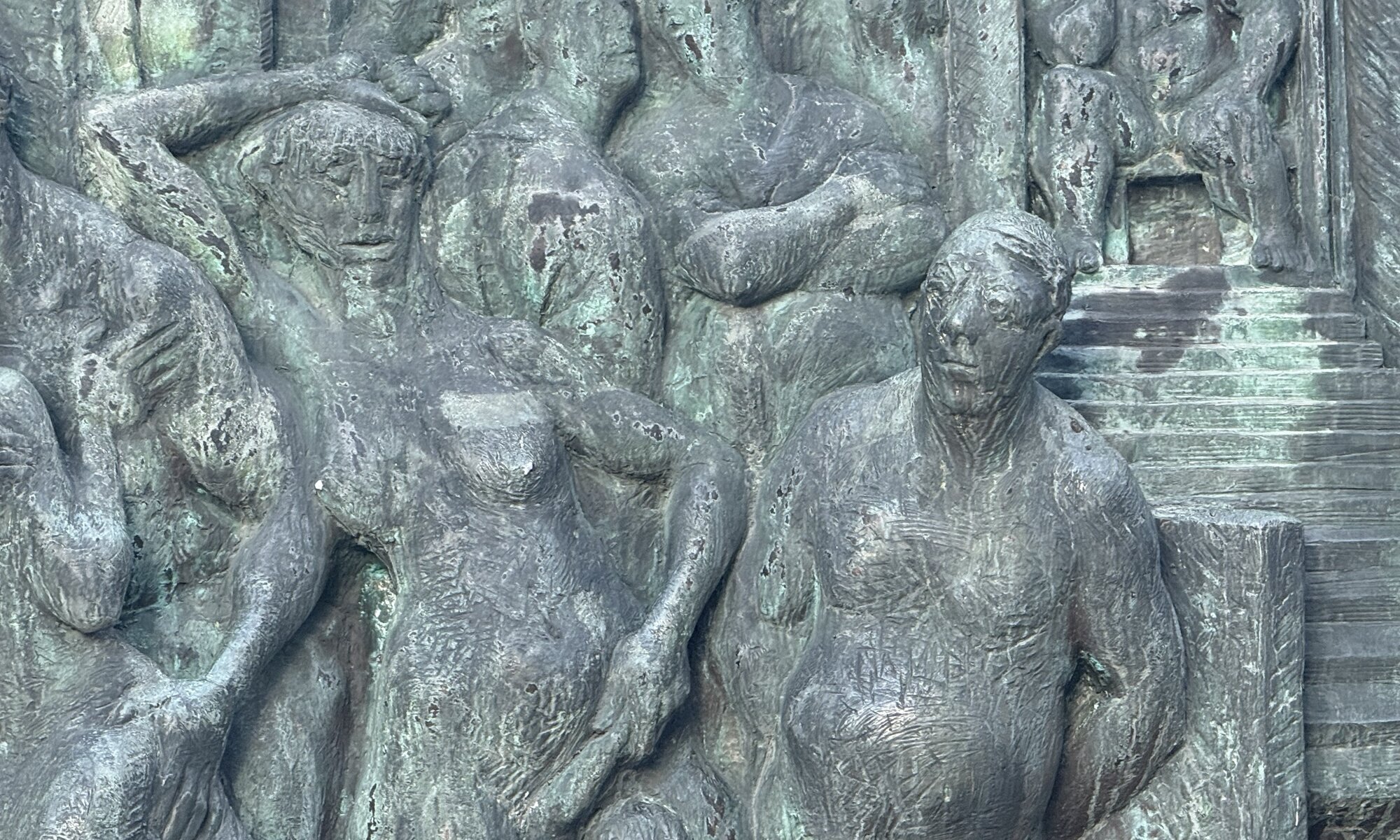
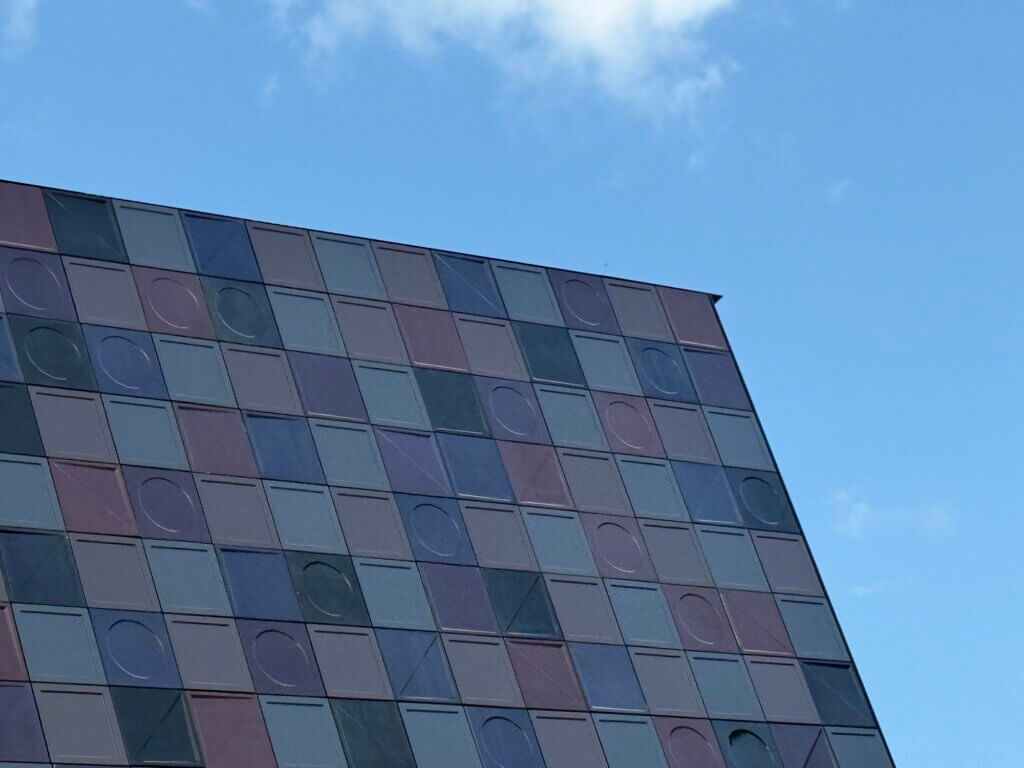
Jürgen Weber’s bronze relief Die Stadt was created in 1963/64 for the Stadthalle in Göttingen, at a time when the building itself was part of a new, modern post-war civic identity. It was conceived as an architectural companion piece for the terrace entrance, designed to animate the otherwise strict, geometric setting of the hall.
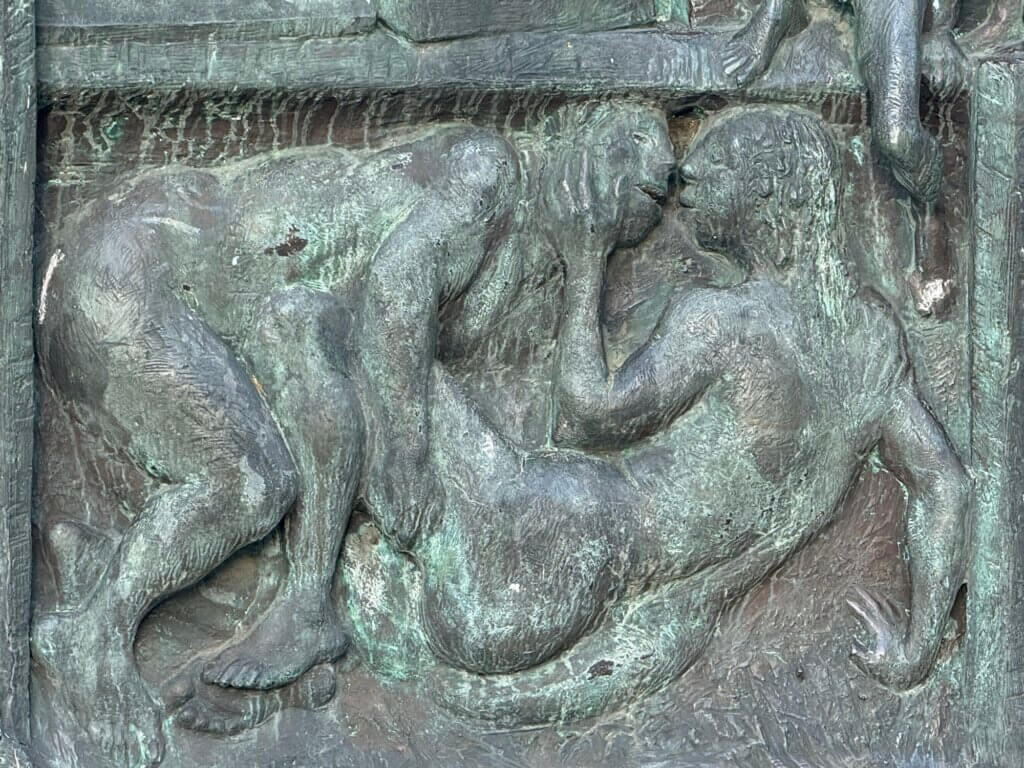
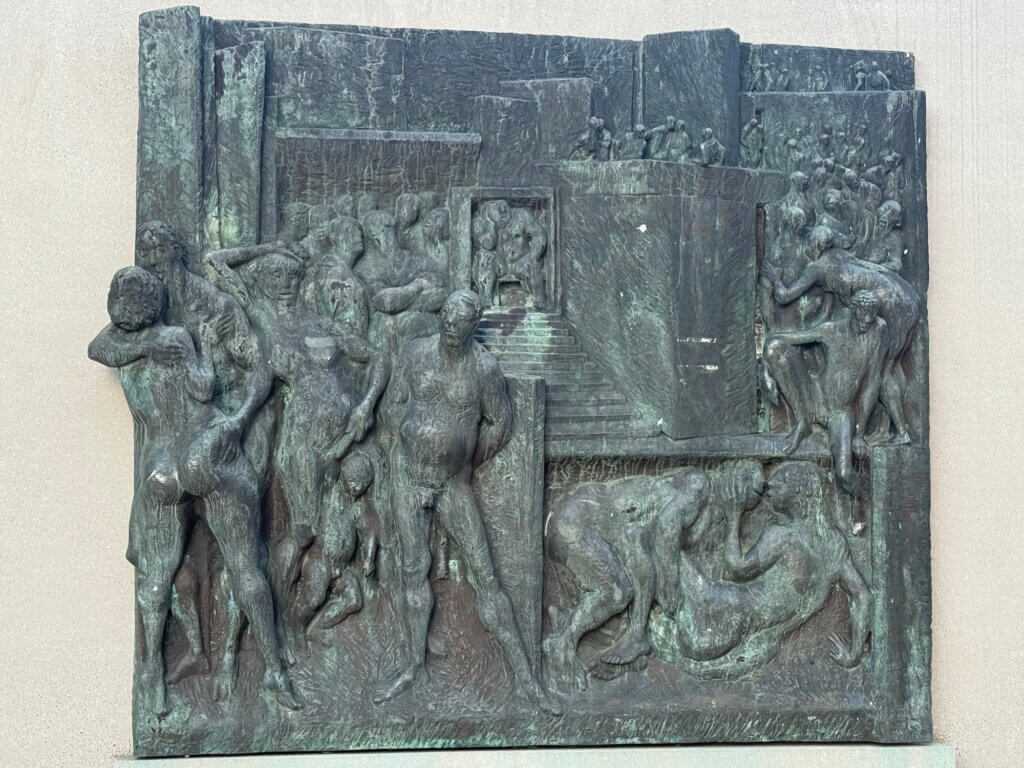
The relief does not present an idealised cityscape of buildings and monuments. Instead, it is crowded with human figures in shifting arrangements – individuals, couples, groups and masses – so the city appears as a living social organism rather than a neat urban plan. Weber’s focus is on people, bodies and relationships, suggesting that a city is made by human interaction rather than by stone alone.
What made the work controversial was its frank, expressive treatment of the body. Some critics in the 1960s found the naked and sometimes sexualised figures too direct, even shocking, and the piece prompted public indignation and heated debate in Göttingen. In a conservative atmosphere, the relief was seen by some not as public art but as an unwelcome provocation.
Over time, however, the reaction softened and the work became part of the city’s cultural memory. When the Stadthalle was renovated, the relief was taken down and later put back in place, which says a great deal about how its reputation changed: what once caused outrage is now generally regarded as an important and distinctive work of civic art.
Die Stadt
Stadthalle Göttingen
Göttingen
Germany
Loading map...
