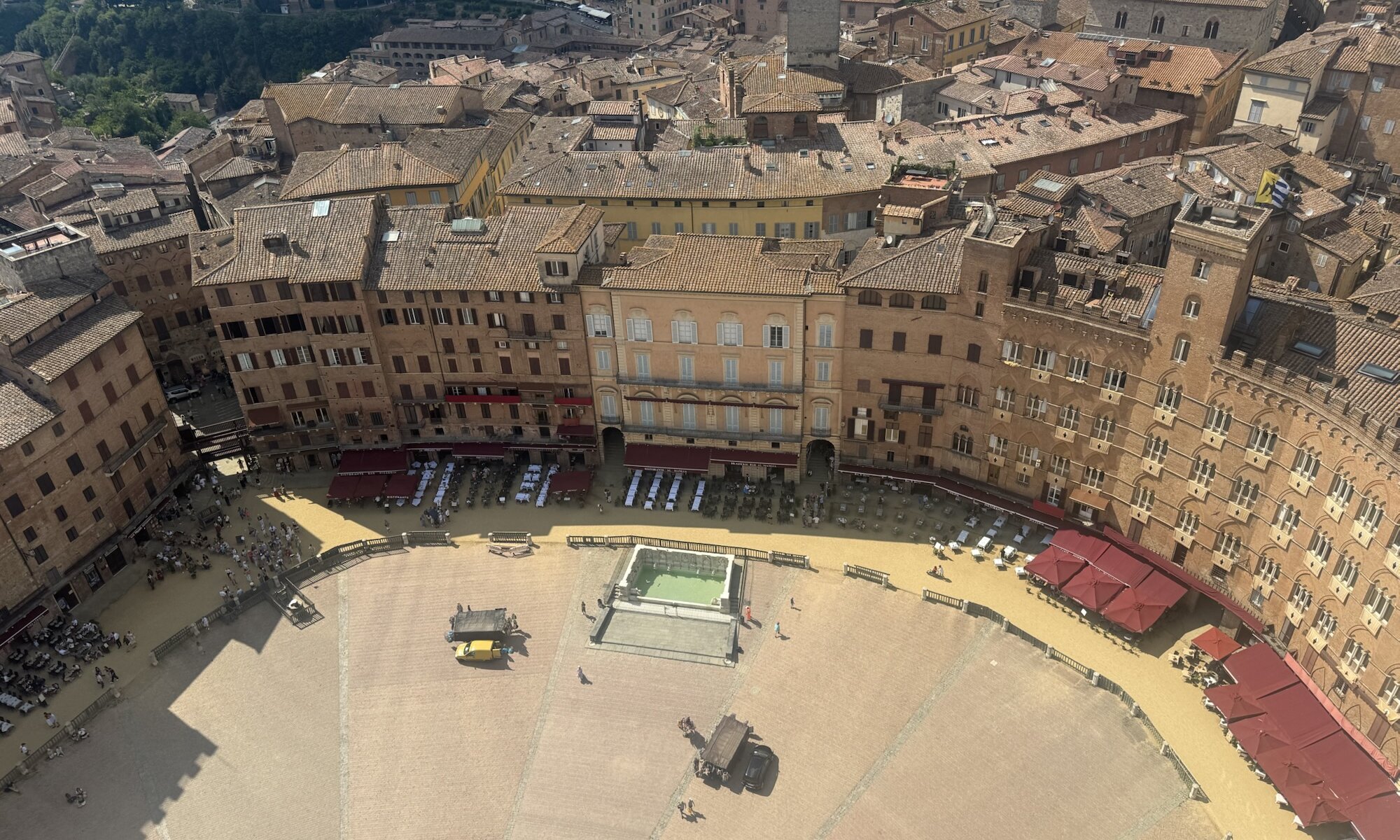
The Palio di Siena is a vivid, centuries-old horse race held in the shell-shaped Piazza del Campo, the civic heart of Siena. Rather than a sporting event in the modern sense, it is a communal and ritual spectacle where contrade – the city’s historic neighbourhood wards – compete fiercely for honour and prestige. The race itself is a short, intense sprint around the piazza, ridden bareback by jockeys who often ride horses they barely know. The atmosphere is theatrical: flags, banners, medieval costumes and drumming transform the city into a living pageant, so the Palio reads as much as a public celebration of Sienese identity as it does a competition.
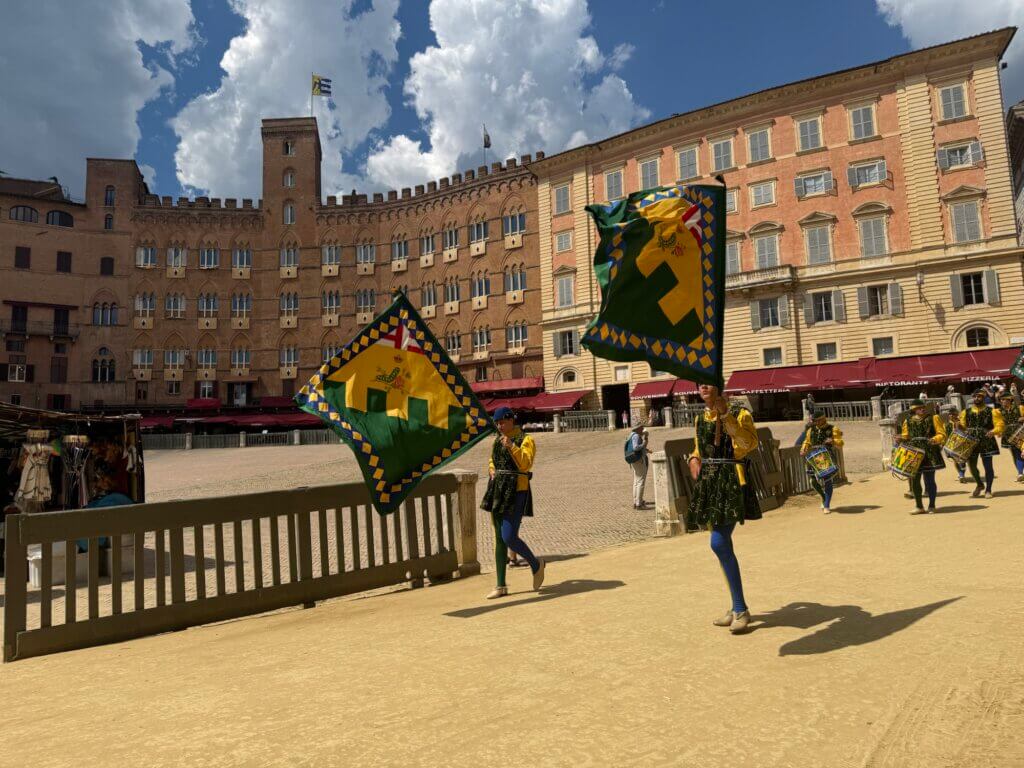
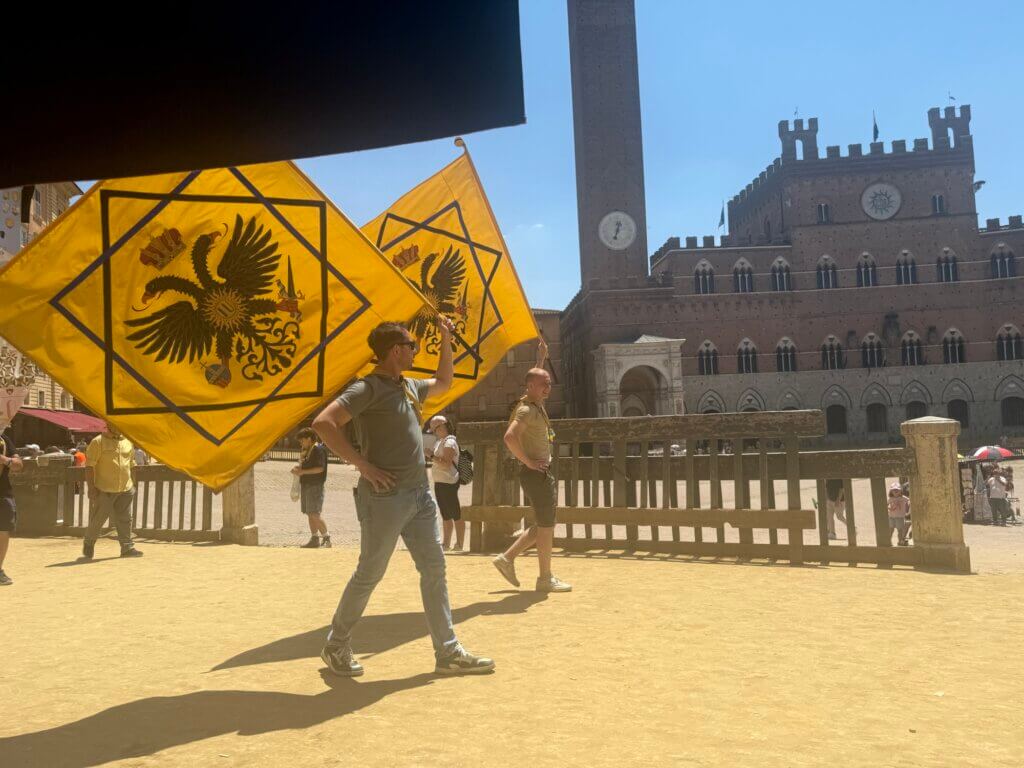
Its origins lie in medieval urban life, when city-states marked civic power, allegiance and communal rivalry through festivals, pageants and military displays. Over time these displays crystallised into the Palio, a structured contest that channels centuries of local pride and neighbourly rivalry into a ritualised form. The race links religious observance and civic politics – each Palio honours the Virgin Mary under a particular devotion – and through the contrade system it keeps alive social bonds and local allegiances that define community membership across generations.
Two Palios take place each year: one on 2 July, the Palio of Provenzano, and the other on 16 August, the Palio of the Assumption. Preparations begin weeks in advance with horse selection, blessing ceremonies, rehearsals of flags and banners, and negotiations between contrade; the actual race, however, is brief. The running lasts just three circuits of the piazza – typically under 90 seconds in elapsed time for the winner – although pre-race rituals, the parade and post-race celebrations stretch the event into a full-day and often multi-day affair for participants and spectators alike.
The Palio’s documented history stretches back to at least the 17th century in its recognisable form, but its roots are much older, drawing on medieval and even ancient civic traditions; references to similar public horse races and festivities in Siena appear in records from the late Middle Ages, so one can reasonably say the Palio has existed in some form for many centuries. Its endurance lies in the way it fuses spectacle, local identity and ritual: every race renews ties to the past while remaining an emotionally charged present-day contest, which is why the Palio continues to command such devotion in Siena.
Contrade
The Contrade of Siena are the city’s historic neighbourhoods, and they are the heart of the Palio: each one has its own identity, colours, emblem, church, museum and deep-rooted local loyalties. During the Palio, ten of the seventeen contrade are chosen to compete in the bareback horse race in Piazza del Campo, with the whole district rallying behind its rider and horse in a display that is as much civic pride as sport.
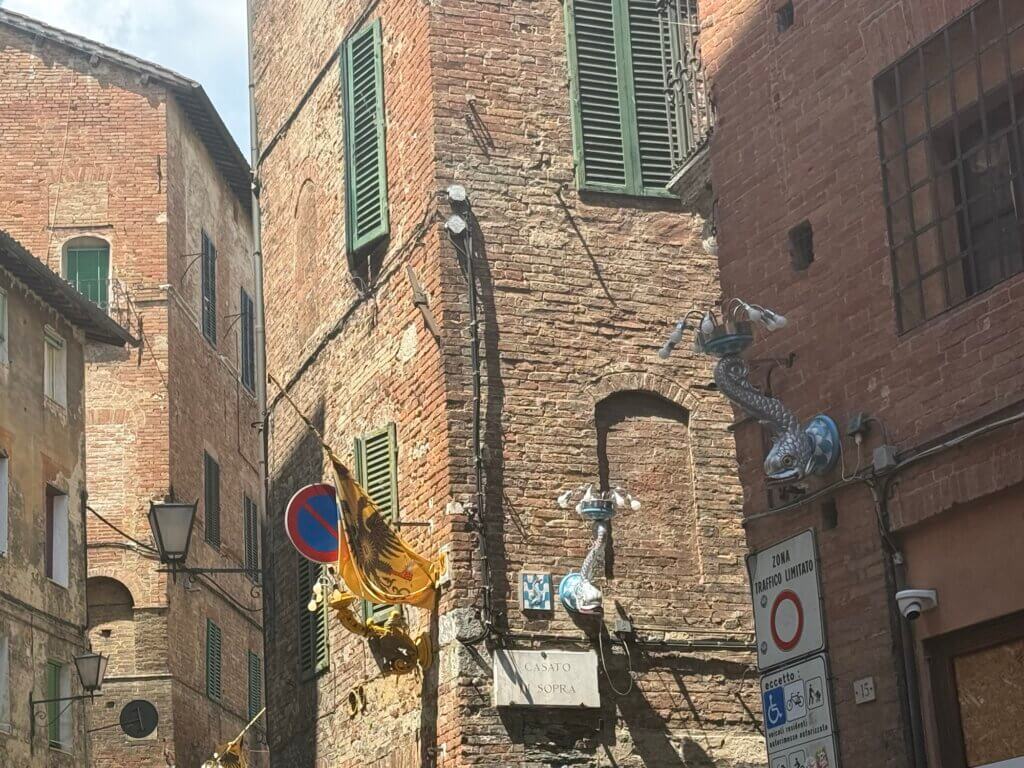
The seventeen contrade and their icons are: Aquila – eagle; Bruco – caterpillar; Chiocciola – snail; Civetta – owl; Drago – dragon; Giraffa – giraffe; Istrice – porcupine; Leocorno – unicorn; Lupa – she-wolf; Nicchio – seashell; Oca – goose; Onda – wave; Pantera – panther; Selva – forest; Tartuca – tortoise; Torre – tower; and Valdimontone – ram. These symbols are central to each neighbourhood’s sense of belonging and are used on flags, costumes and banners throughout Palio time. You can also see this icons in the city quarters throughout the enter year, especially on street lights.
The three contrade with the most Palio victories are Oca, Onda and Torre. Oca leads the historical roll of honour, with Onda and Torre close behind, and that long record of wins is part of why these names carry so much weight in Siena’s race culture.
Palio
Siena
Italy
Loading map...
