
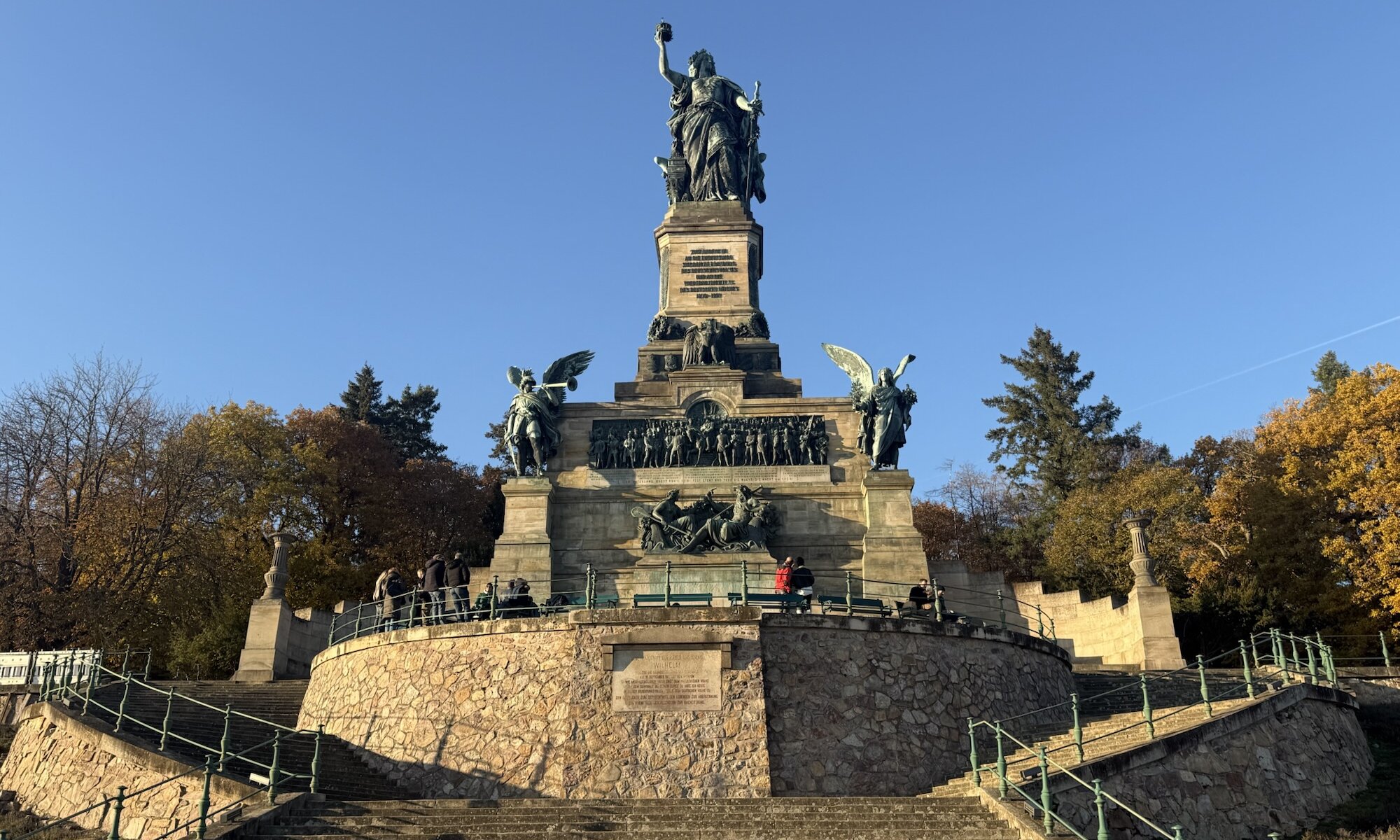
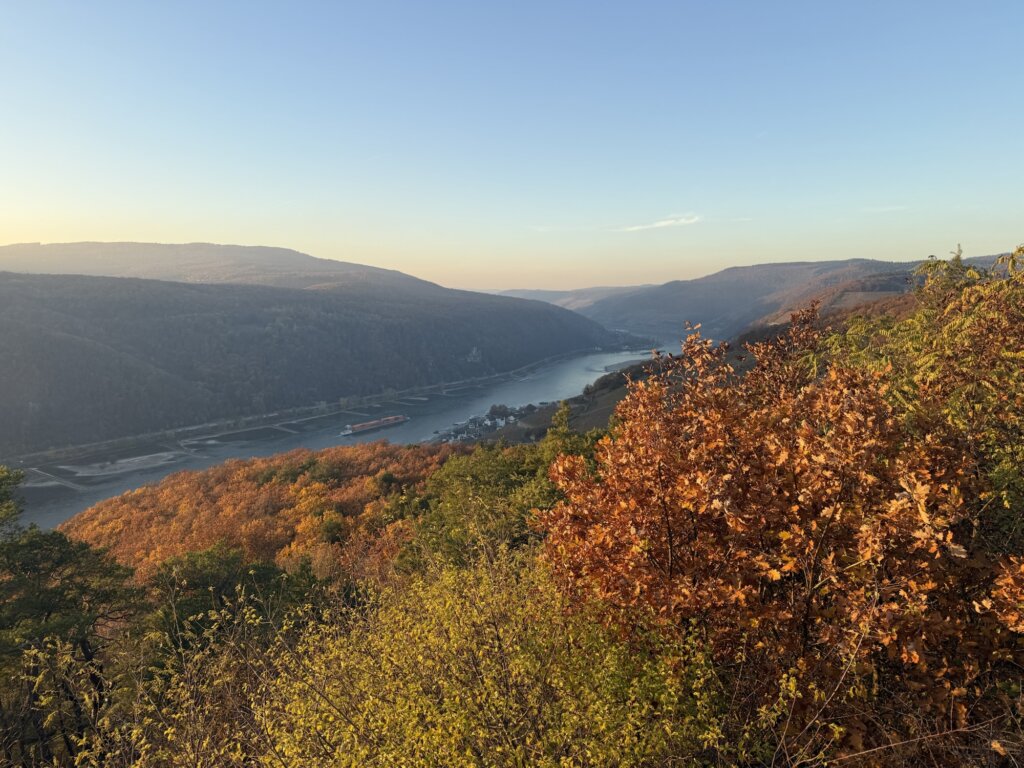
Some viewpoints you earn; this one you can nearly stumble into. Ride the chairlift from Rüdesheim through the vineyards of the Rheingau – a lovely, slightly creaky affair swinging you over rows of Riesling vines – and within fifteen minutes you find yourself standing before the Niederwalddenkmal, one of the most striking monuments anywhere on the Rhein. Or hike uphill through the vineyards like I did, it is wonderful! The monument crowns the wooded hillside above the town, gazing south across the broad bend of the river towards Bingen and the beginning of the dramatic Rheintal. On a clear afternoon, with the ferries weaving below and the Niederwald forest at your back, it is easy to understand why this spot was chosen for something monumental. It helps that the walk back down, or a glass of dry Riesling in town afterwards, gives the whole excursion a pleasantly civilised rhythm.
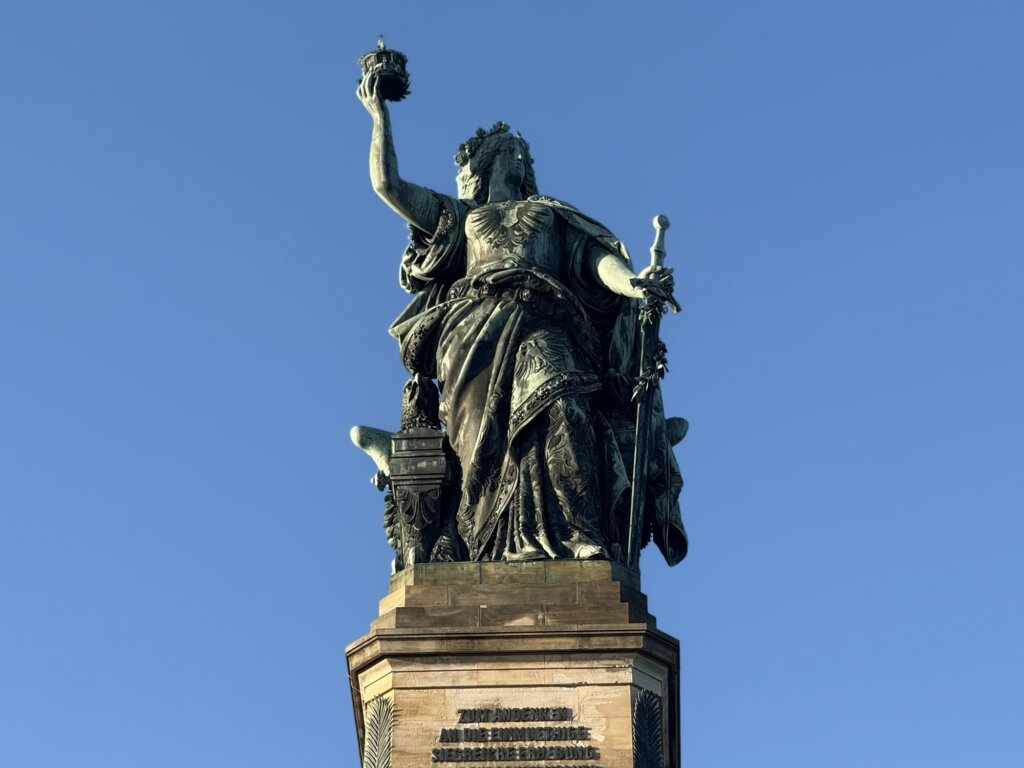
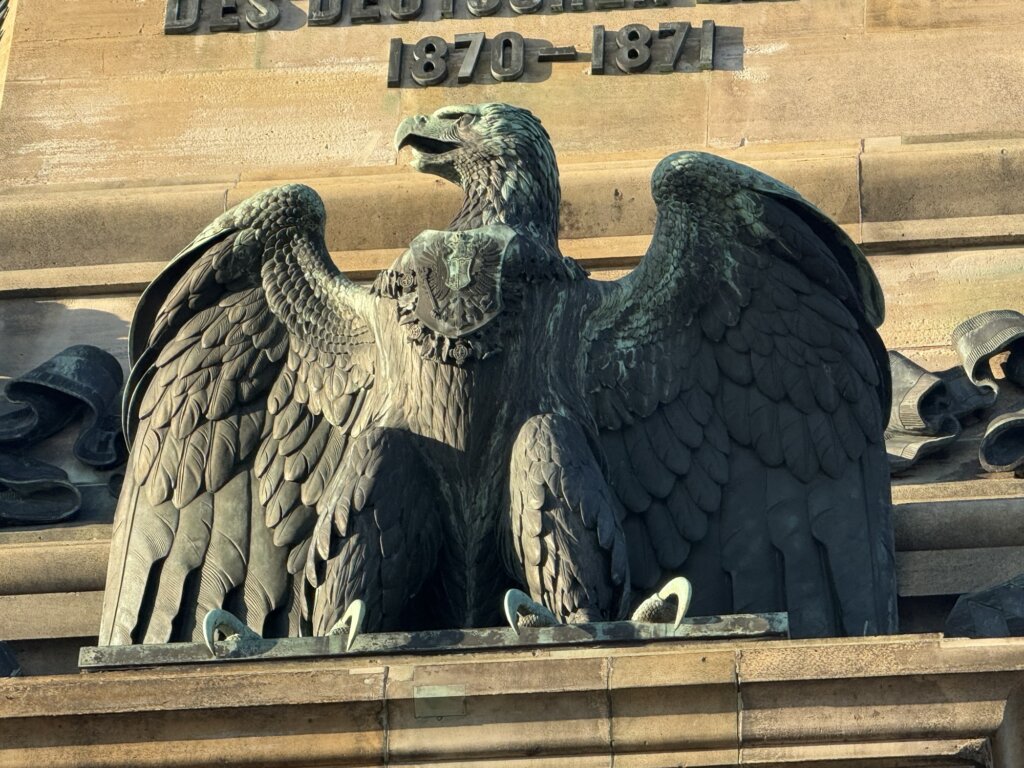
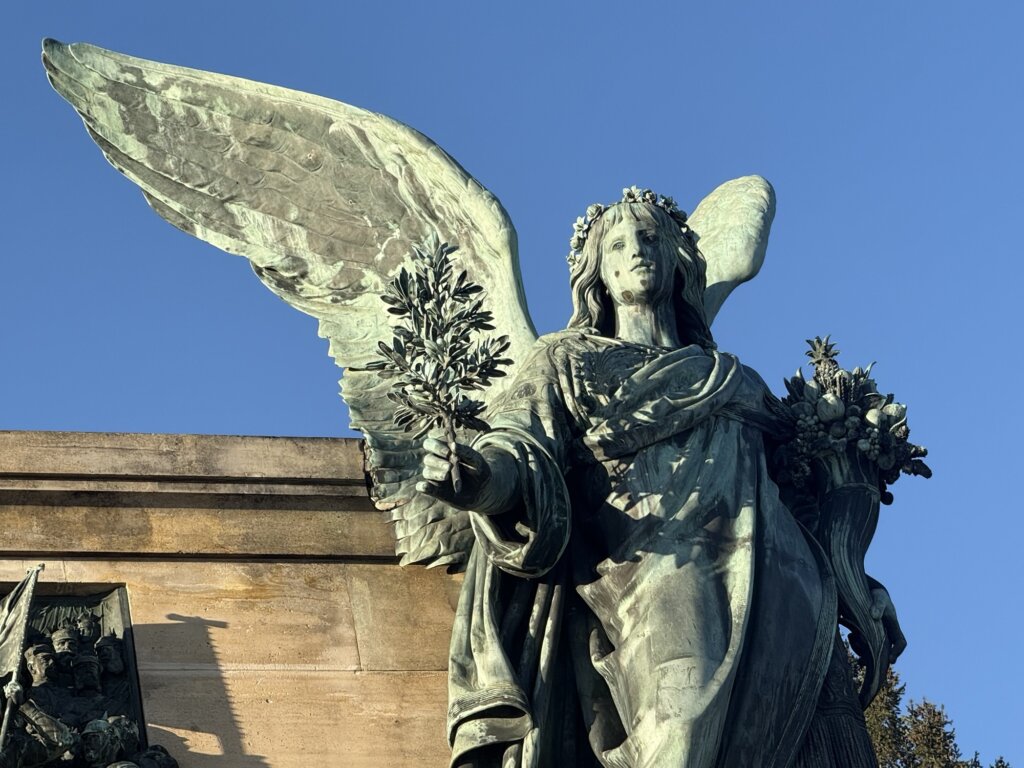
The monument itself is hard to prepare yourself for, photographs never quite capture the scale of it. At its heart stands Germania, a bronze figure over ten metres tall, sword at rest and the recovered crown of the old Reich in her hands, draped in flowing robes with her hair braided in the fashion of the age. She rests on a massive plinth that lifts the whole ensemble to nearly 38 metres, flanked by a curved colonnade and relief panels teeming with allegorical detail – war, peace, the rivers Rhein and Mosel – all rendered in a confident, muscular historicism the Germans of the 1870s did so well. Look closer at the friezes and you’ll find soldiers marching home, cherubs, and inscriptions of victory, including the famous line from the song ‘Die Wacht am Rhein’. The stylistic cousins of this ornamentation are the great town halls and operas of the Gründerzeit era, but here the whole vocabulary of that confident young empire is assembled in one open-air statement above the vineyards.
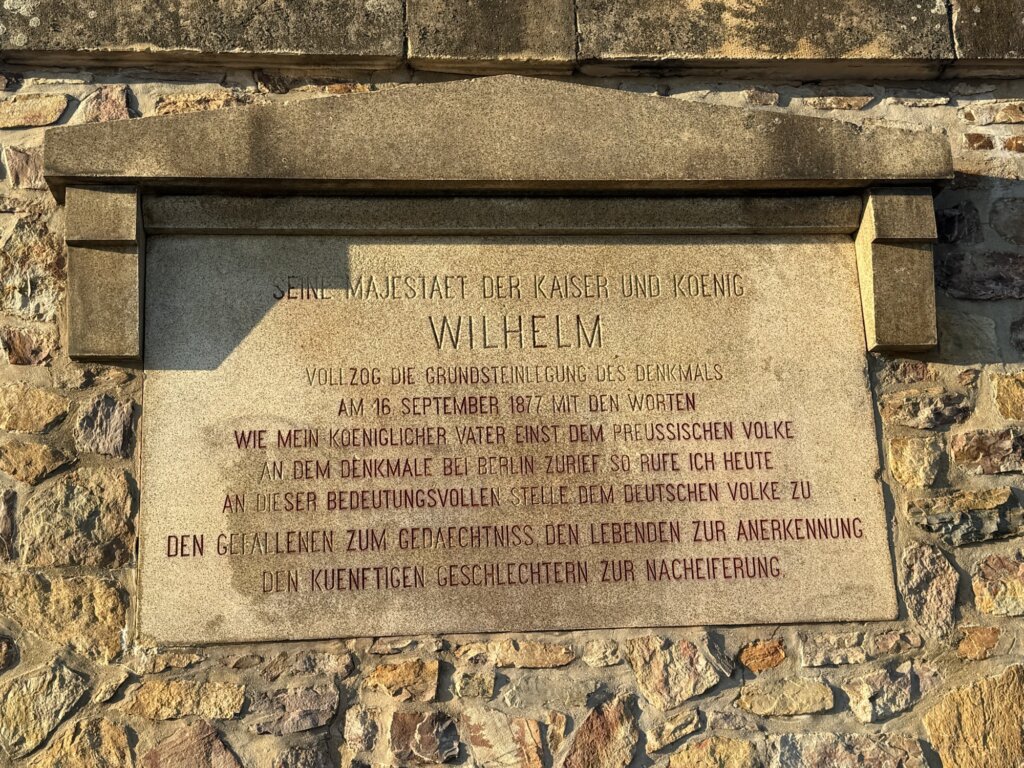
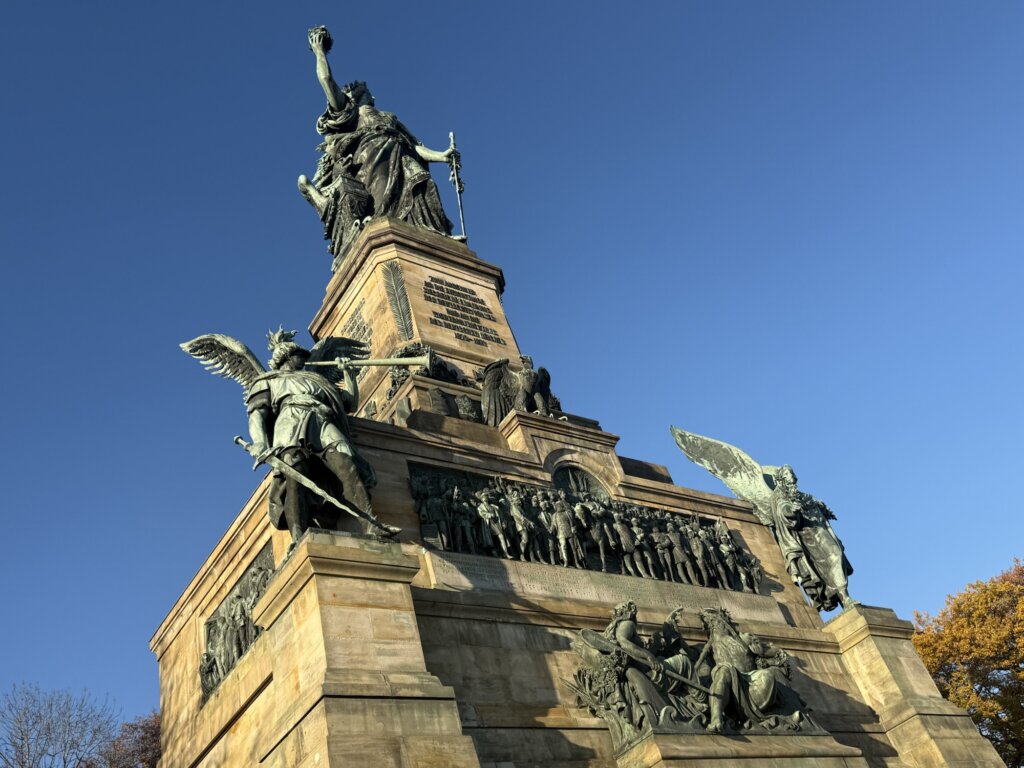
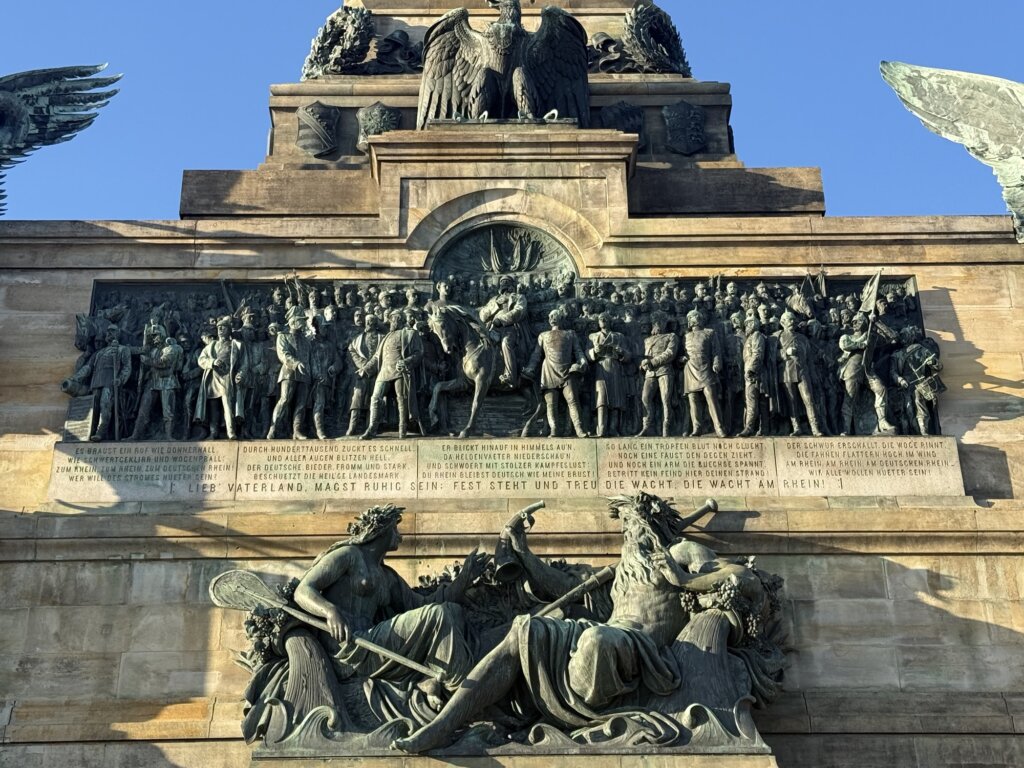
The story behind it is very much a story of its time. After the victory over France in 1871 and the proclamation of the German Empire at Versailles, the young nation went in search of symbols, and in 1871 a competition was announced for a national monument on the Niederwald. Building began in 1877 and was completed in 1883; the sculptor Johannes Schilling created the Germania, and her solemn unveiling by Kaiser Wilhelm I drew enormous crowds. Over the following decades the Niederwalddenkmal became a destination of national pilgrimage, reached by railway and paddle-steamer, and after the Second World War it transformed once more — less a statement of triumphant nationalism than a lookout over a river valley that is now a UNESCO World Heritage stretch and a landscape of rather gentler associations: wine, walking, romantic Rhein legends.
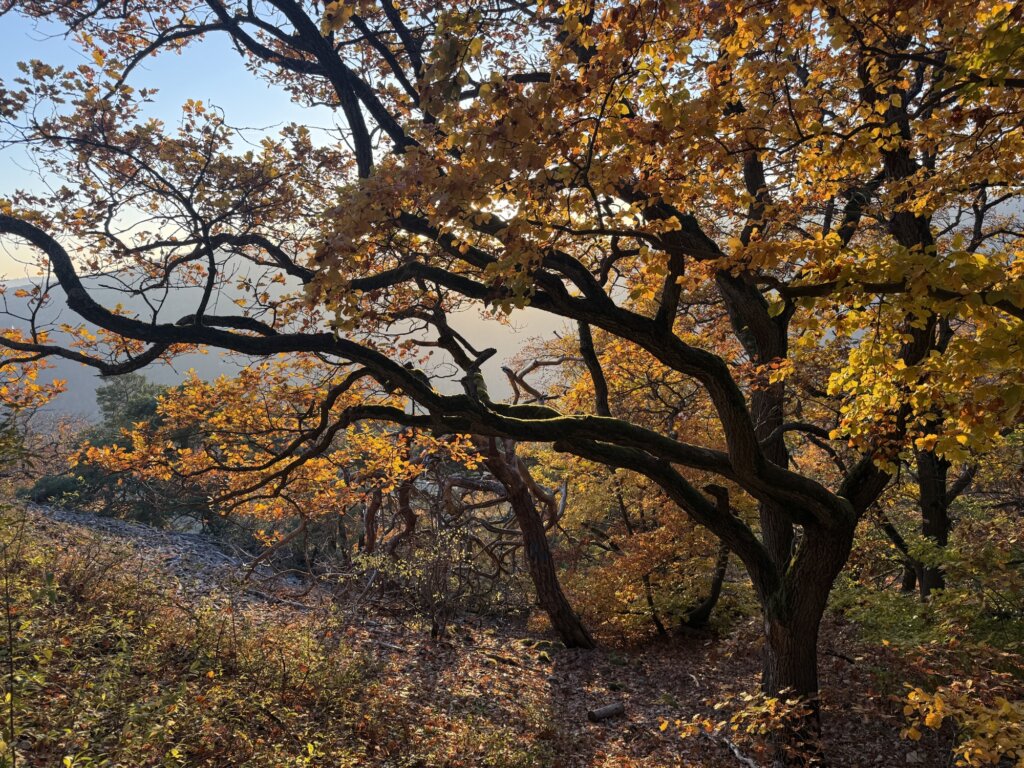
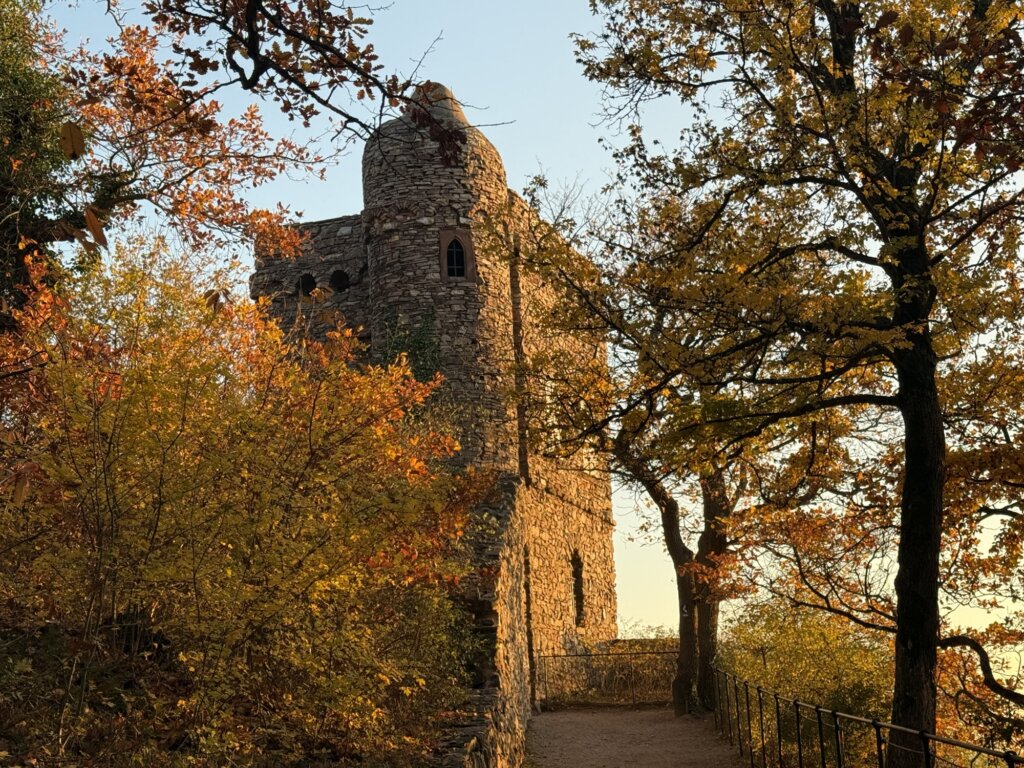
What I find fascinating is how Germania fits into a whole family of monuments from the same nationalist flowering of the late 19th century, each one staked out on a dramatic hilltop as if the young empire wanted to write its name across the landscape itself. Maybe the only thing nice nationalism has ever created. Her nearest sibling in spirit is the Hermannsdenkmal near Detmold in the Teutoburger Wald, the towering Arminius who commemorates the victory over Roman legions and had been finished in 1875; the Kyffhäuserdenkmal in Thüringen, with its Barbarossa rising beneath Wilhelm I, followed in the 1890s and pushes the same message of empire reborn. Add the Völkerschlachtdenkmal outside Leipzig, completed shortly before the First World War, and you can trace an entire arc of self-confident – and, read today, rather telling – monument-building from the Empire’s founding to its first great crisis. The Rüdesheim Germania is the most beautifully situated of them all, and the only one I know where the view is half the point.
Niederwalddenkmal
Rüdesheim am Rhein
Germany
Loading map...
