The Universitätsreitstall, also known as the Akademisches Reithaus, was a remarkable Baroque complex built between 1734 and 1736 for the newly founded University of Göttingen. It included a covered riding school, stables, an outdoor riding arena and accommodation for the university’s riding master. This was not merely a practical facility: equestrian training formed part of the education of young aristocrats, while riding demonstrations could also serve as prestigious public events.
Its importance lay in its status as the university’s first completed purpose-built building. The Reitstall was constructed even before the university’s ceremonial inauguration in 1737, and its prominent design reflected Göttingen’s ambition to establish a modern and distinguished centre of learning. The riding master held the rank of a university professor, underlining the institution’s educational role and the social importance attached to riding, military skills and the upbringing of the eighteenth-century elite.
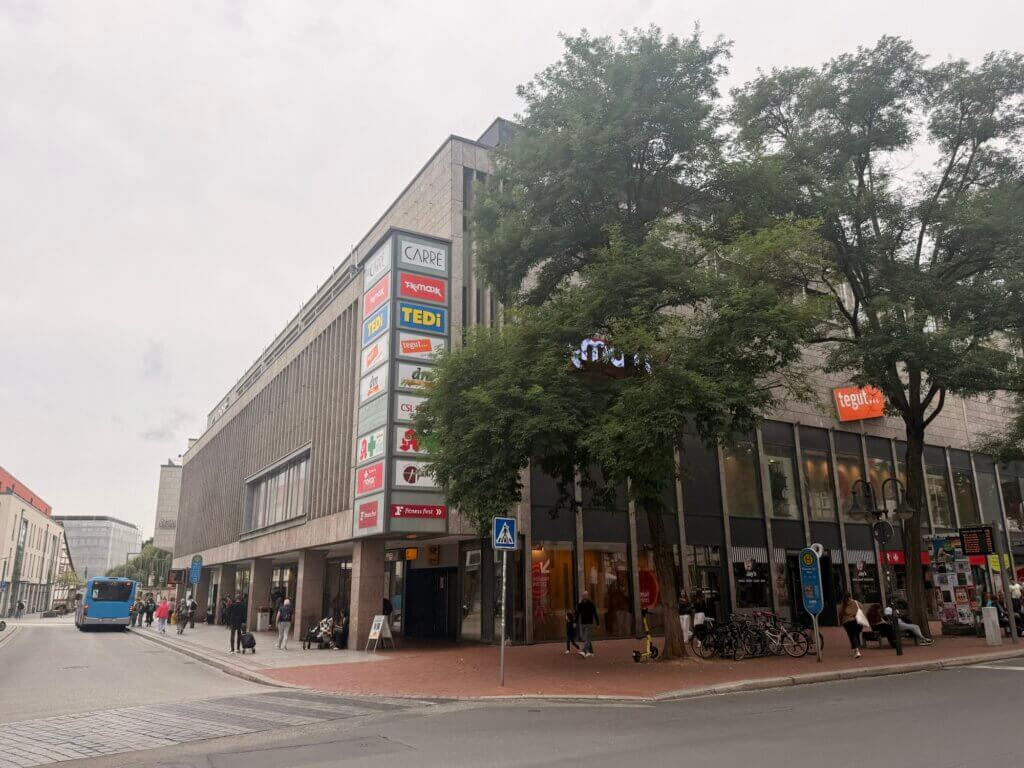
The complex once stood at the north-western end of Weender Straße, near the Weender Tor, on the area historically known as the Freudenberg (a name that has completely disappeared these days). After the city and university pursued post-war modernisation plans, the university sold the property to the city in 1966. The Reitstall was demolished in the summer of 1968, despite vigorous protests from residents and students, because the site was intended for a large administrative and civic redevelopment. Those plans were not ultimately realised as envisaged: the former site later became the location of the Hertie department store and is now occupied by the Carré shopping centre.
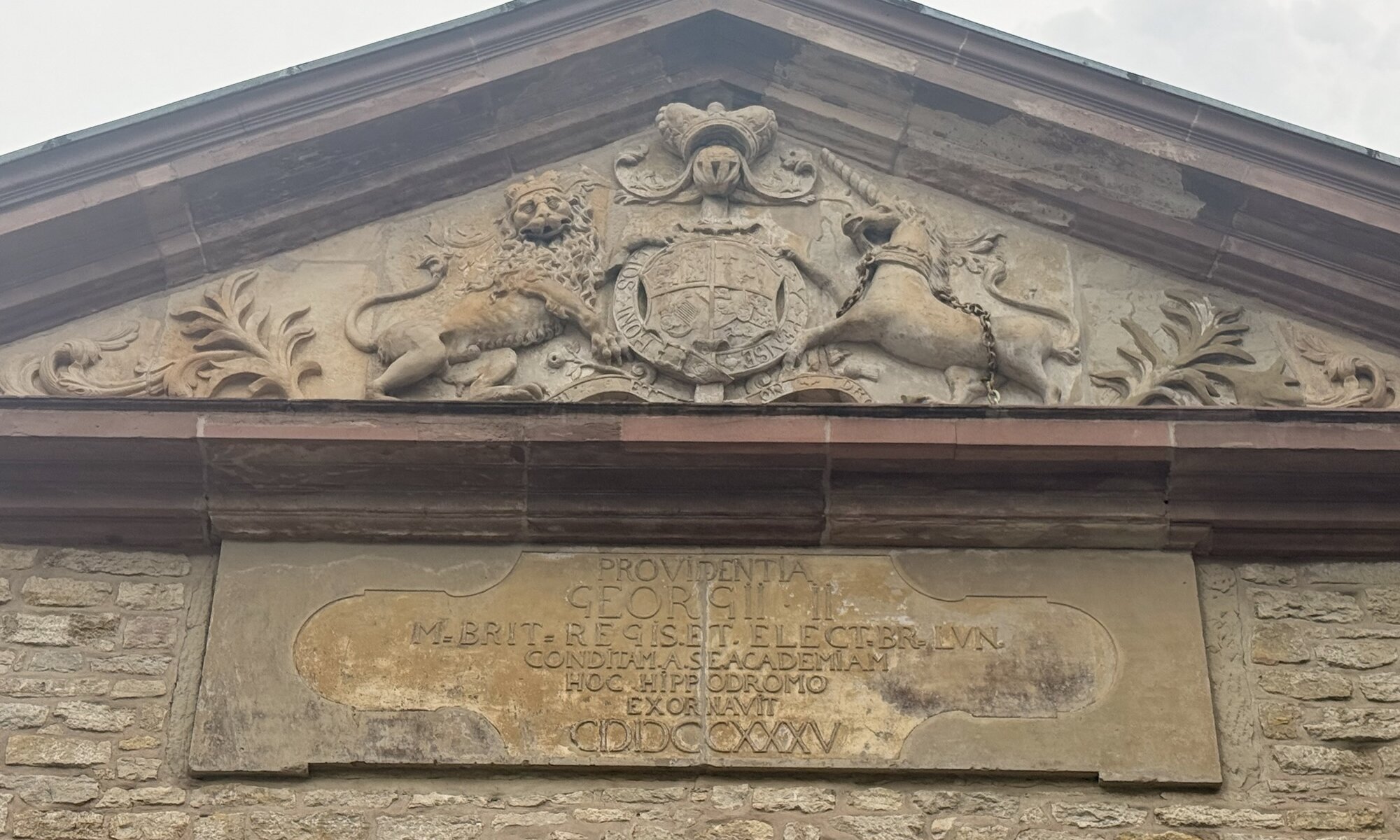
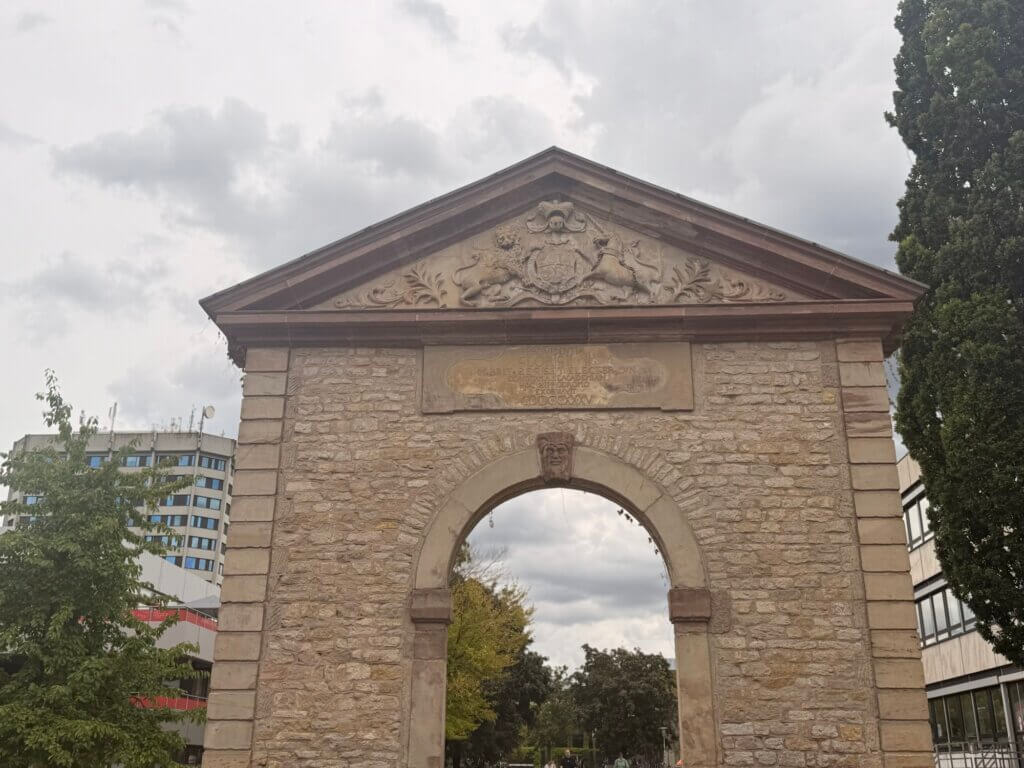
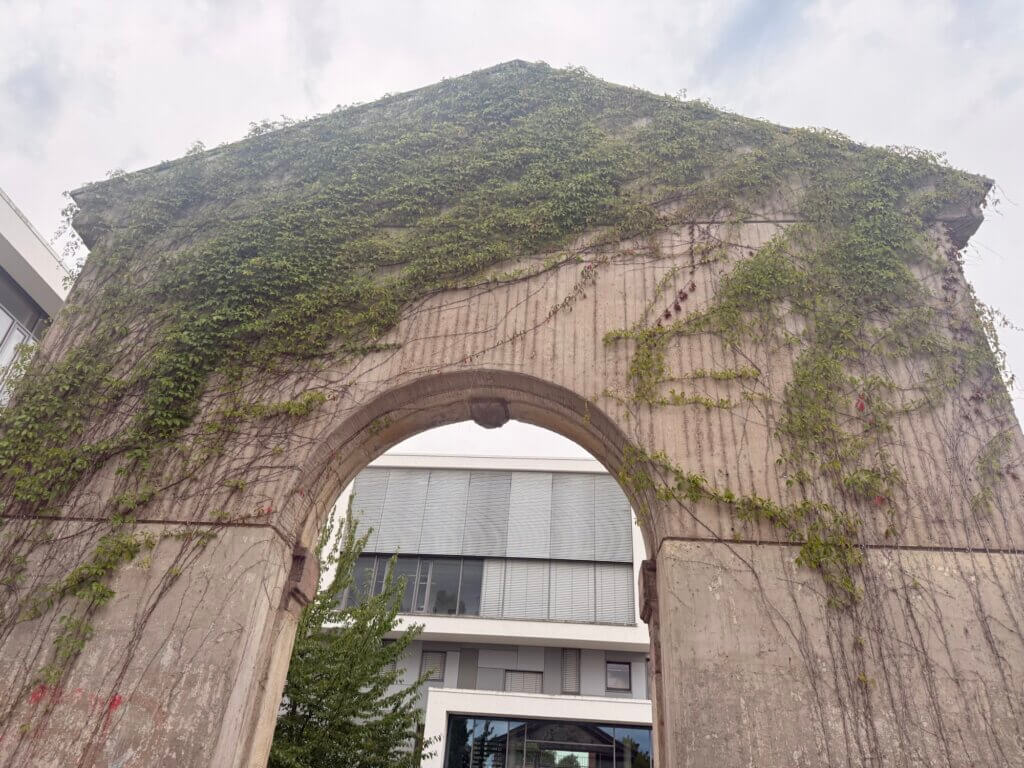
Fortunately, the entrance portal, known as the Reitstalltor, survived. After being stored for several years, it was reconstructed in 1975 on the university’s central campus, at the Platz der Göttinger Sieben, north of the city centre. Today it stands in front of the Lern- und Studiengebäude (LuSt) errected later. The surviving Baroque gateway, bearing royal insignia, is more than an architectural fragment: it is a reminder of the university’s formative years and of a controversial chapter in Göttingen’s twentieth-century urban history.
Reitstalltor
Göttingen
Germany
Loading map...
