The castle of Katlenburg rises above the village on a prominent hill, and even if you just pass by on the road between Northeim and Osterode you immediately sense that this was once a genuine centre of power for the valley. The origins go back to the early 12th century, when count Dietrich III of Katlenburg transformed his fortified residence into a monastery dedicated to St. John, effectively shifting the focus from a purely military stronghold to a religious and administrative hub for the surrounding territory. Over the following centuries the foundation evolved from a collegiate establishment into an Augustinian house of canons and later a convent for women, closely tied to both the Welf rulers and the archbishop of Mainz, which gave the site considerable regional weight in both secular and ecclesiastical affairs. The gradual decline and eventual secularisation in the 16th century mirrored wider Reformation-era changes, but the castle hill remained a defining landmark for Katlenburg-Lindau and the Harz foreland.
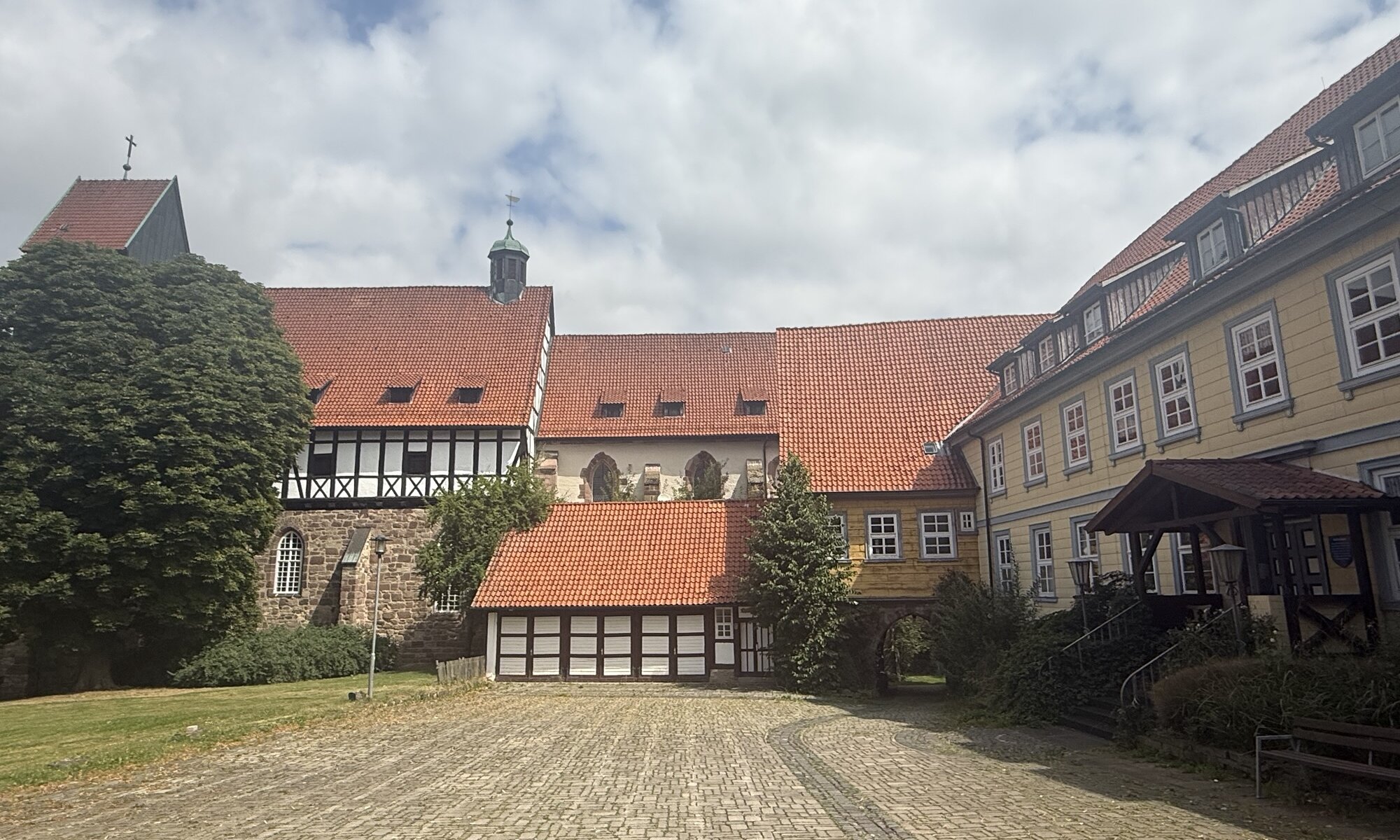
Today, only parts of the original castle complex are still visible, yet the ensemble of buildings on the Burgberg clearly reflects these layers of history. The most striking monument is the St. John’s Church (St.-Johannes-Kirche), a former Augustinian monastic church founded around 1105 and standing prominently on the steep slope above the old trade and military route from Einbeck towards Nordhausen. Inside, you find a fascinating mixture: Romanesque elements such as the crypt, a Gothic choir and a baroque pyramidal pulpit altar from the mid‑17th century, complete with expressive figures and biblical scenes that connect Katlenburg to the broader artistic tradition of Harz churches. Nearby, the former provost’s house and magazin building recall the time when the castle-monastery complex managed estates, exercised legal authority and anchored Christian culture in the region.
On the castle hill, the Bücherburg project has given the place a surprisingly contemporary cultural role. In a barn on the Burgberg a ‚book castle‘ has been created under the motto ‚passing on books instead of throwing them away‘, originally to rescue important works of GDR literature from ending up on the rubbish tip after reunification. Over time this has become a large volunteer-run book depot with roughly 50,000 volumes covering everything from fiction and theology to science, gardening, travel guides and children’s books, accessible to visitors on Sundays who can take books home in exchange for a donation, turning the old castle area into a lively meeting point for readers and locals. The project has even attracted national attention by featuring in exhibitions on post‑1945 German history, which adds a modern layer of significance to a site already steeped in medieval and early modern heritage.
For visitors, the castle hill offers a combination of historical atmosphere and quiet rural charm rather than a fully restored fortress or a busy tourist attraction. You can explore the church, appreciate the views over the valley and sense how the former monastery shaped settlement and trade routes in this corner of Niedersachsen. The small museum in the old provost’s building and the Bücherburg sessions give insight into both the religious past and the literary activism that keeps the site relevant today, but services and events are modest in scale and largely community-driven. At the moment, the restaurant at the castle is closed, so it is worth planning refreshments elsewhere, treating Katlenburg more as a historically rich stopping point or short excursion.
Burg Katlenburg
Katlenburg-Lindau
Germany
Loading map...
