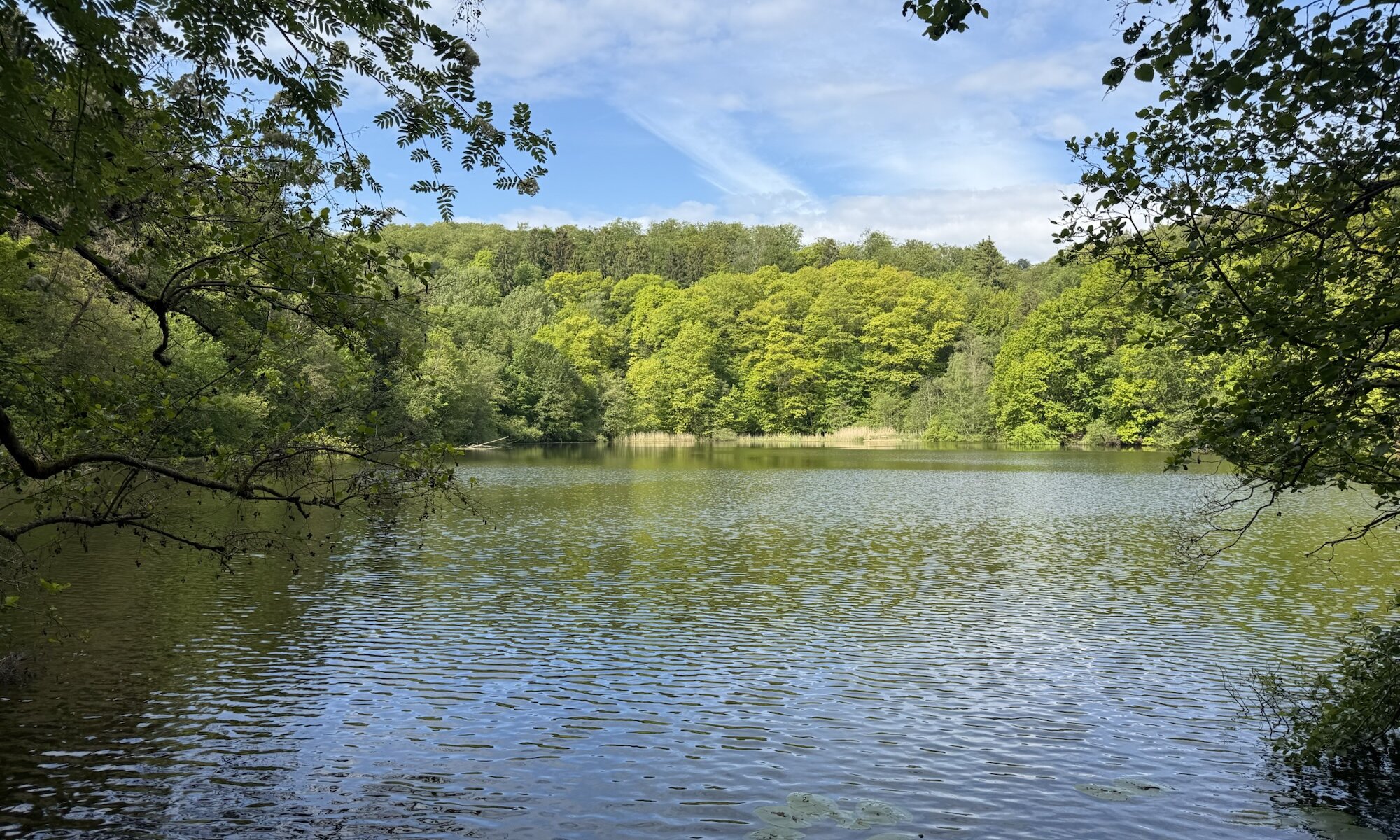
Tucked away in the wooded hills near Uslar, the Bergsee at Delliehausen is one of those quietly atmospheric places that feels far removed from modern life. At first glance, it appears to be a natural mountain lake, its dark, still waters framed by dense forest and steep slopes. In reality, however, it is a relic of the region’s industrial past, shaped by human activity rather than nature alone.
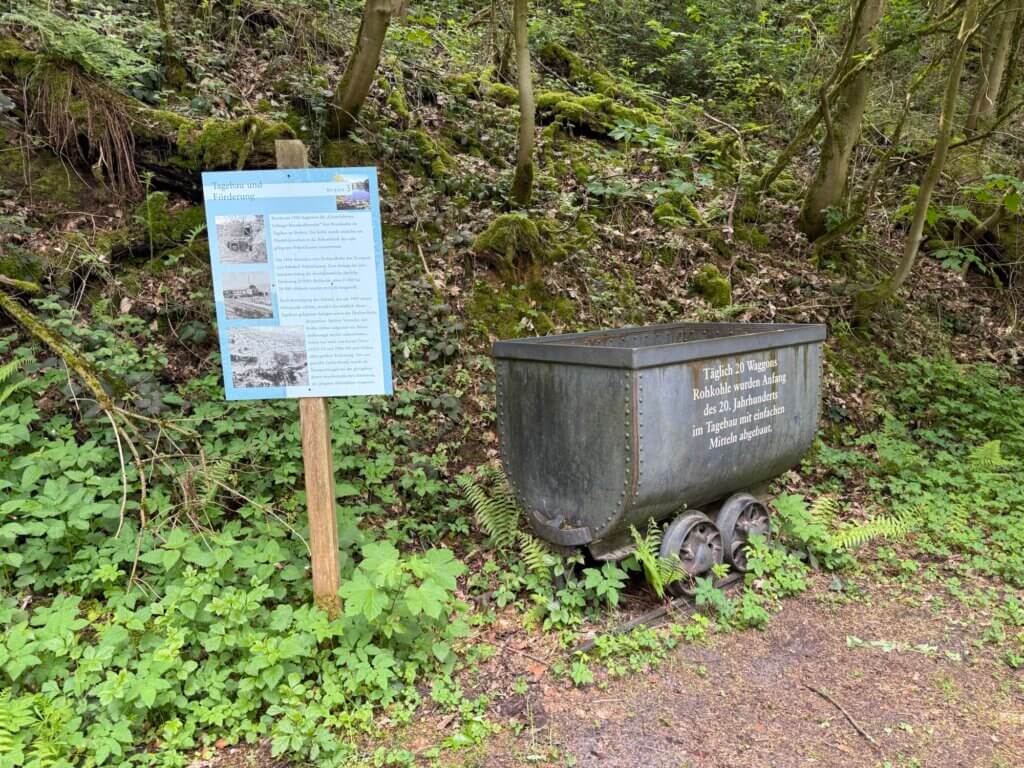
The area around Delliehausen was once an active coal mining site, part of a network of smaller operations in southern Lower Saxony. Coal extracted here did not remain local for long; it was transported via an aerial cable car system to nearby Volpriehausen. From there, it entered broader distribution channels and was primarily used for energy production and industrial purposes, including heating and powering machinery during a time when coal was a crucial resource. It was also used to produce colours, especially two types of brown (‘Kassler Braun‘, ‘Van-Dyck-Braun‘).
When mining operations ceased, the former excavation site gradually filled with water, forming what is now the Bergsee. Over time, nature reclaimed the surroundings, softening the industrial scars and creating a surprisingly tranquil landscape. Despite its inviting appearance, the lake is now designated as a protected area, and swimming is strictly prohibited in order to preserve its delicate ecosystem and ensure safety.
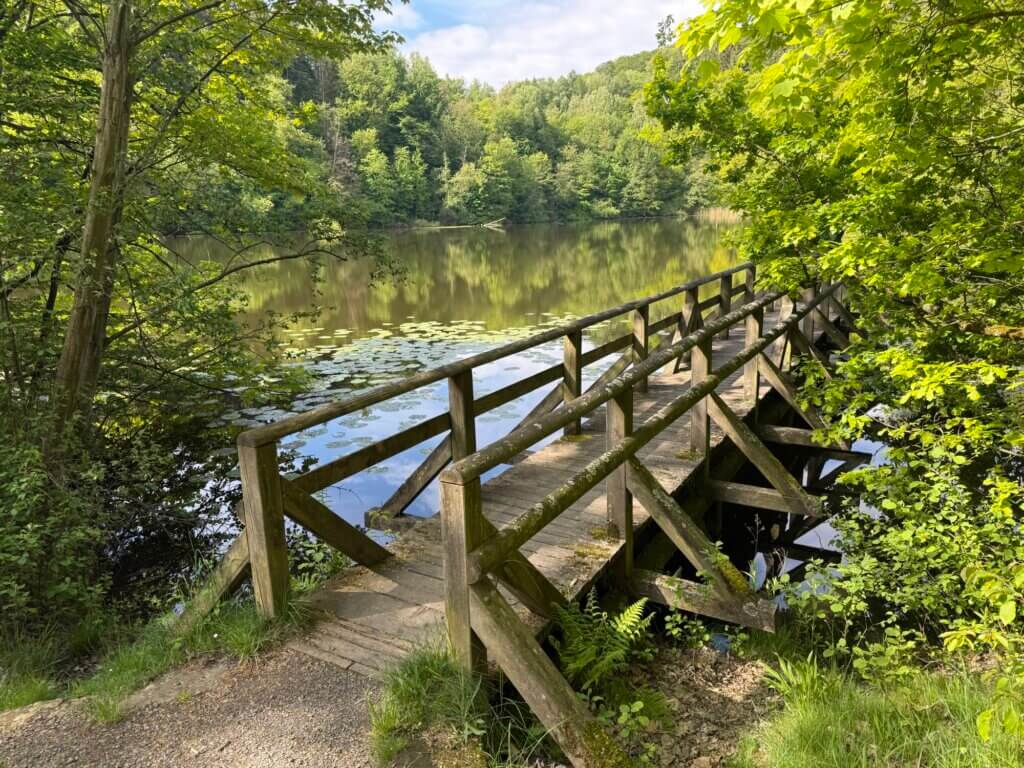
That said, the site is still very much worth a visit. A well-maintained circular path of roughly 800 metres runs around the lake, making it ideal for a short, reflective walk. Benches along the shore offer peaceful spots to sit and take in the scenery, whether you’re passing through the Solling region or deliberately seeking out places where history and nature quietly intersect.
Bergsee Delliehausen
Uslar
Germany
Loading map...
