
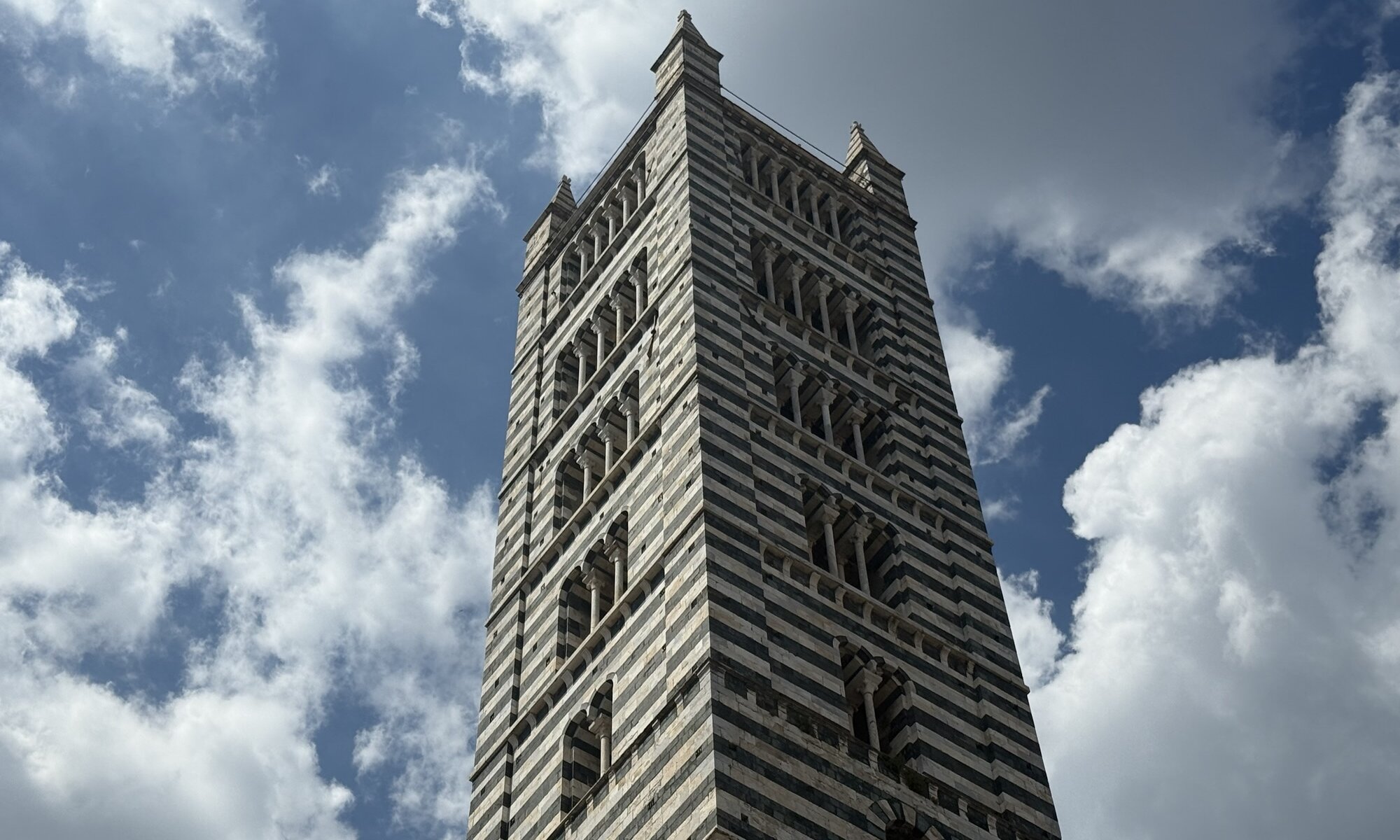
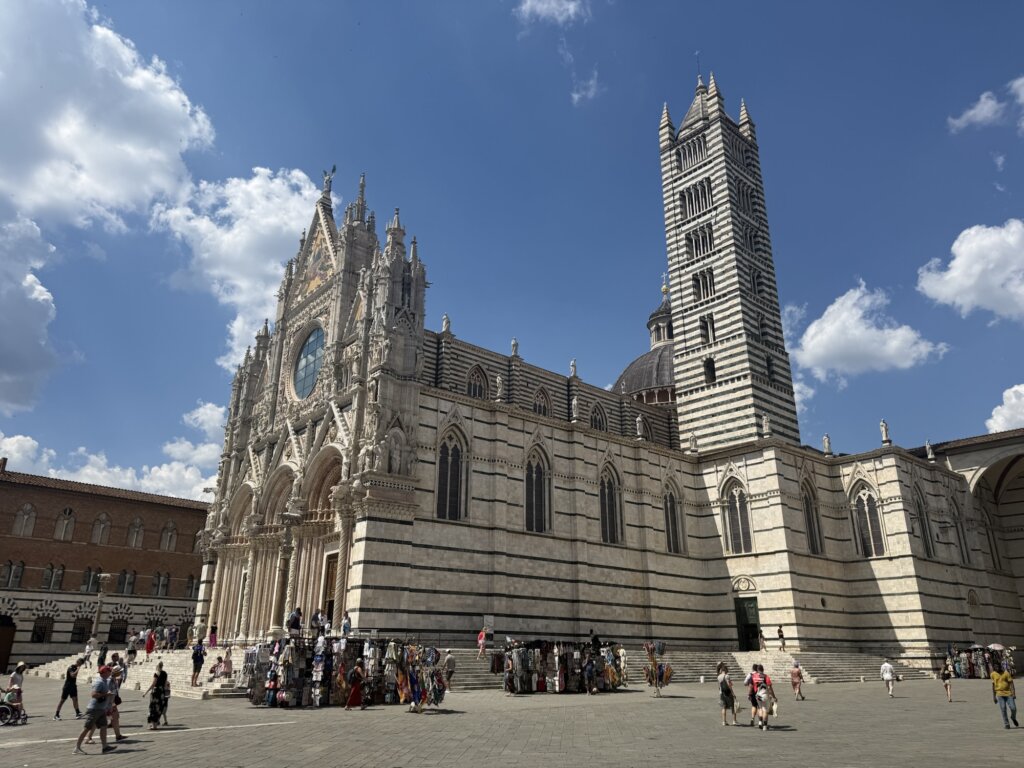
The Duomo of Siena is one of Italy’s most striking cathedrals, built over several centuries as the city’s wealth and ambition grew. Its origins go back to the 12th century, with the building consecrated in 1179, and major work continuing through the 13th and 14th centuries.
What makes it especially fascinating is that it was never simply a single, finished project in one style. The cathedral combines Romanesque solidity with Gothic elegance, and its development reflects the changing tastes of different generations of builders and patrons.
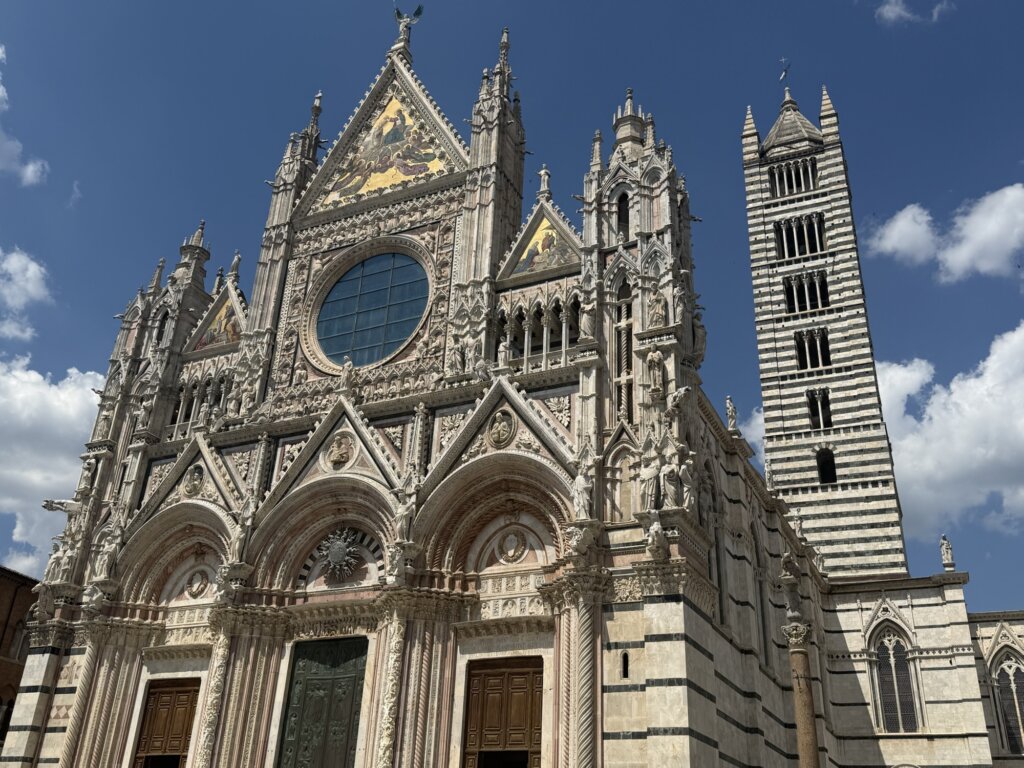
Its special style is most obvious in the exterior, where the marble façade uses white, dark and reddish tones to create a vivid striped effect that is strongly associated with Siena. The upper part of the façade is richly decorated, with statues, pinnacles and pointed forms that give it a refined Gothic character, while the lower part feels more grounded and Romanesque.
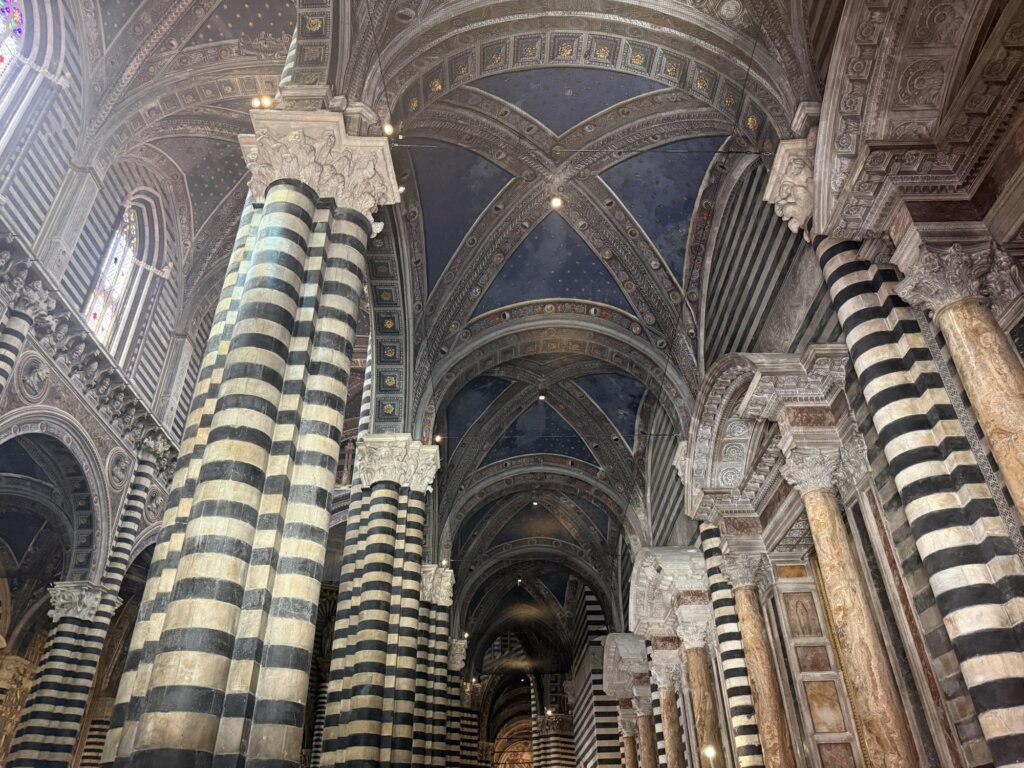
Inside, the effect is even more memorable: the black-and-white marble stripes on the columns and arches create a dramatic rhythm, and the whole space feels both solemn and lively. There is also a remarkable sense of civic identity here, because the building is not only a place of worship but also a statement of Siena’s pride, history and artistic refinement.
Duomo
Siena
Italy
Loading map...
