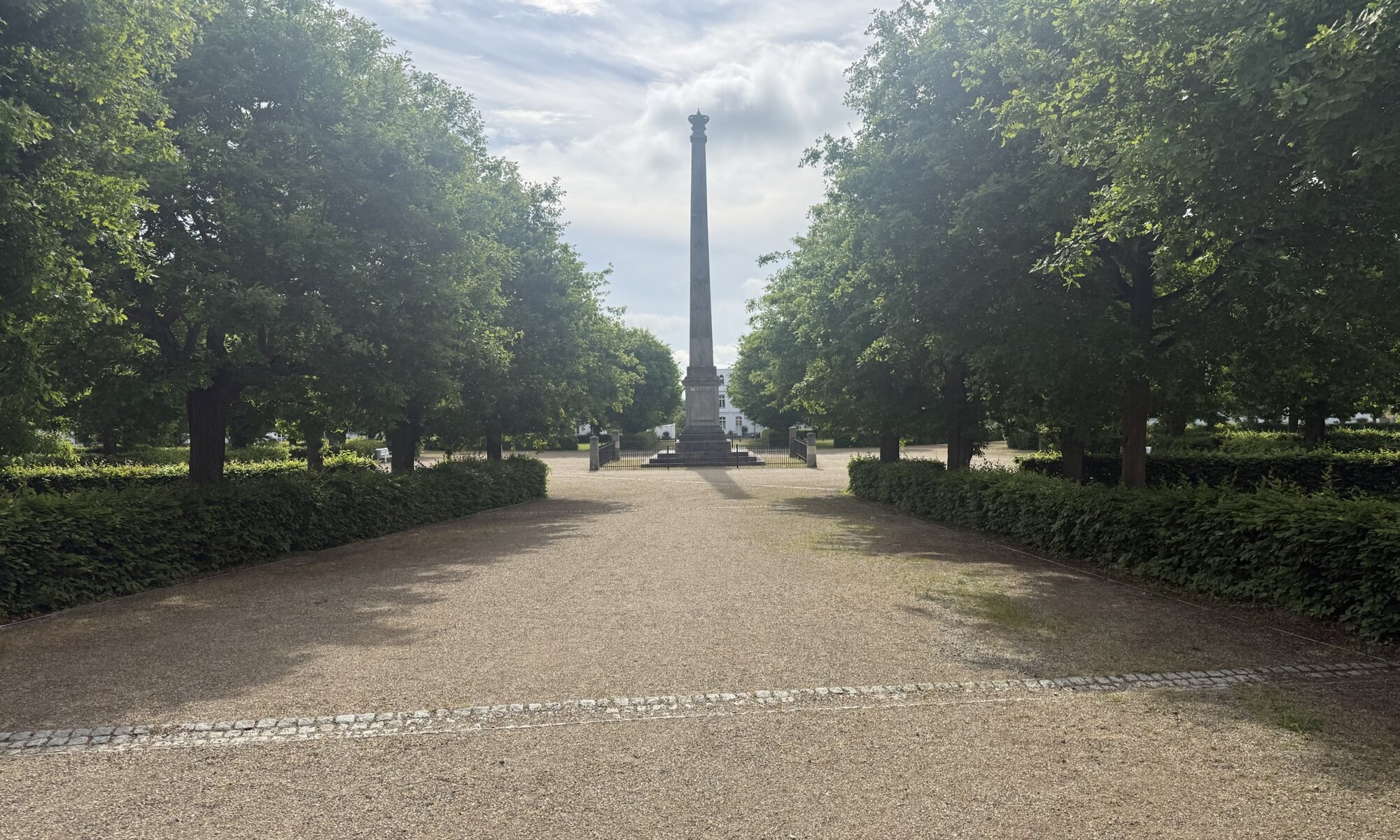
The Circus in Putbus is one of the most striking town spaces on Rügen: a perfectly round square framed by elegant white classical buildings, with a disciplined, almost theatrical symmetry that gives it a calm and refined feel. At its centre stands a tall obelisk, while paths and lawns radiate outwards in a neat pattern, so the whole place feels both formal and airy rather than crowded or ornamental. The effect is of a planned landscape in which architecture and open space are meant to be experienced together.
Its history begins in the early 19th century, when Prince Wilhelm Malte I of Putbus set out to turn the settlement into a model residence town in the classical style. The Circus was laid out from 1828 onwards, inspired in part by the famous circular layout in Bath, and it was gradually built up with white-painted classical houses over the following years. The result was a carefully ordered civic space that reflected the ideas of harmony, education, and enlightened urban design that were fashionable at the time.
By the mid-19th century, the ensemble had taken on the form seen today, including the impressive obelisk at the centre, which was intended to commemorate the founding of Putbus in 1810. Over time, the Circus became one of the defining symbols of the town and helped give Putbus its nickname as the White Town. Even now, it remains a rare and memorable example of urban planning from that era, combining grandeur with a distinctly peaceful atmosphere.
Circus
Putbus
Rügen
Germany
Loading map...
