The city of Konjic sits quietly in Herzegovina, yet it carries a weight of history that feels far greater than its size. Approaching from Sarajevo, the journey itself sets the scene: after passing through the long tunnel beneath mount Igman, the landscape subtly shifts. This tunnel feels like a gateway, not just geographically but climatically as well, as you leave behind Sarajevo’s cooler, more continental air and descend into the softer, Mediterranean-influenced climate of Herzegovina.
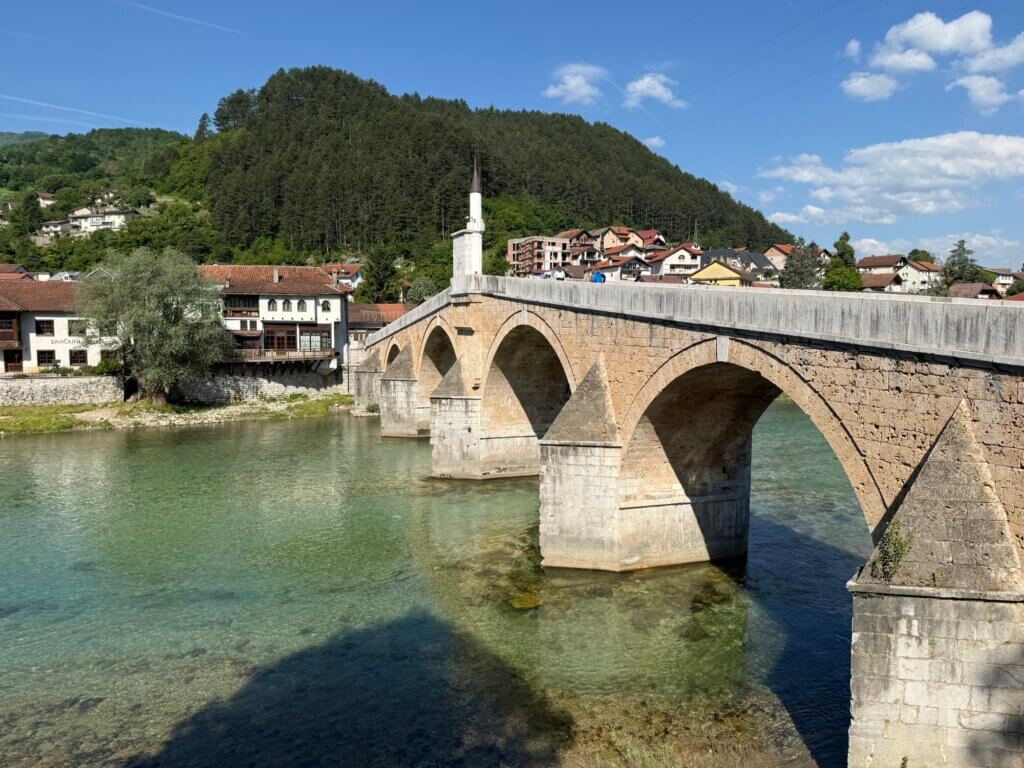
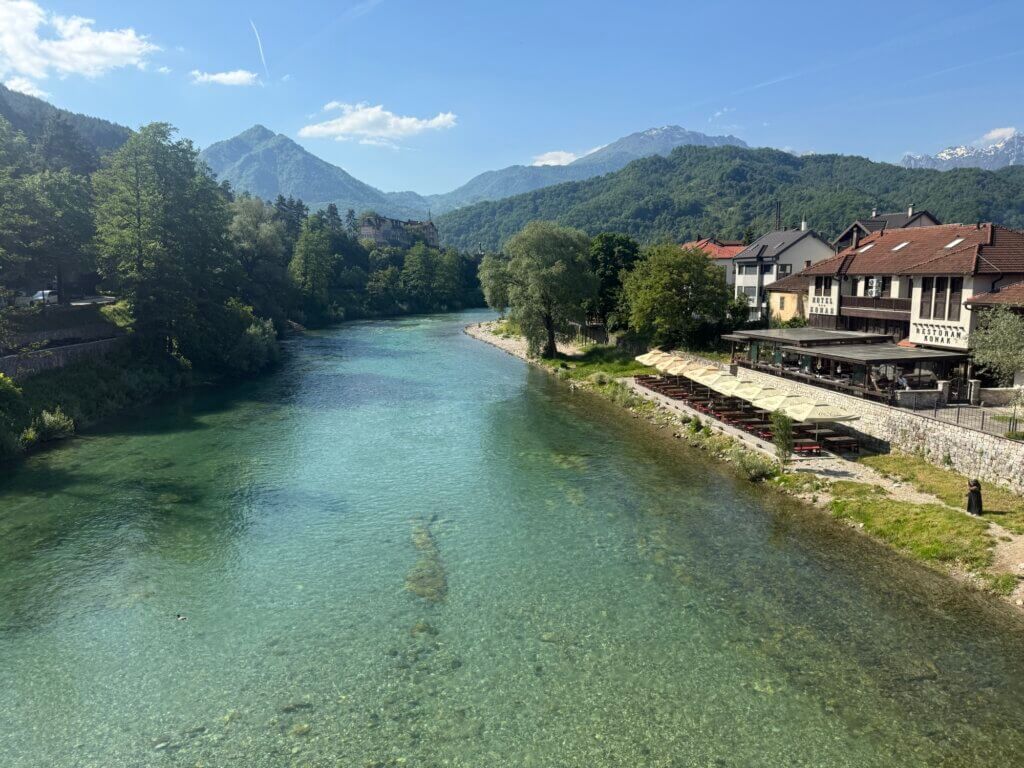
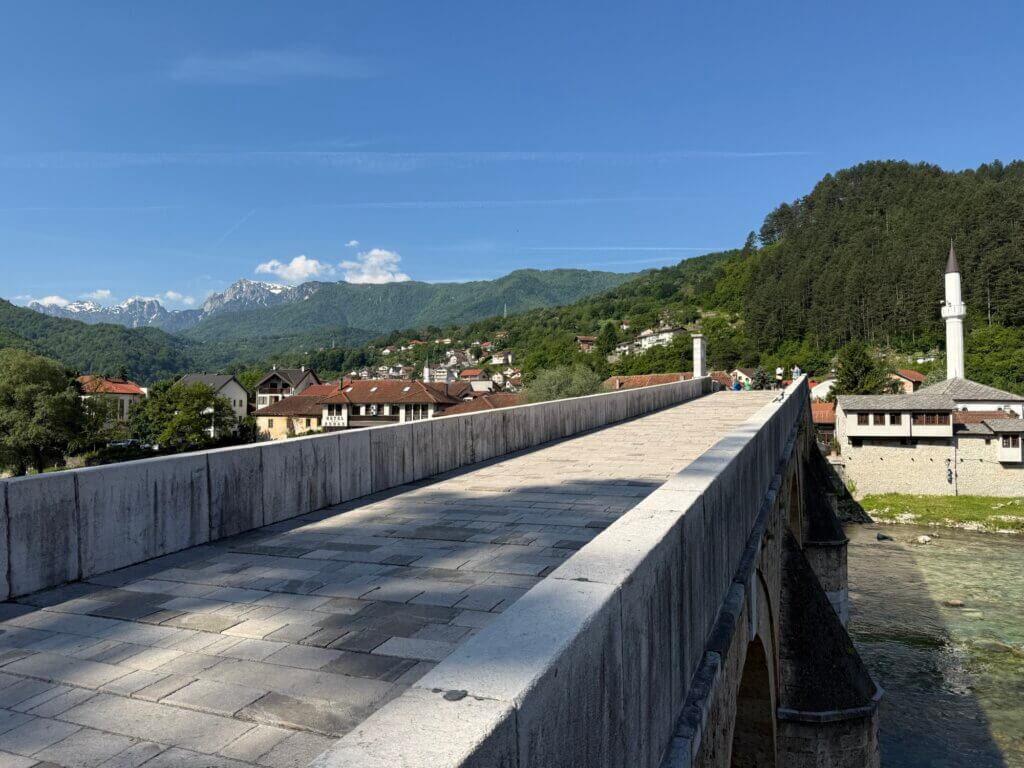
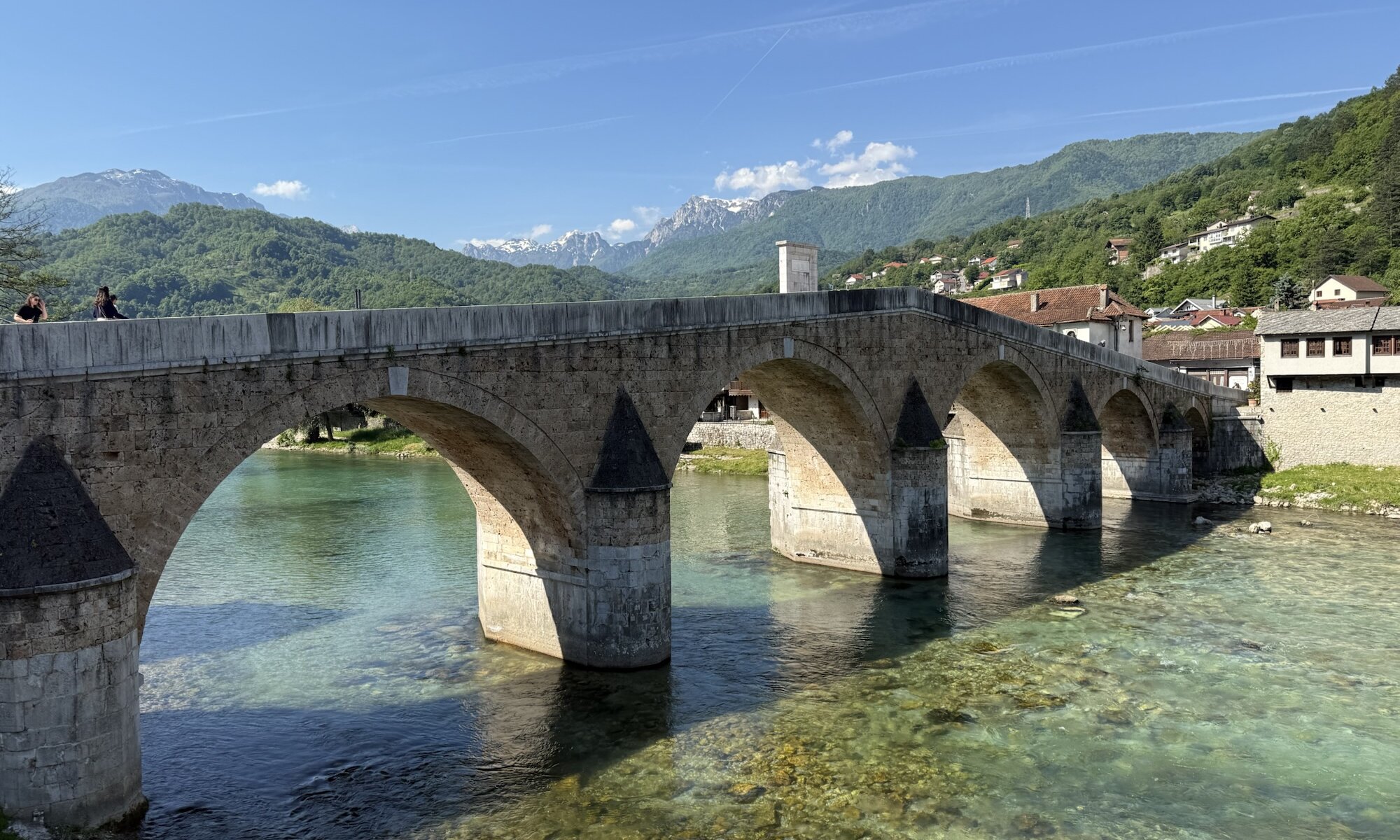
At the heart of Konjic stands its most recognisable landmark, the old stone bridge (Stara Ćuprija), gracefully arching over the emerald waters of the Neretva river. Originally built in the 17th century during Ottoman rule, the bridge was both a vital trade crossing and a symbol of the town’s connection to wider routes through the Balkans. It was tragically destroyed in 1945 during the final stages of the Second World War, but has since been meticulously reconstructed using traditional techniques, restoring not only its physical form but also its cultural significance. Today, it remains the focal point of the town, especially striking in the warm evening light when the stone glows softly above the rushing river below.
Just outside Konjic lies one of the region’s most intriguing Cold War relics: Tito’s vast nuclear bunker, hidden deep within the mountains. Built in secrecy to shelter Yugoslavia’s leadership in the event of nuclear war, it is an extraordinary underground complex, preserved almost exactly as it was. Visiting it offers a fascinating contrast to the Ottoman-era bridge in the town centre, revealing how Konjic, despite its tranquil appearance, has been shaped by very different chapters of history.
Konjic
Bosnia and Herzegovina
Loading map...
