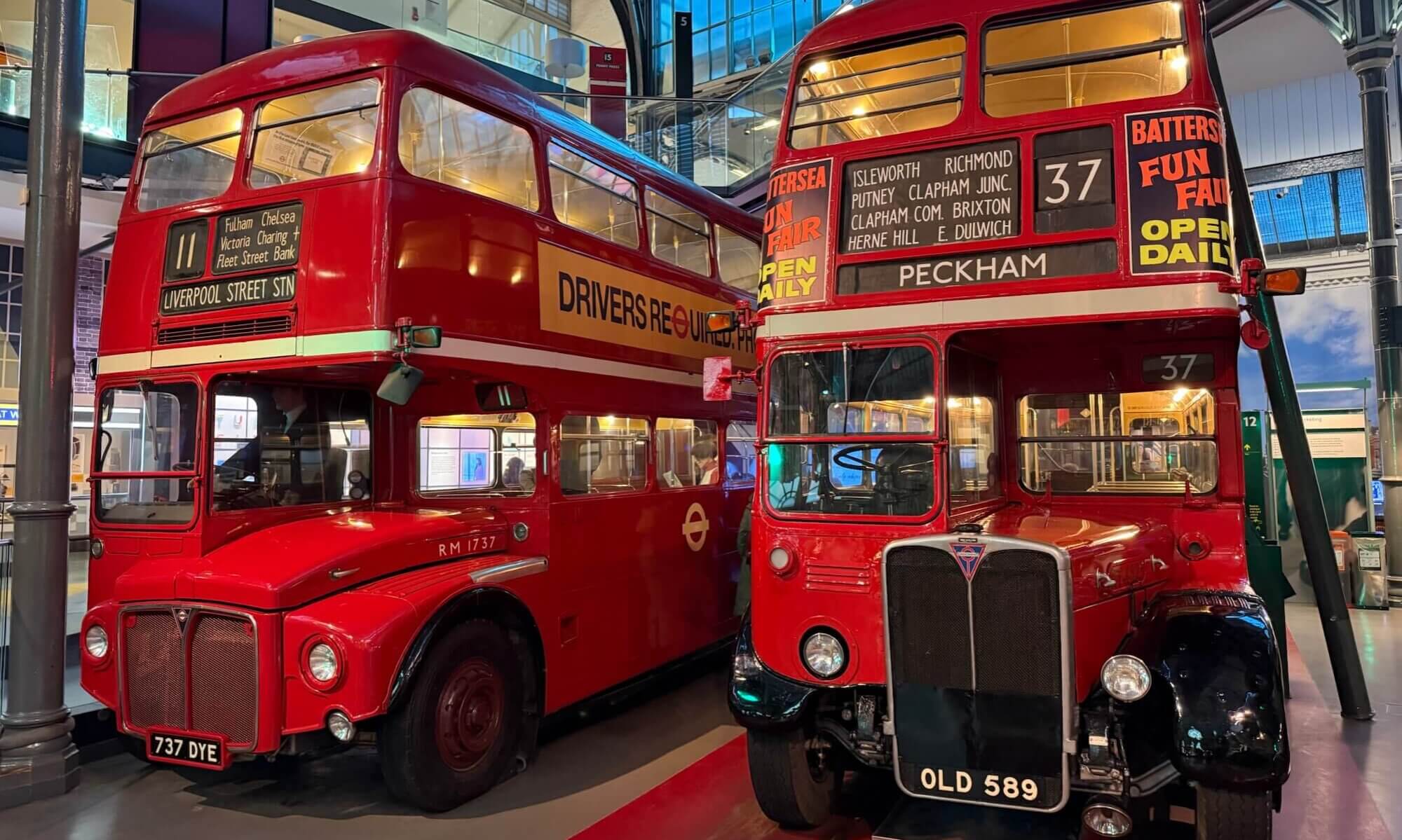
The Bismarck-Denkmal in Hamburg stands as one of the city’s most imposing and controversial landmarks. Otto von Bismarck, the so-called ‘Iron Chancellor’, was the leading political architect of German unification in 1871 and served as the first Chancellor of the German Empire. Known for his diplomatic skill and pragmatic statecraft, he forged alliances that shaped European politics for decades. In Hamburg, a city proud of its independence and Hanseatic traditions, the decision to honour Bismarck reveals both admiration for his national achievements and a degree of local identification with his strong, determined character.
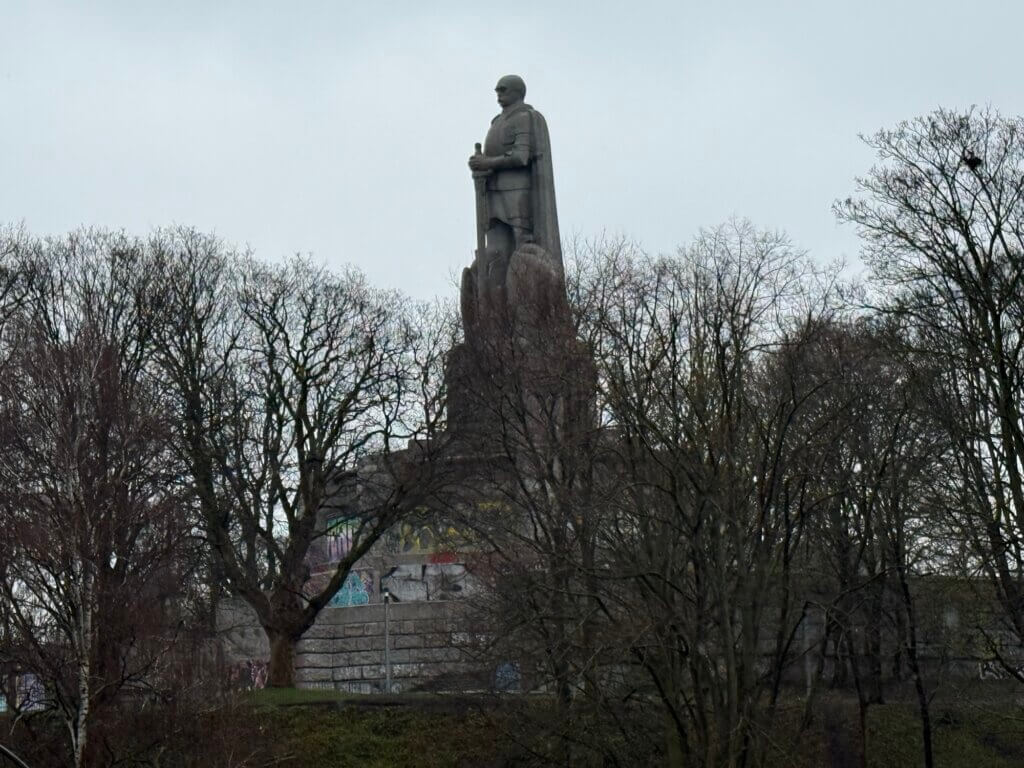
Construction of the memorial began in the early 20th century and was completed in 1906, shortly after Bismarck’s death. It was designed by architect Johann Emil Schaudt and sculptor Hugo Lederer as part of a broader wave of Bismarck monuments that appeared across Germany during that period. Standing on a hill in the Alter Elbpark, the colossal granite figure overlooks the Elbe river, symbolically guarding both the port and the nation. During its early years, the monument served as a gathering place for patriotic ceremonies and military parades, embedding it deeply in the civic and national identity of the Wilhelmine era.
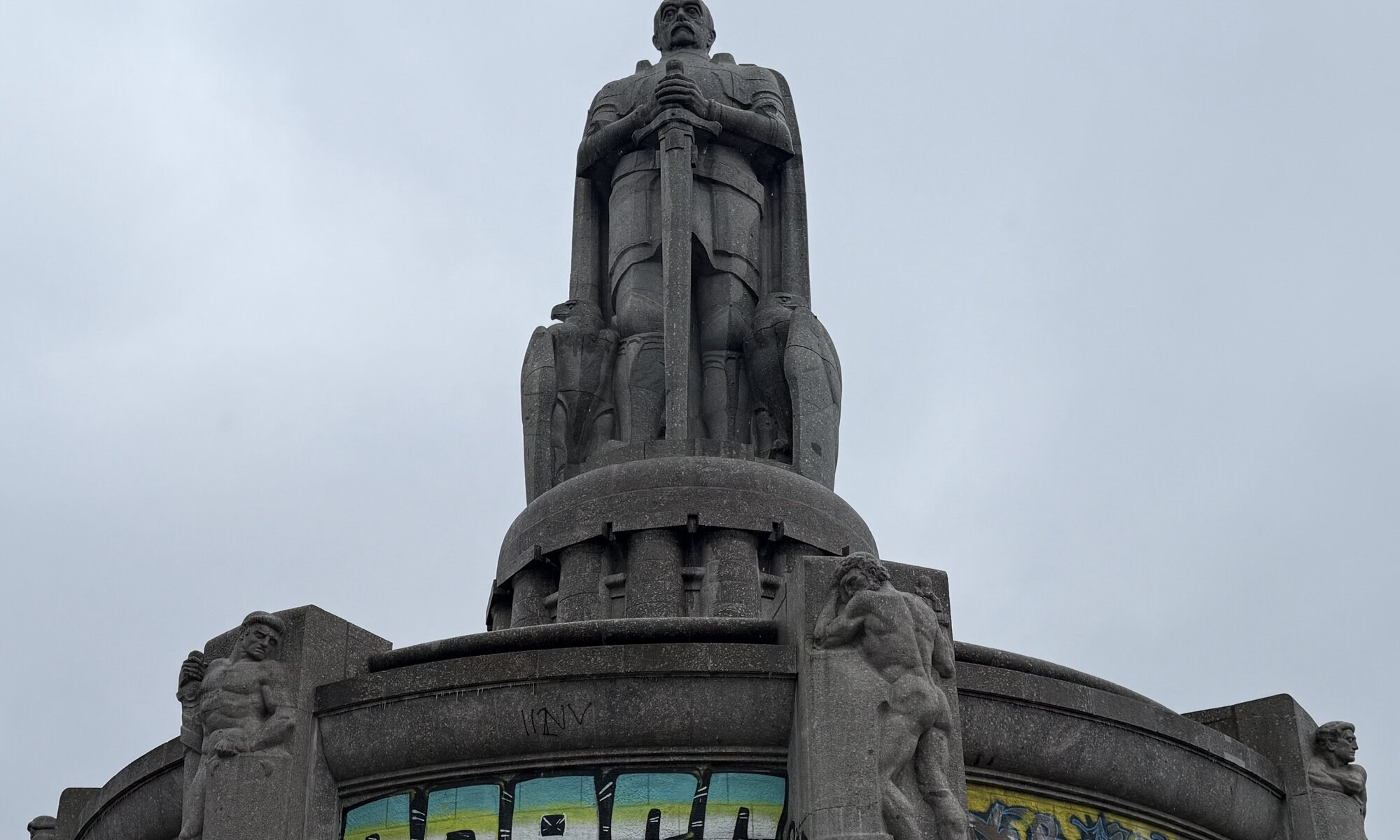
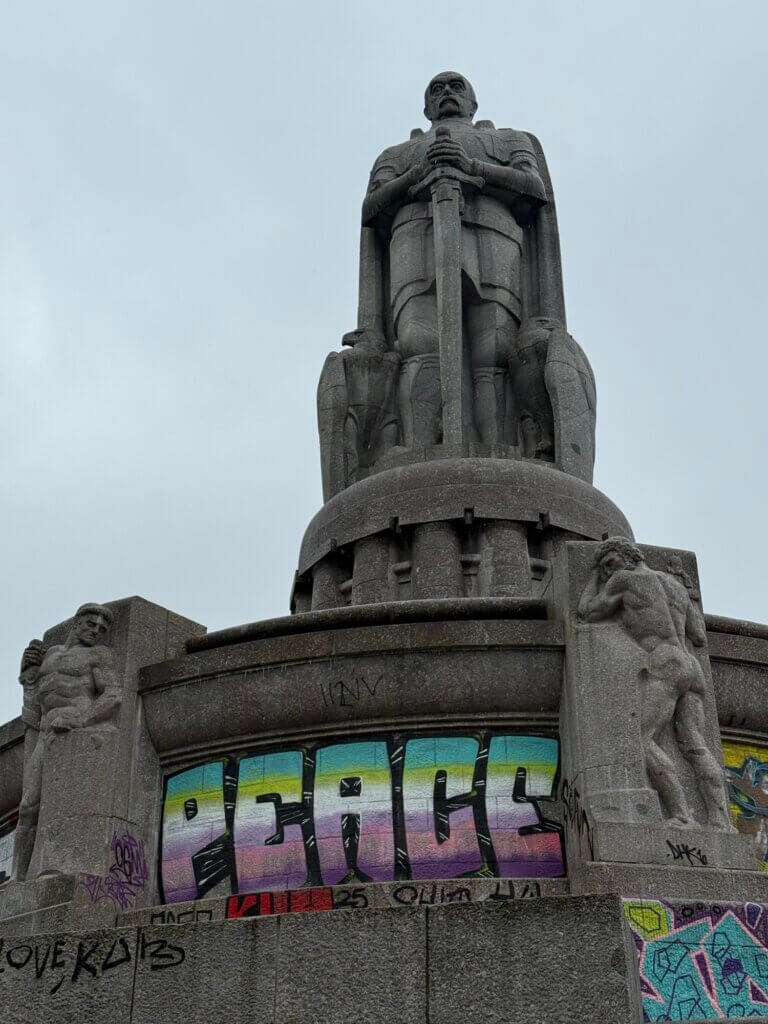
The statue itself, carved from massive granite blocks, depicts Bismarck as a Hanseatic Roland – the medieval guardian figure symbolising civic freedom and justice. Clad in armour and holding a mighty sword, he does not appear as a statesman but as a watchful protector, blending mythic imagery with national symbolism. The figure’s stern facial expression, rigid posture, and monumental size lend it an almost intimidating air. The pedestal beneath, with its decorative reliefs and heavy masonry, accentuates the feeling of solidity and permanence. The overall impression is one of strength and vigilance, reflecting early 20th-century ideals of power and unity.
Yet, when viewed through a modern lens, the Bismarck-Denkmal evokes mixed feelings. Its sheer scale and martial imagery now seem to reflect a bygone era of nationalism and imperial ambition rather than civic virtue. Hamburg’s current efforts to restore and reinterpret the monument demonstrate an awareness of this tension – a desire to preserve its historical and artistic value while acknowledging its problematic symbolism. For many visitors, it stands less as a celebration of Bismarck himself and more as a reminder of how history, power, and memory intertwine within the urban landscape.
Bismarck-Denkmal
Hamburg
Germany
Loading map...
