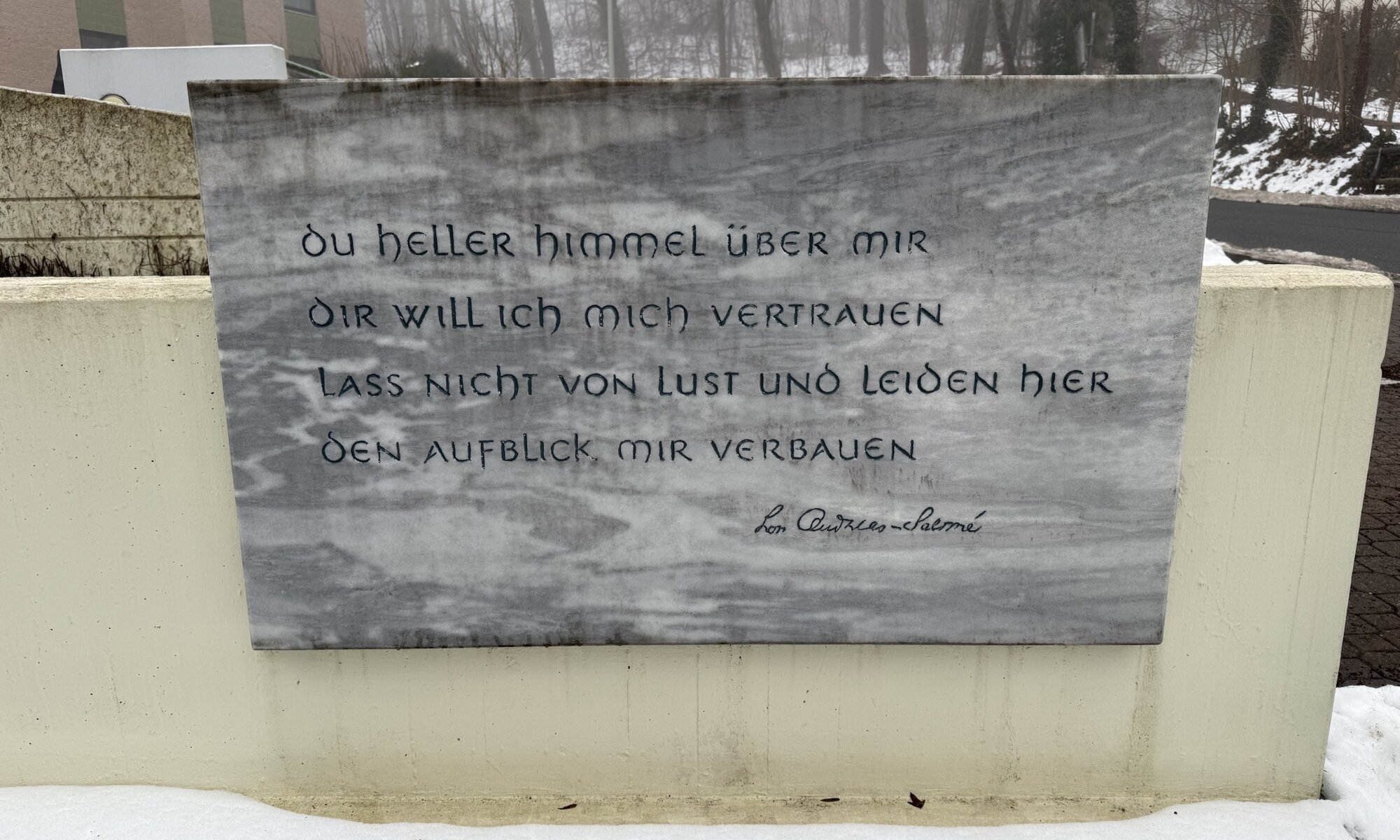
Lou Andreas-Salomé was born in 1861 in St. Petersburg and died in 1937 in Göttingen, where she had spent the last decades of her life and intellectual work. She moved within the great intellectual currents of late nineteenth- and early twentieth‑century Europe, shifting from theology and philosophy to literature and, finally, to psychoanalysis. Her life feels like a continuous journey between cities and languages, but it comes to rest, symbolically and quite literally, in Göttingen, where her grave still draws visitors who know her name more through others – Nietzsche, Rilke, Freud – than through her own books.
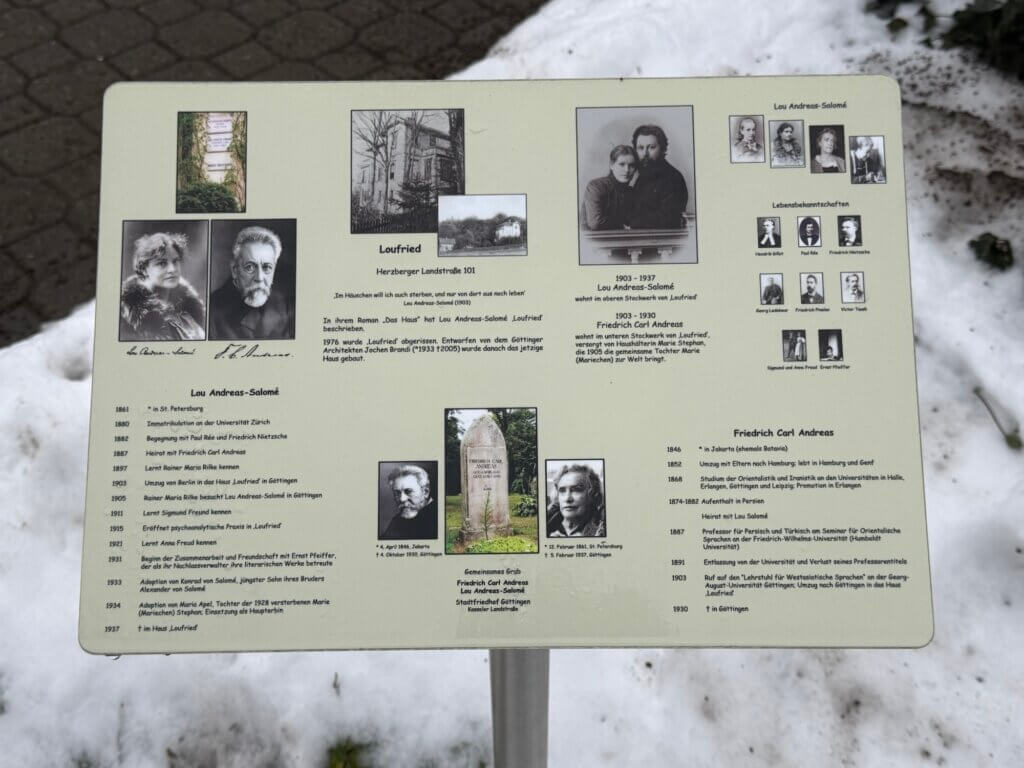
As a person she embodied a rare combination of intellectual discipline and personal freedom, refusing the usual roles offered to women of her time. Early on she studied theology and philosophy, then turned to writing essays, novels and reflections that interrogated religion, love and identity with a clear, unsentimental eye. She wrote in German despite her Russian upbringing, and her prose mirrors the movement of her life: outwardly cosmopolitan, inwardly preoccupied with questions of self, faith and desire.
Her literary work runs from novels such as ‘Das Haus’ and ‘Rodinka’ to essayistic books like ‘Die Erotik’, in which she explored psychological and erotic life long before psychoanalysis became fashionable. In Göttingen she was already an established writer when she turned systematically to psychoanalysis, becoming one of the first women to practise and to write analytically about female sexuality and inner conflict. Through her correspondence and case work she linked the quieter university town on the Leine to the broader psychoanalytic movement that was transforming views of the human mind.
Her relationships with Paul Rée and Friedrich Nietzsche began in the early 1880s, when she met them in Roma and briefly imagined a shared ‘free-thinking’ household, something that scandalised polite society and ultimately proved unsustainable. Later, her bond with the young Rainer Maria Rilke was both intimate and formative: she encouraged his writing, travelled with him to Russia and remained a crucial interlocutor as he developed his voice. As a psychoanalyst she engaged with Sigmund Freud on theoretical questions, corresponding and meeting within the Wien-centred circle while keeping enough distance to maintain her own perspective on religion, love and the unconscious.
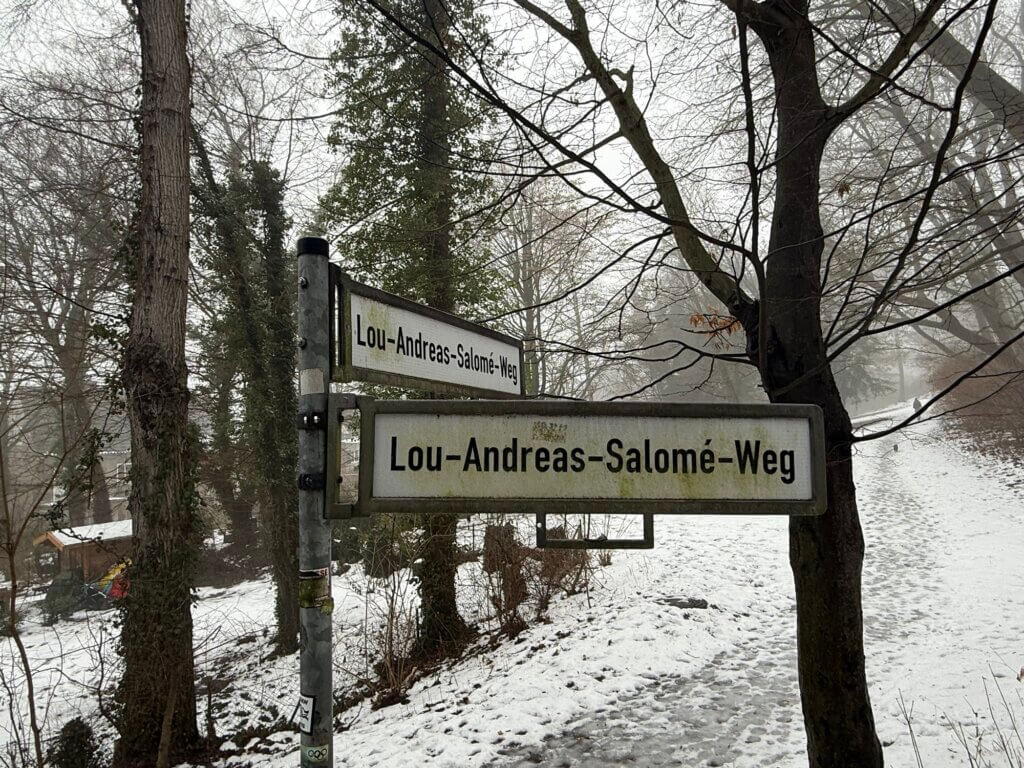
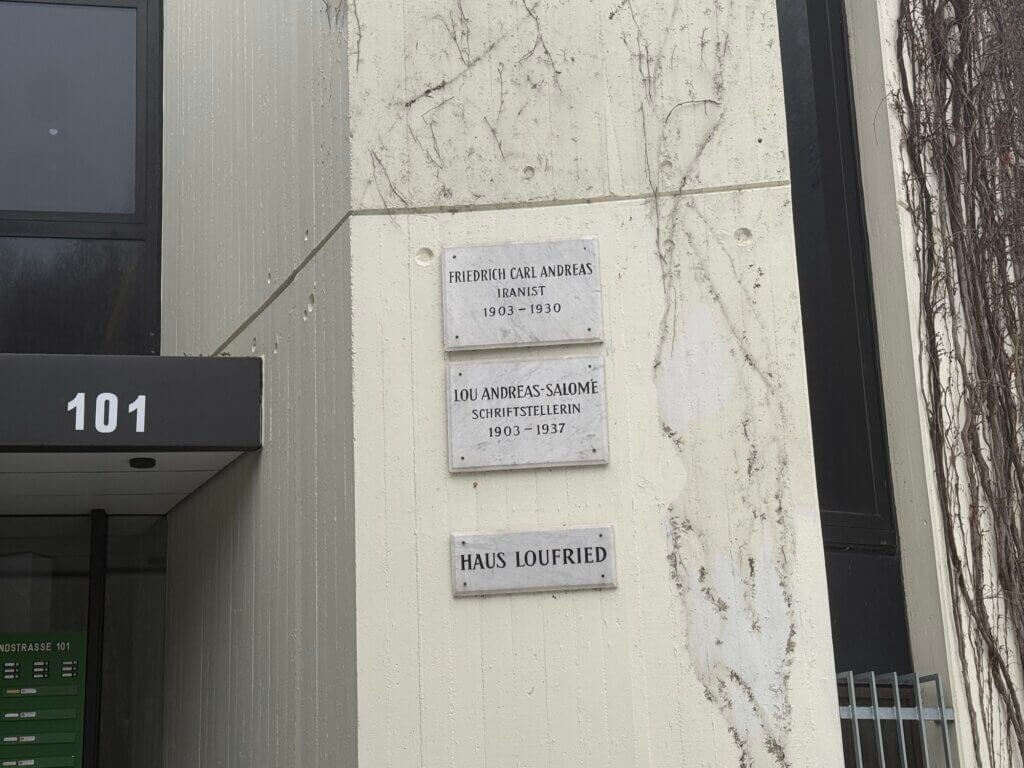
Her marriage to Friedrich Carl Andreas, concluded in 1887, brought her eventually to Göttingen, where he held a chair as philologist and where they shared a household that was more intellectual partnership and cohabitation than conventional romance. The house they lived in on the Hainberg above the town was later known as ‘Loufried’, a name that has survived the building itself, which was demolished in the 1970s but still lives on in local memory. Today, Göttingen remembers her through her grave on the Stadtfriedhof, a path named Lou-Andreas-Salomé-Weg, and the Lou Andreas‑Salomé‑Institut für Psychoanalyse und Psychotherapie, which anchors her legacy in the city’s present‑day therapeutic and cultural life.
Lou Andreas-Salomé
Haus Loufried
Göttingen
Germany
Loading map...
