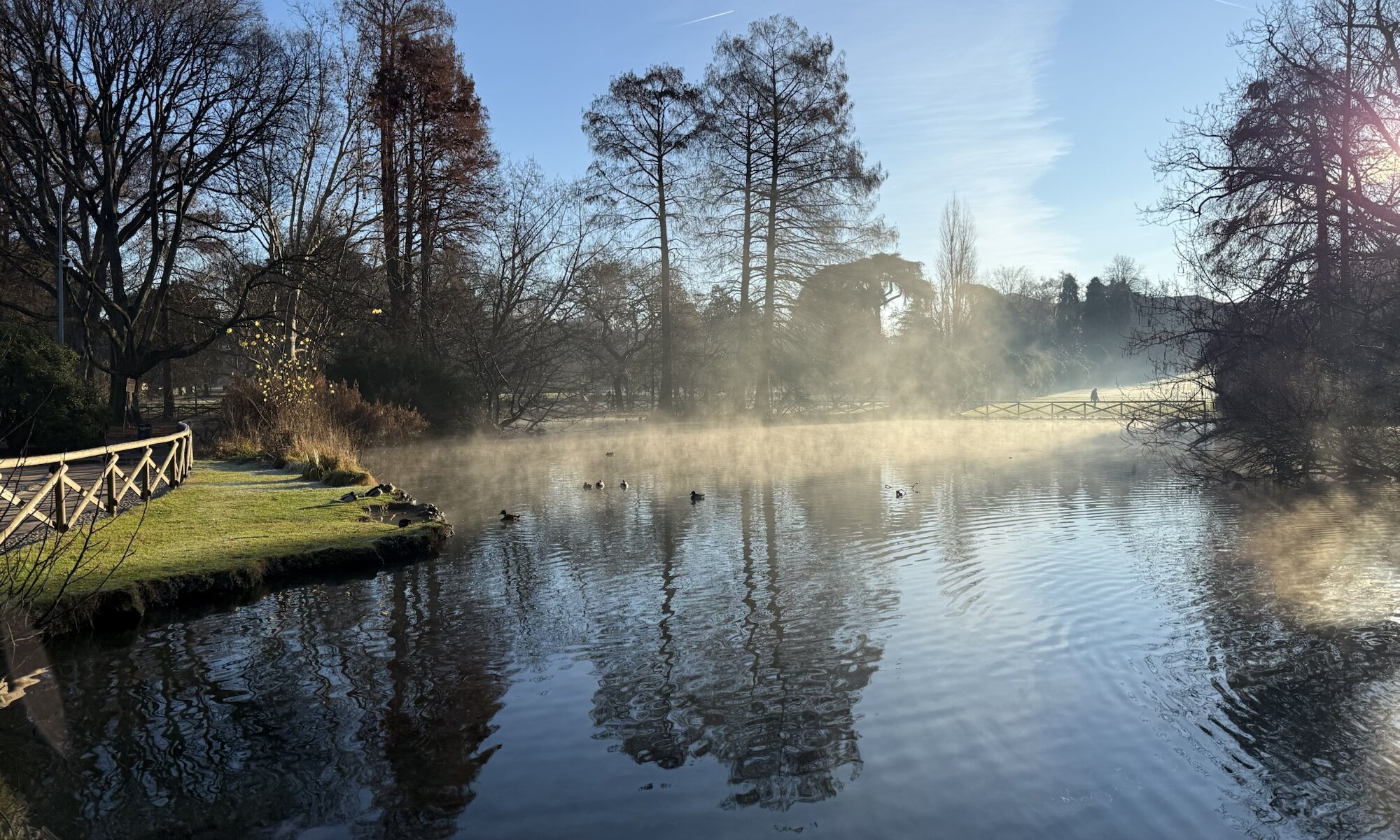
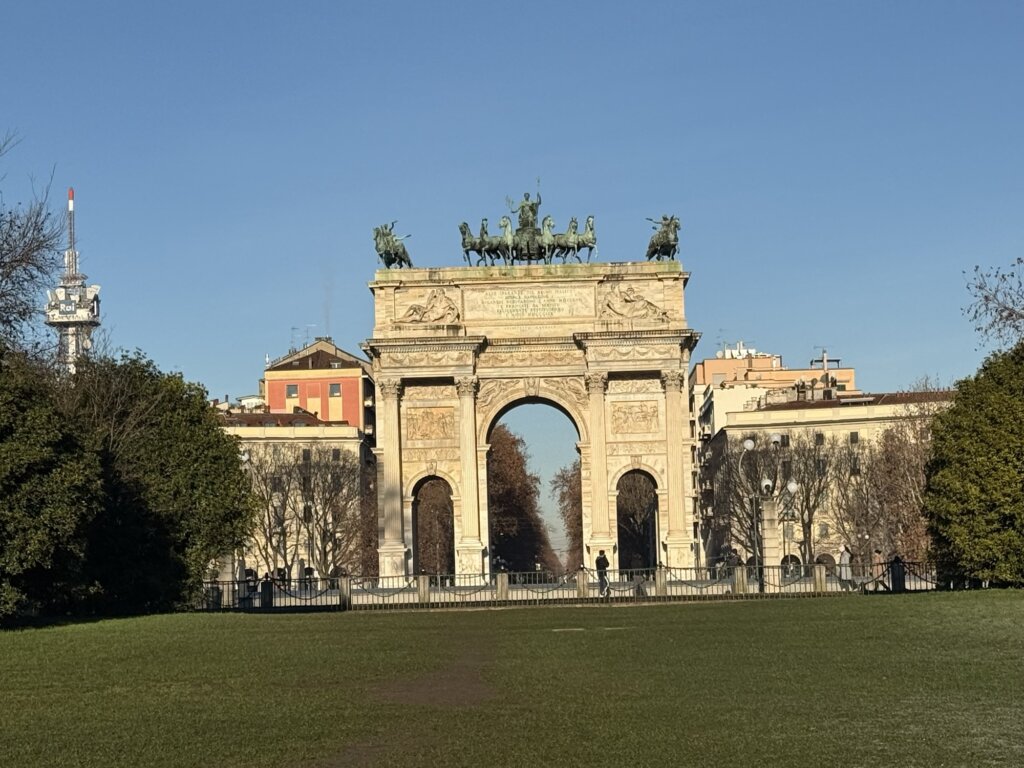
Parco Sempione is the green heart of central Milano, unfolding immediately behind the massive walls of Castello Sforzesco and stretching out towards the Arco della Pace. It feels like a deliberate counterpoint to the city’s dense traffic and fashion-conscious streets, offering long perspectives of lawn, water and monumental stone framed by mature trees.
Historical background
The area now occupied by Parco Sempione was once the hunting and garden grounds of the Visconti and Sforza rulers, later turned into a vast military parade ground attached to the castle. In the late 19th century the city decided to transform this open expanse into a public park, and between 1888 and 1894 the architect Emilio Alemagna created an English-style landscape with curving paths, a lake and a belvedere that softened the fortress setting and opened it to everyday civic life.
What makes it special
What sets Parco Sempione apart is the way history, design and daily Milanese routine overlap in one compact space. You see people running past Renaissance walls, couples sitting on benches with views to a 19th‑century triumphal arch, and children playing near sculptures and pavilions that once formed the backdrop to great international exhibitions. The layout is informal and romantic rather than rigidly geometric, so you are constantly moving between shady corners, sudden vistas and small architectural surprises.
Sights within the park
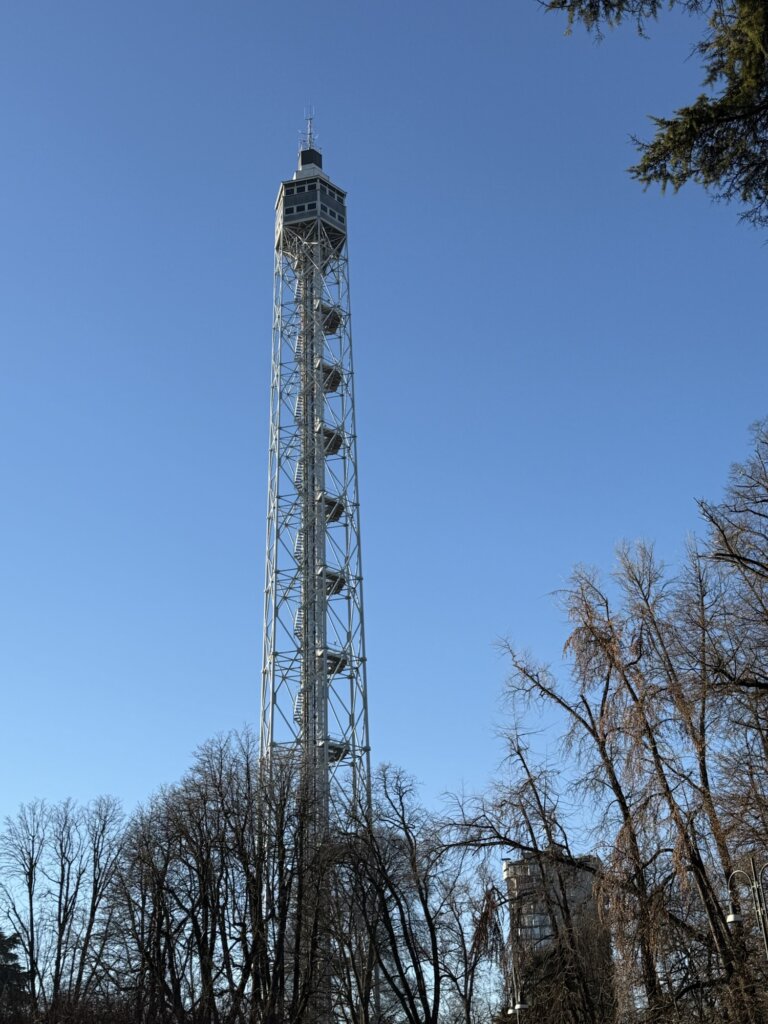
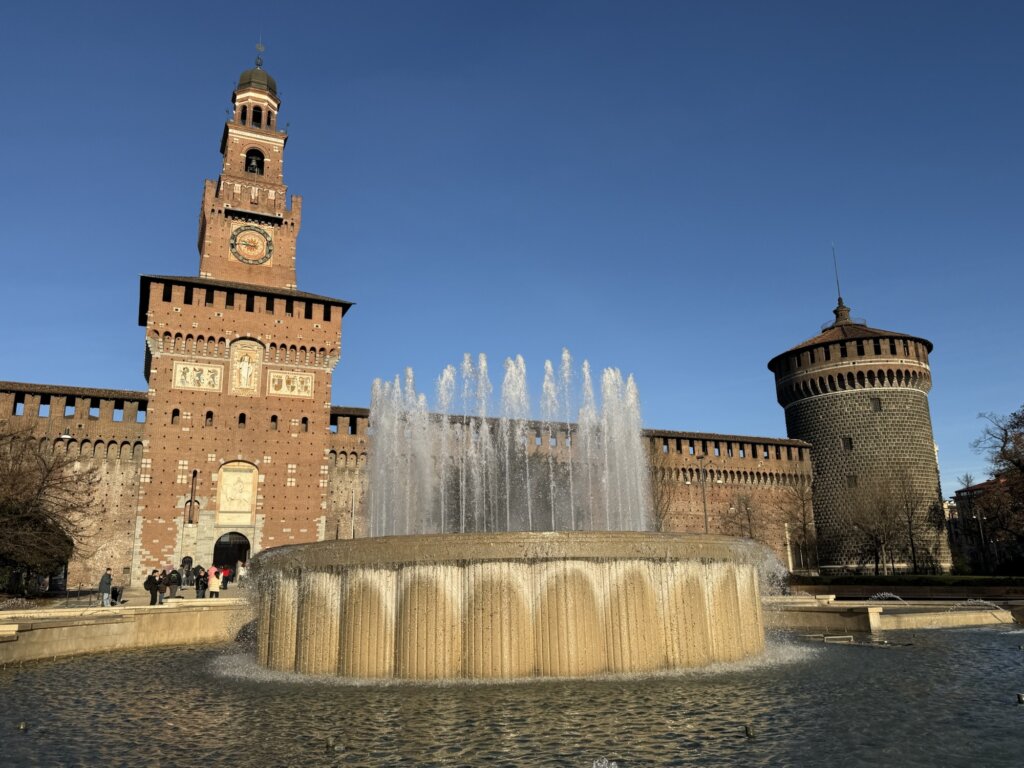
At one end stands Castello Sforzesco with its museums and courtyards, while at the opposite end the Arco della Pace closes the main axis and lines up dramatically with Corso Sempione. Within the park itself there is a small lake with picturesque bridges, the striking steel Torre Branca offering panoramic views over the city, and the Palazzo dell’Arte, home of the Triennale design museum and its changing exhibitions. Scattered around are sculptures, playgrounds and lawns where locals stretch out with picnics, making it easy to combine sightseeing with a relaxed pause.
Atmosphere and practical impressions
The atmosphere changes through the day: in the morning it belongs to joggers and dog walkers, at lunchtime office workers drift in with takeaway boxes, and in the evening students and friends gather with drinks on the grass. It is an easy place to spend a couple of hours between museum visits, using the shaded paths as a gentle route from the historic centre towards the more residential neighbourhoods beyond Corso Sempione. For a visitor, the real charm is that you never feel cut off from the city; instead, the park acts as a calm, lived‑in stage set linking some of Milano’s most recognisable landmarks.
Torre Branca
Parco Sempione
Milano
Italy
Loading map...
