

The Castello Sforzesco stands as one of Milano’s most recognisable landmarks, a formidable red-brick fortress that has witnessed the city’s shifting fortunes over several centuries. Originally built in the 14th century by the Visconti family, it served as both a defensive stronghold and a symbol of dynastic power. When the Sforza family rose to prominence in the 15th century, Francesco Sforza ordered extensive reconstruction of the castle, transforming it from a military fort into a grand ducal residence. Through the Renaissance, it became not only a centre of governance but also a refined courtly residence that reflected Milano’s growing cultural prestige.
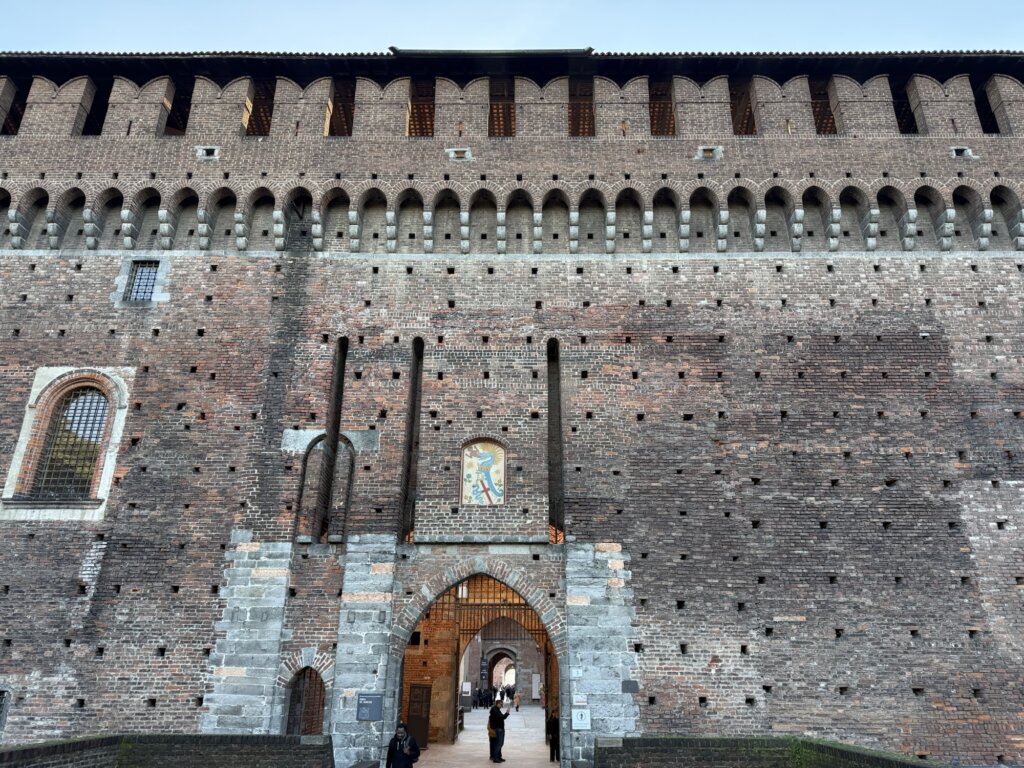
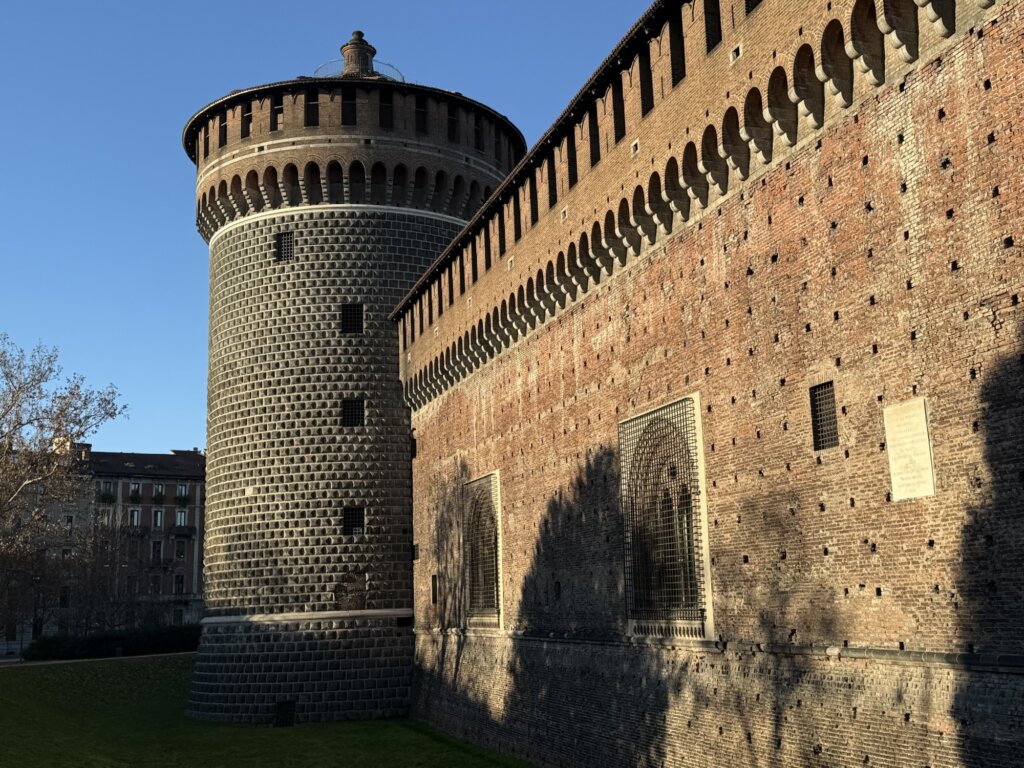
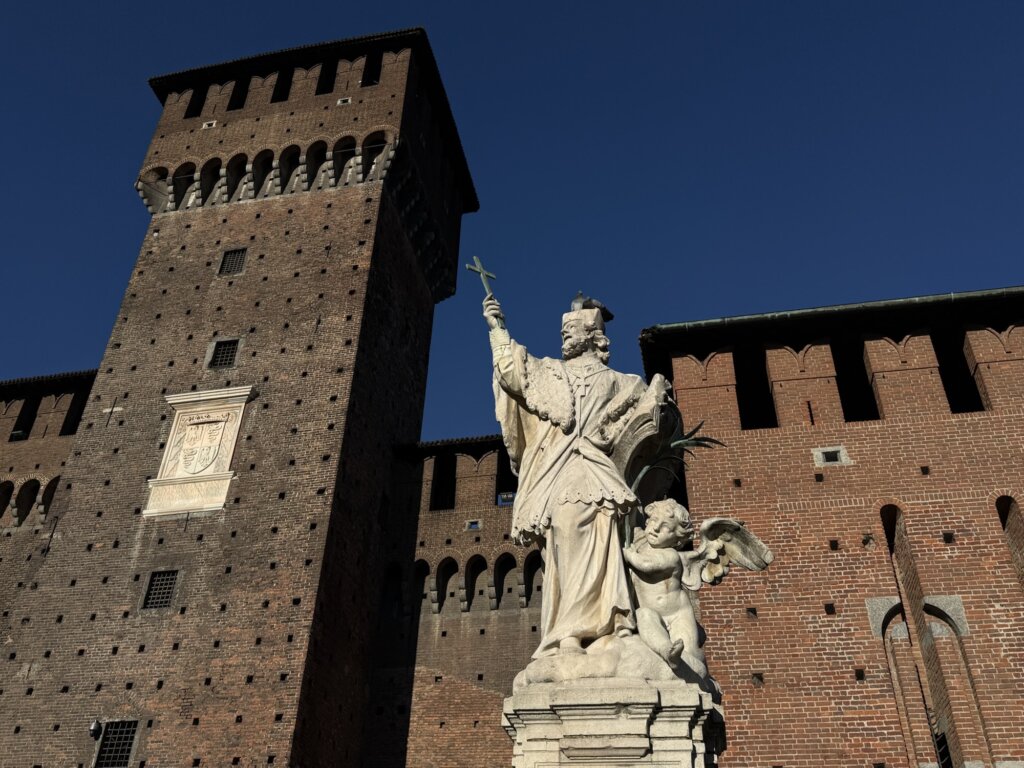
What makes the Castello Sforzesco truly distinctive is its layered history, where military architecture and artistic heritage coexist harmoniously. Its vast walls and imposing towers – especially the Filarete tower – illustrate the evolution of fortification styles, while its interiors and courtyards reveal the refined tastes of Renaissance patronage. The castle once hosted artists such as Leonardo da Vinci and Bramante, whose work contributed to Milano’s artistic golden age. Despite later centuries of neglect and damage, including severe bombardment during the Second World War, the castle was restored with remarkable care, reclaiming its position as a focal point of Milanese identity.
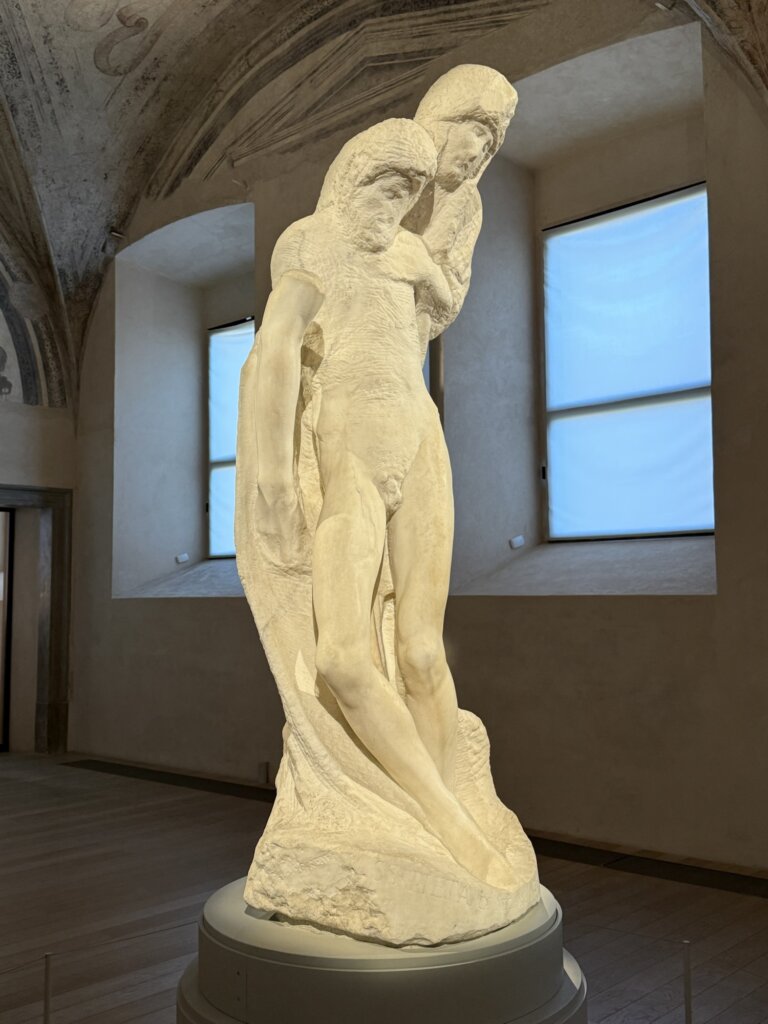
Today, the Castello Sforzesco functions as an extraordinary cultural complex, housing several of Milano’s major civic museums. Visitors can explore the Pinacoteca del Castello Sforzesco, where masterpieces by Mantegna and Bellini hang, or the Museum of Musical Instruments, which charts the evolution of Italian craftsmanship in sound. The Museum of Ancient Art holds a special treasure: Michelangelo’s unfinished Rondanini Pietà, one of his most moving and introspective late works. Other galleries display tapestries, sculptures, and archaeological relics spanning from antiquity through the Renaissance.
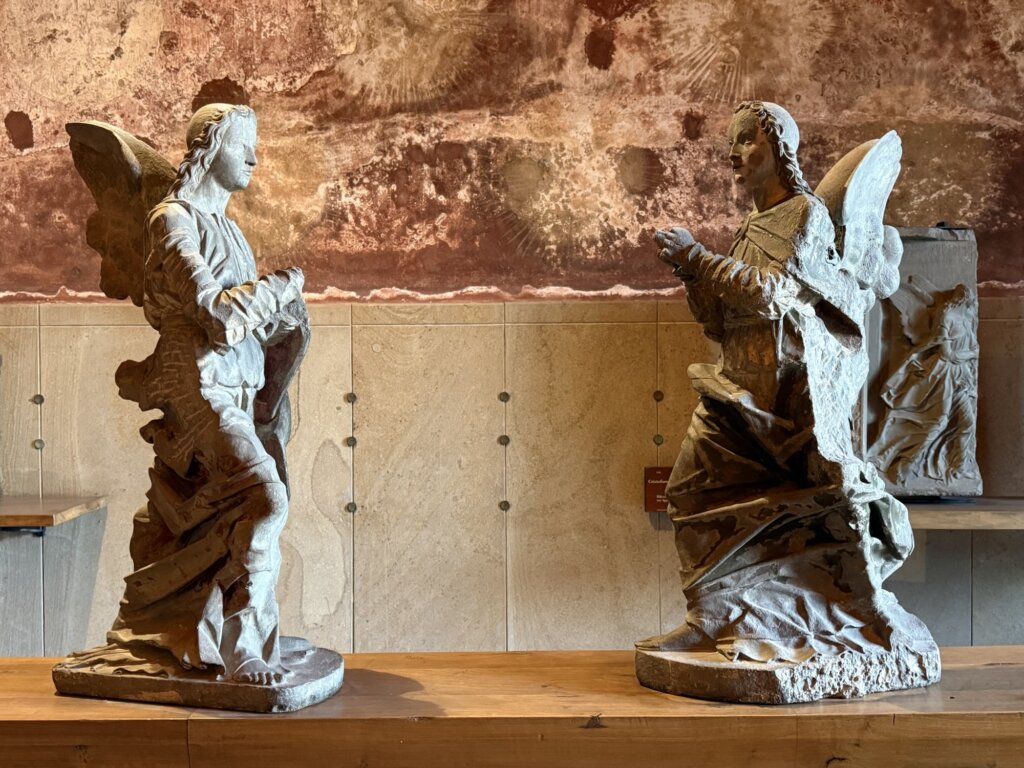
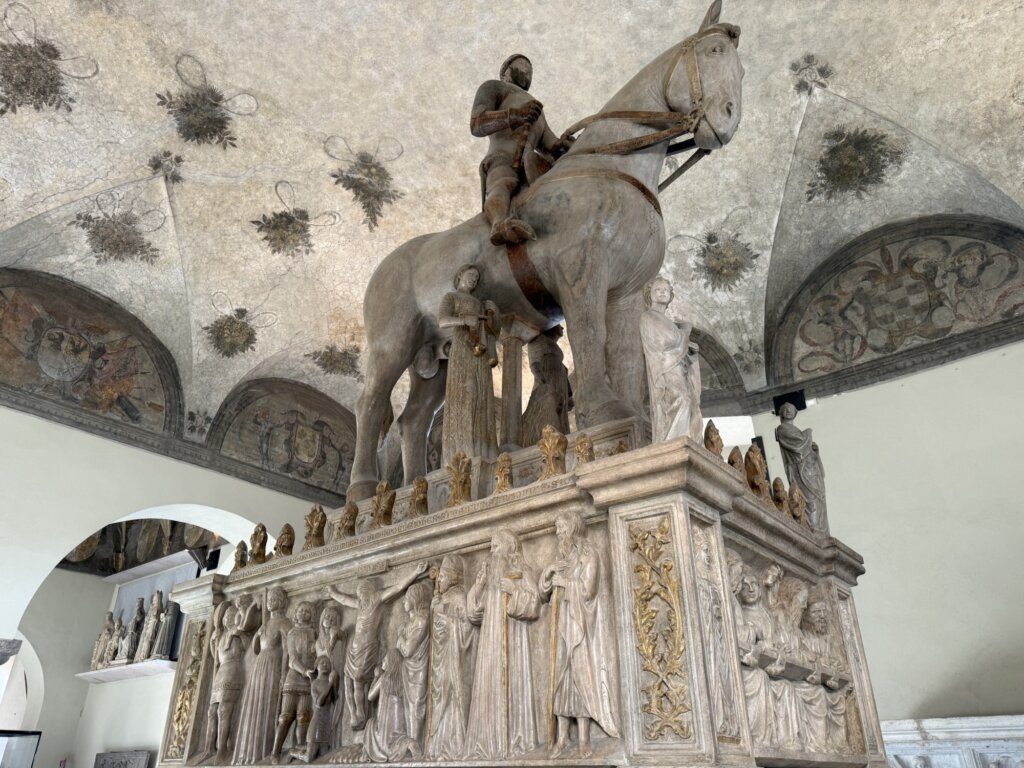
Beyond the museums, the castle grounds offer a tranquil contrast to the urban rhythm of Milano. The inner courtyards and defensive ramparts provide sweeping views, while the adjacent Parco Sempione invites leisurely walks and moments of reflection beneath the shadow of the fortress. The combination of art, history, and open space makes the Castello Sforzesco not merely a monument but a living part of the city’s daily life – a place where centuries of Milanese legacy continue to breathe through its stones and exhibitions.
Castello Sforzesco
Milano
Italy
Loading map...
