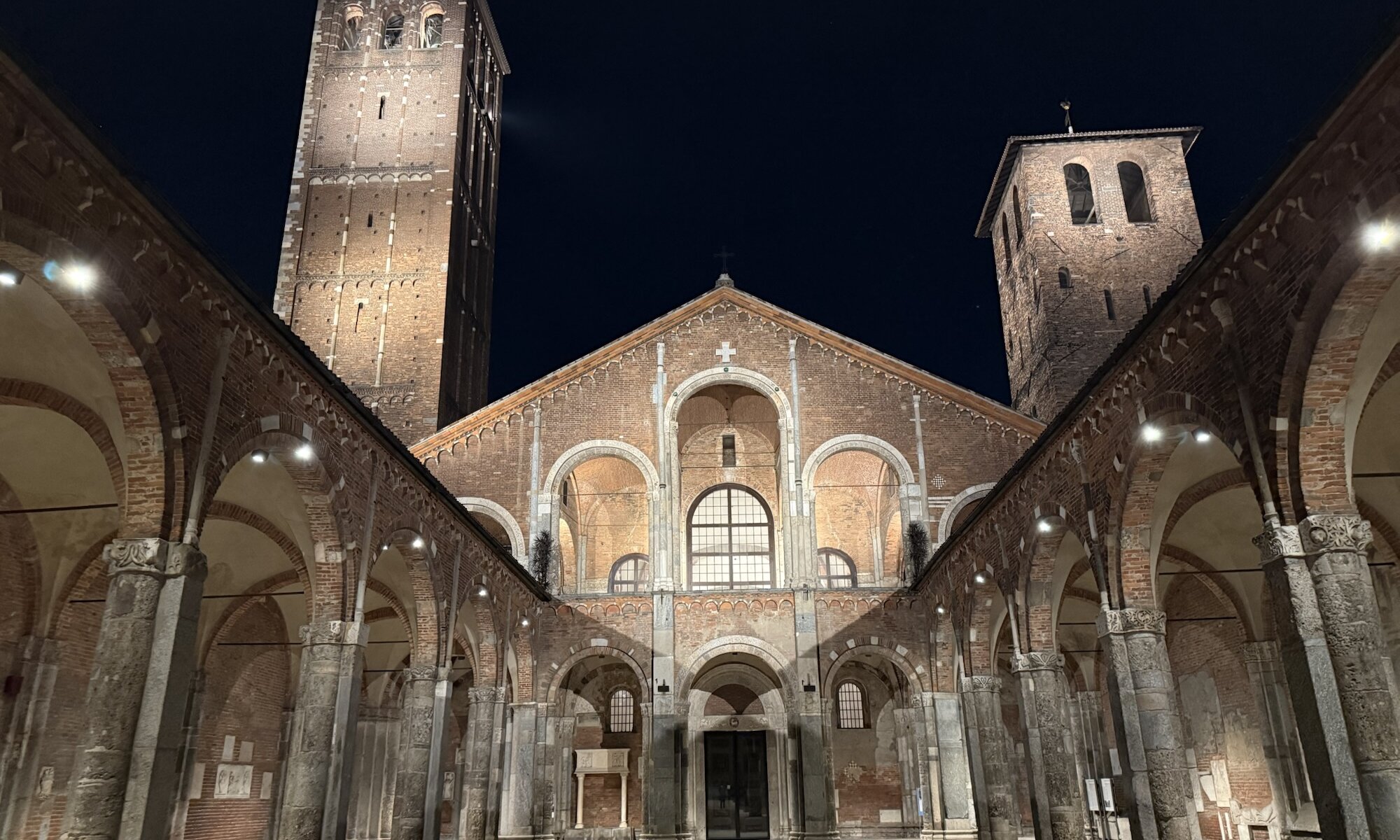
The Basilica of Sant’Ambrogio is one of Milano’s most distinguished landmarks, with roots reaching back to the earliest centuries of Christianity. Built originally in the late fourth century, it stands on a site that was then far beyond the Roman walls, chosen by its namesake, Bishop Ambrose, one of Milano’s most influential figures. Over the centuries, the church has been rebuilt and restored, particularly in the Romanesque period of the 11th and 12th centuries, which gave it the distinctive appearance we see today. Despite renovations after wartime damage, the basilica has preserved its solemn, ancient character, serving as a powerful reminder of Milano’s early Christian heritage.
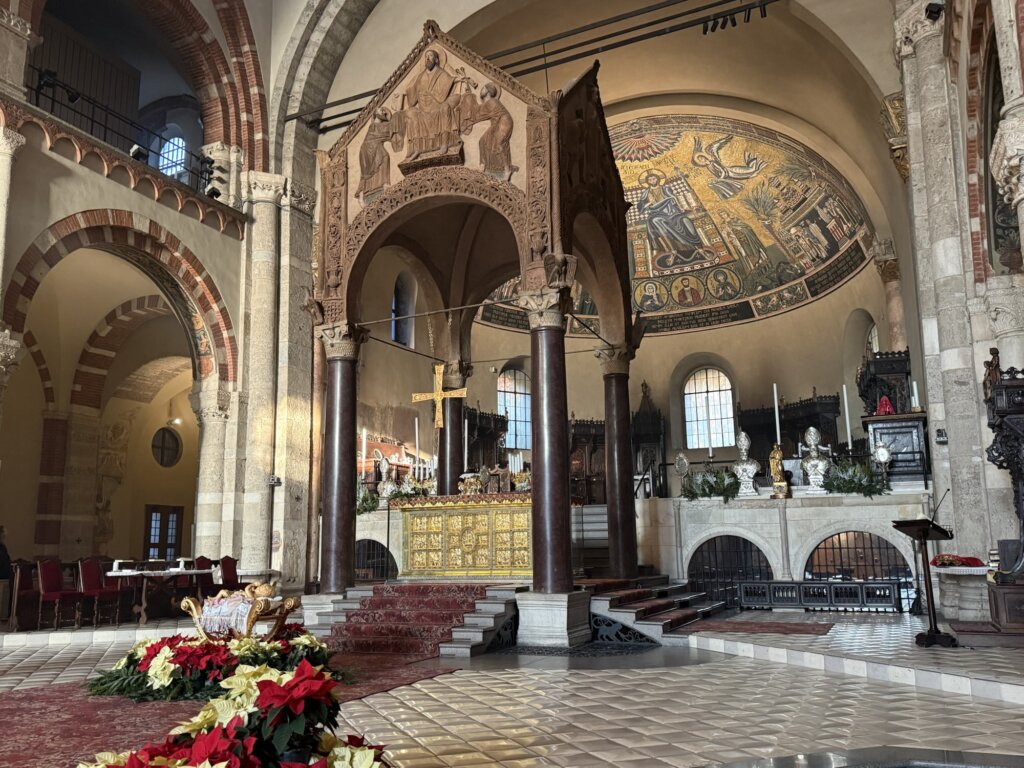

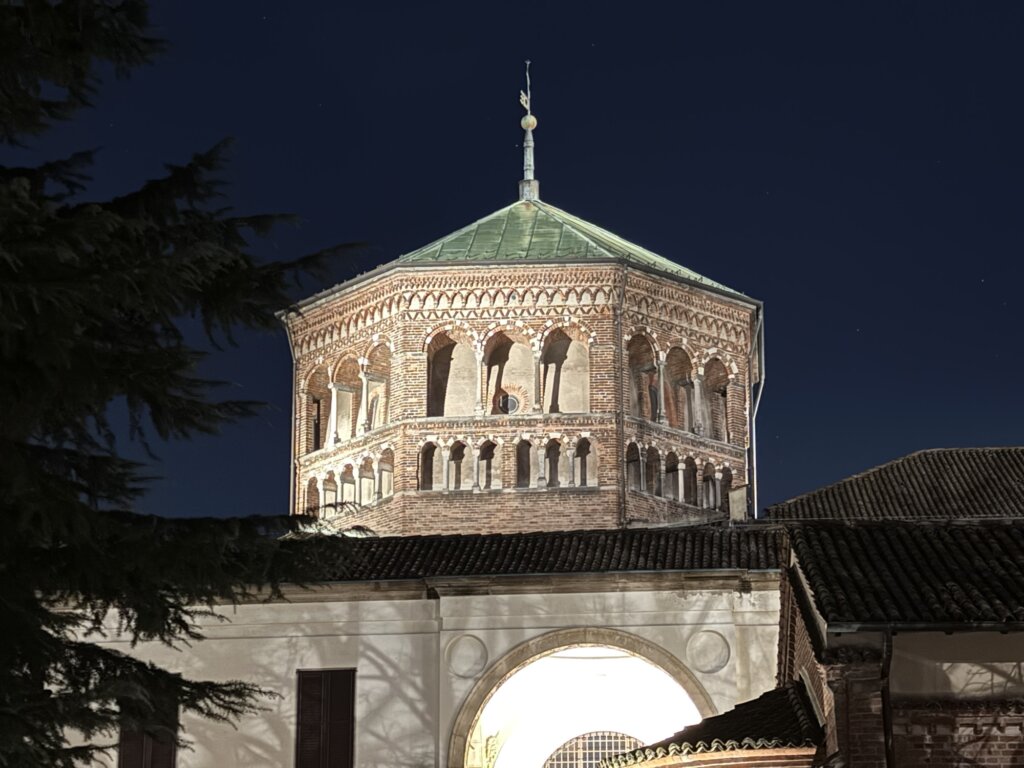
Its architecture is a masterpiece of Lombard Romanesque style, marked by sturdy brick walls, rounded arches, and twin bell-towers rising asymmetrically from the façade. The interior, supported by massive columns and ribbed vaults, has an austere yet harmonious balance, reflecting both spiritual strength and medieval craftsmanship. The mosaic-decorated apse, the golden altar beneath its baldachin, and the crypt containing Ambrose’s relics make the space deeply evocative. Yet perhaps the most distinctive feature is the open atrium, or narthex, preceding the main entrance – an enclosed courtyard paved with ancient stone, surrounded by arcades that blend light and shadow.
In earlier times, this atrium held an important function in the life of the church. It was here that catechumens – those preparing for baptism – stood during Mass, listening from beyond the threshold until they could participate fully in the Eucharist. The courtyard also served as a gathering place for pilgrims, processions, and civic meetings, symbolising the link between the sacred and the everyday world. The man who gave his name to this basilica, Saint Ambrose, was Bishop of Milano in the 4th century, renowned as theologian, diplomat, and defender of Christian orthodoxy against Arianism. His intellect and moral strength shaped both the faith and the political landscape of his time, making him one of the four great Latin Doctors of the Church and an enduring symbol of Milano’s spiritual authority.
Sant’Ambrogio
Milano
Italy
Loading map...
