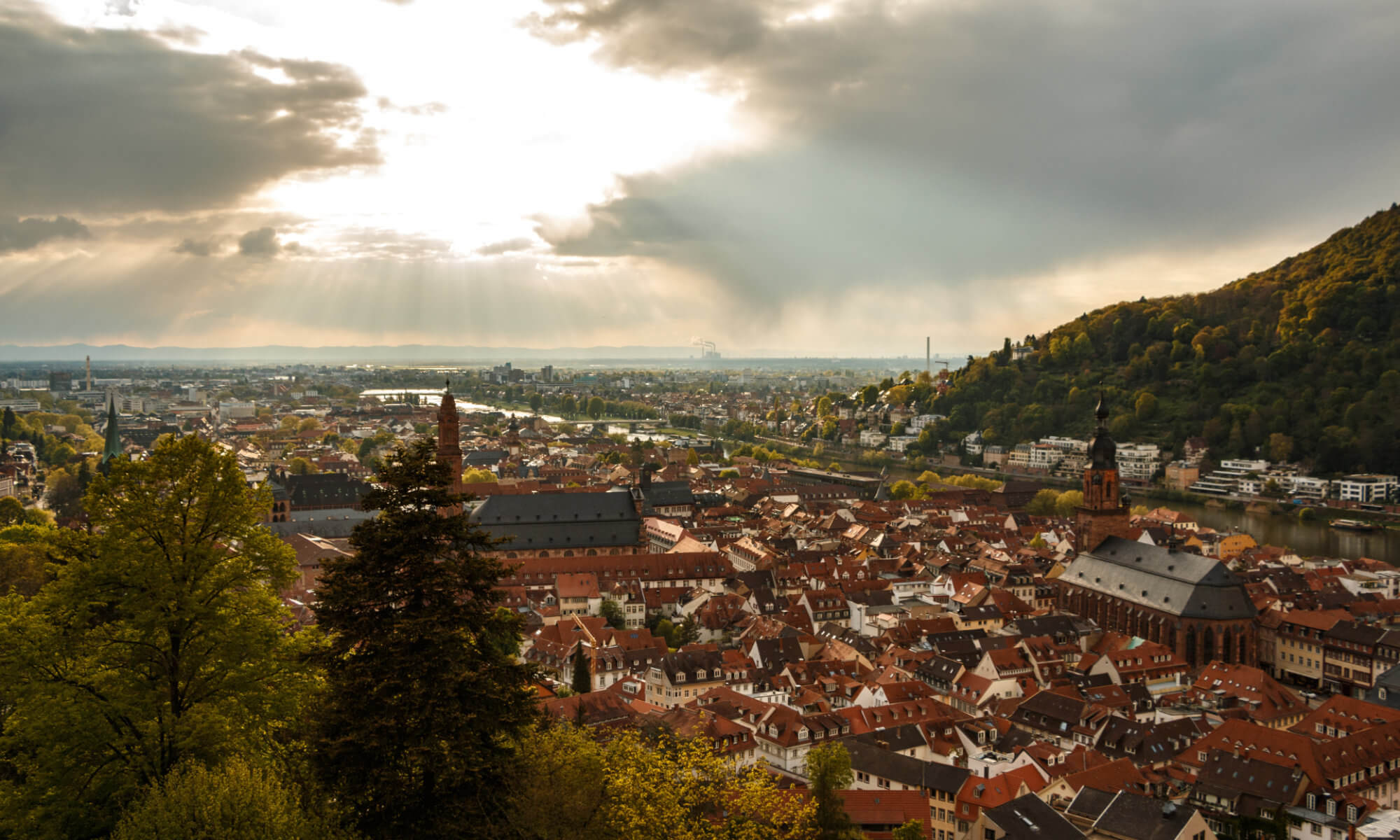
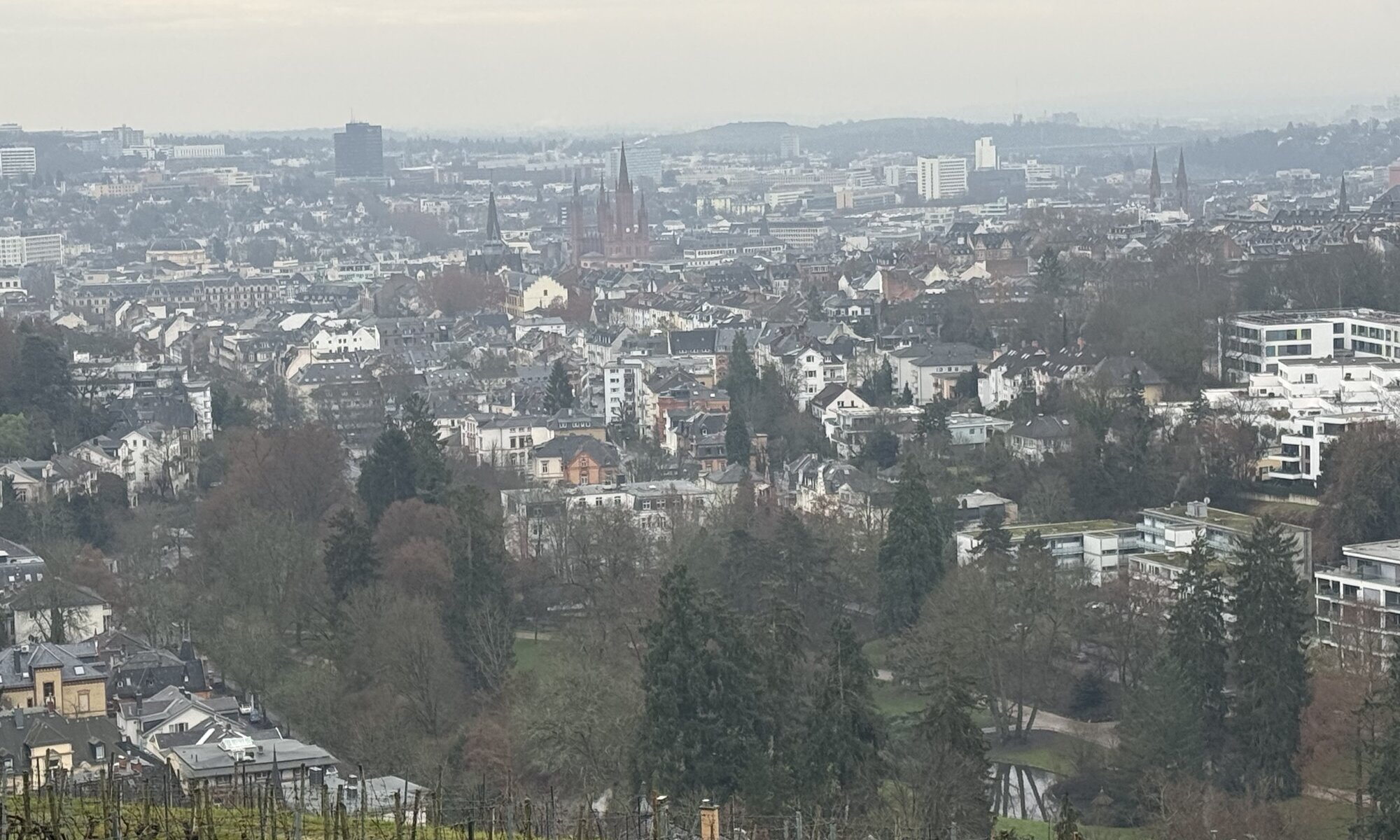
Neroberg rises gently above Wiesbaden, offering one of those classic hillside viewpoints where city, river and forest seem to knit together in a single panorama. On a clear day the view stretches across the elegant Kurhaus quarter towards Mainz and the wider Rhein-Main region. The hill has long been treated as the city’s local ‘house mountain’, and even today the mix of woodland paths, vineyards and historic architecture gives it a distinctly cultivated, almost park-like character rather than a wild, rugged feel.
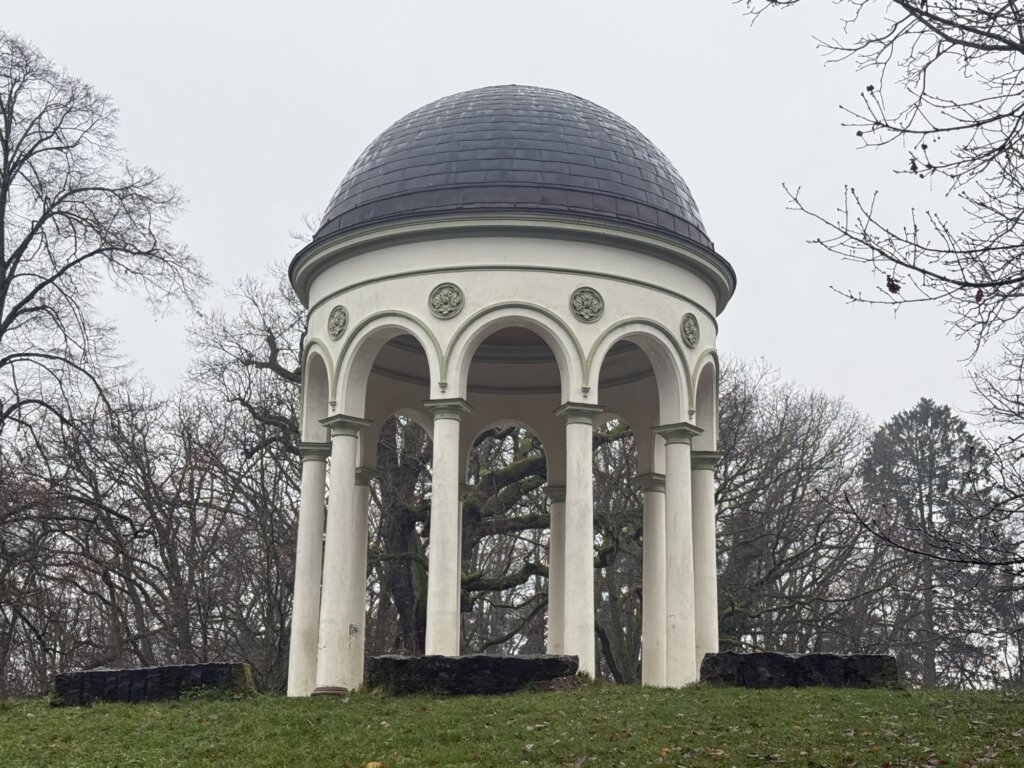
At the heart of this carefully staged landscape stands the Neroberg-Tempel, a small, open, circular temple that acts as both an architectural ornament and a viewing platform. Built in the nineteenth century in the style of an Italian Renaissance monopteros, it consists of a ring of columns supporting a domed roof, open to the air so that the actual ‘walls’ are the surrounding treetops and the distant cityscape. Because of its position on the edge of the slope, the temple feels like a balcony above Wiesbaden, and it has become a popular backdrop for wedding photos, quiet picnics and those contemplative pauses that naturally occur at the turning point of a walk.
The hill itself is very much in active use rather than being a relic of spa-town history. Walking trails radiate into the town forest, giving residents and visitors easy access to longer hikes while still being close to the city. There is a historic vineyard on the southern slope that continues to be cultivated, a reminder that Neroberg has always had an economic as well as a recreational role. Up on the plateau you also find a ropes course and other leisure facilities, and the remains of the old hotel complex have been reinterpreted with a café and an outdoor event space where cultural programmes run during the warmer months.
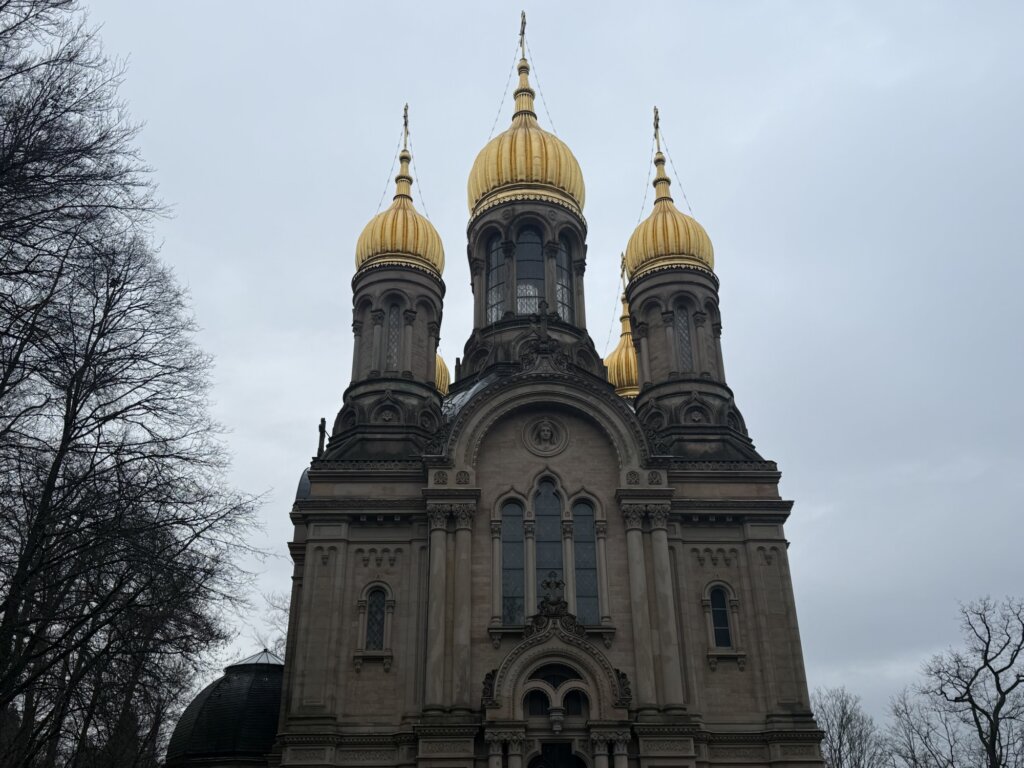
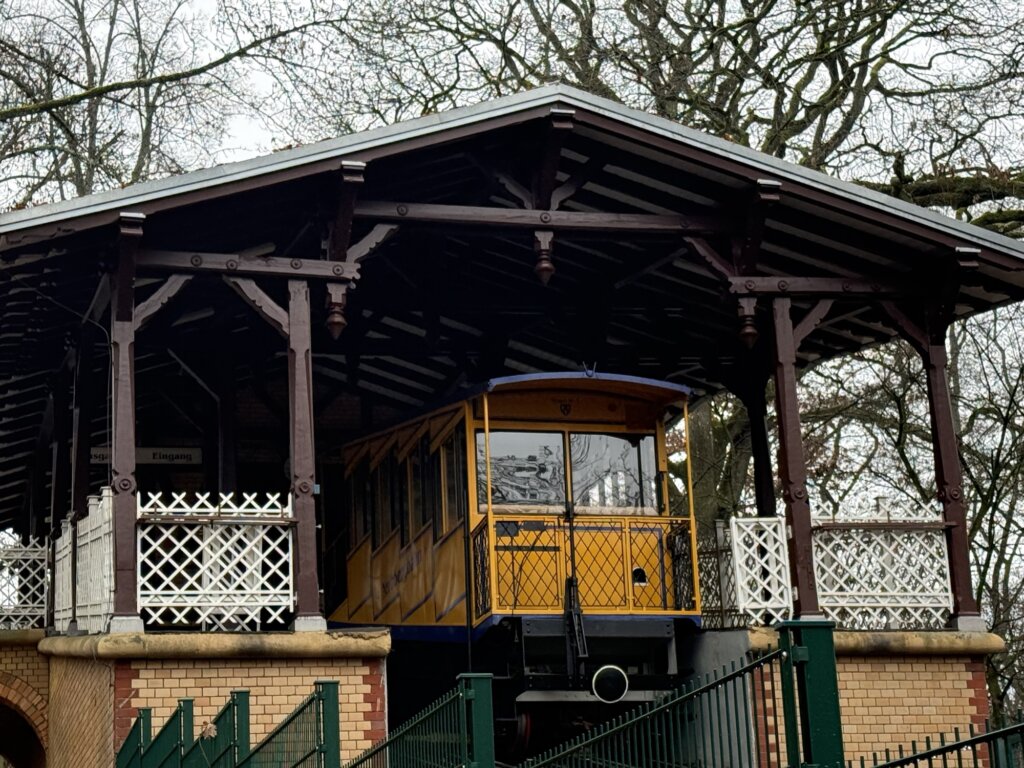
Reaching the top by the Nerobergbahn is part of the experience. This short hillside railway, opened in the late nineteenth century, is one of the few surviving water-ballast funiculars: the upper car is filled with water so that its weight pulls the lower car uphill via a cable, a simple but ingenious system that fascinates technically minded visitors. The track is only a few hundred metres long, but the steep gradient, the creaking of the wooden cars and the slow reveal of the view as you emerge above the treeline make the ride feel surprisingly atmospheric. Stepping out at the upper station, with the temple, the Russian church and the forest paths all within a few minutes’ walk, neatly encapsulates what makes Neroberg so appealing: history, engineering and landscape folded into a compact, very walkable setting. Just remember: Neobergbahn is not operating in winter, but there is a zigzag path next to the tracks leading up.
Neroberg
Wiesbaden
Germany
Loading map...
