
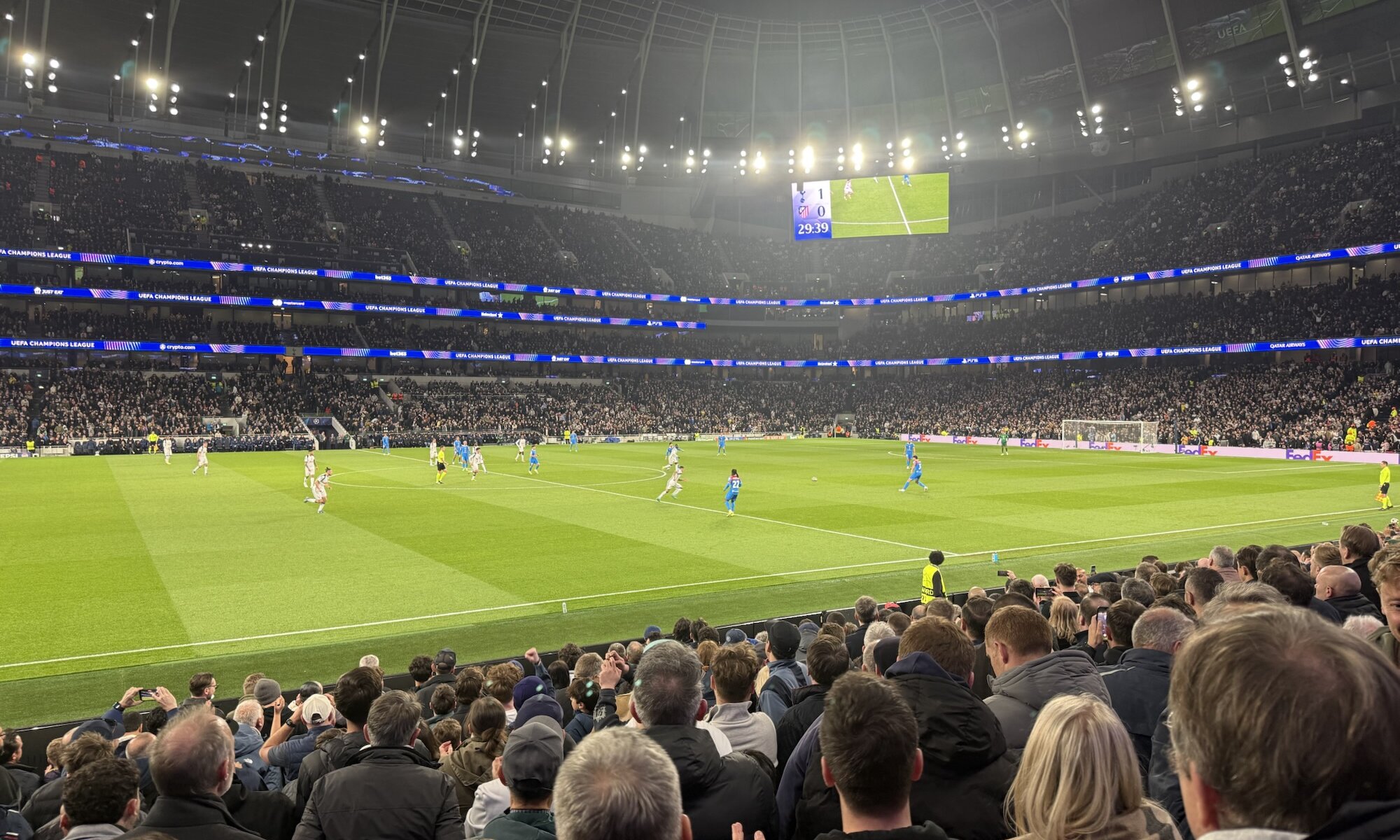
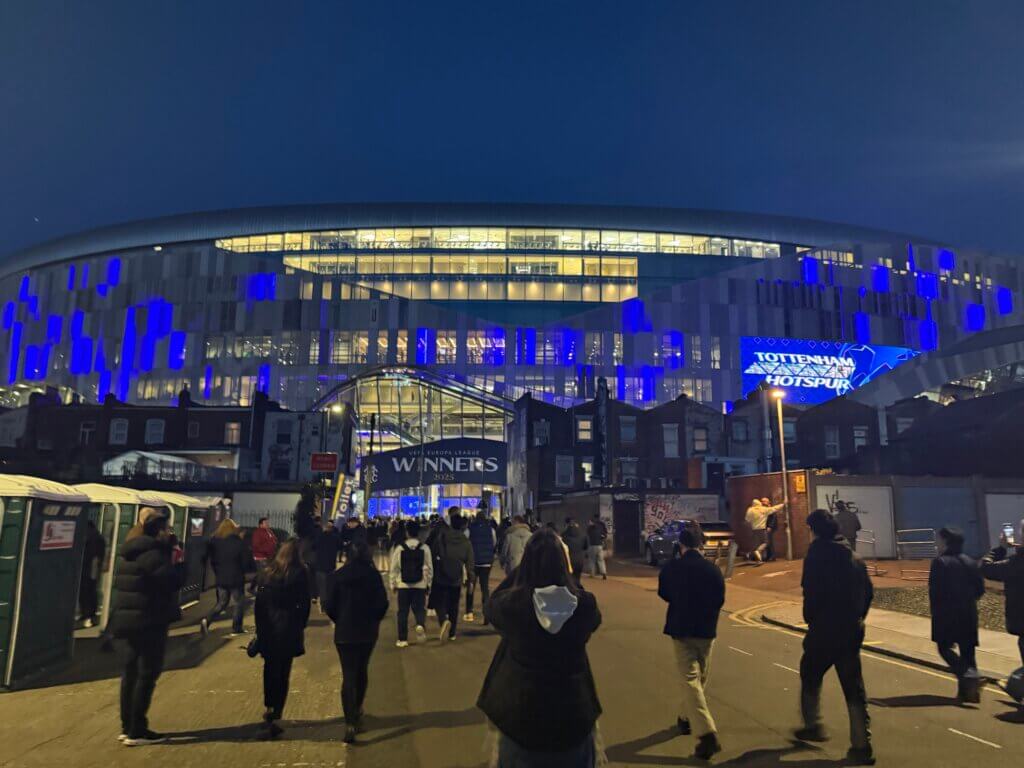
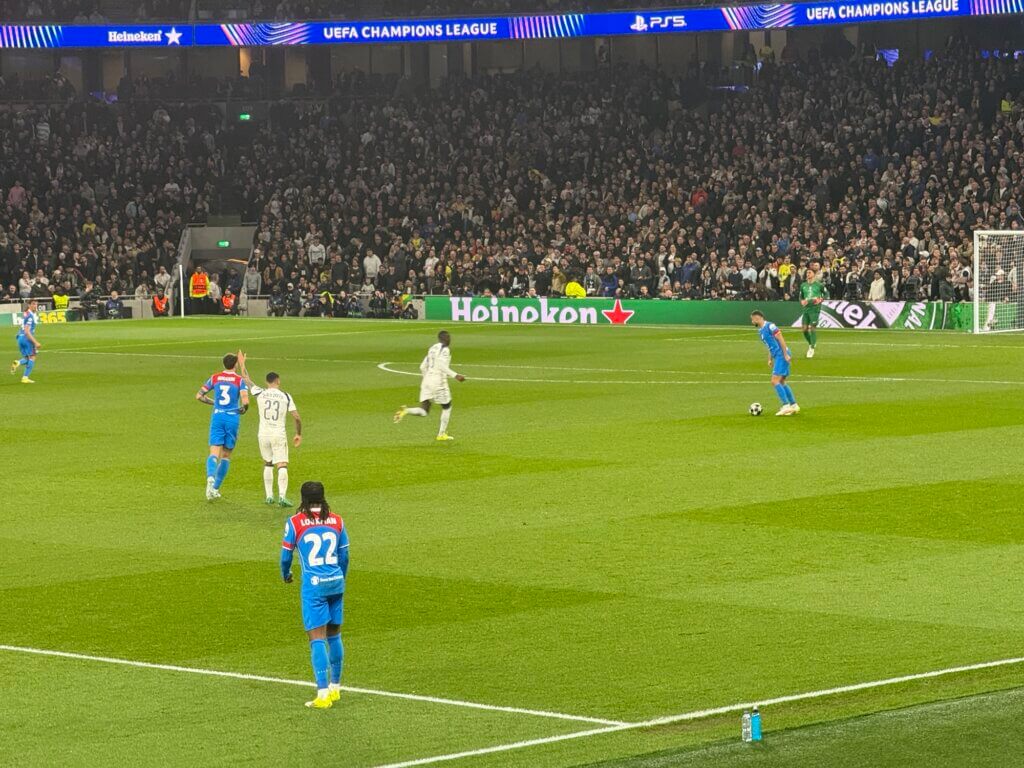
A friend managed to get us tickets for a Champions League night at Tottenham Hotspur’s stadium in White Hart Lane, Spurs against Atlético Madrid, and the anticipation already felt almost electric as I pictured walking up the High Road towards the ground. The area may have changed over time, but that sense of a tight-knit football neighbourhood, with the stadium looming over rows of terraced houses, still defines matchdays there in my mind. Knowing how much European nights have always meant to Spurs supporters, this fixture feels like stepping directly into a living piece of the club’s history rather than just attending another big game. Even before kick-off, there is that awareness that countless unforgettable evenings have unfolded on this same patch of north London turf.
The story of White Hart Lane goes back to 1899, when Tottenham moved onto what had been a disused nursery owned by a local brewery and quickly turned it into their permanent home. The ground opened officially that September with a 4–1 win over Notts County, and was steadily expanded in the early decades, with new stands and terracing pushing the capacity towards 80,000 before the Second World War. Over its 118-year life the stadium saw several waves of redevelopment, from early Archibald Leitch-designed stands through post-war seating conversions to major rebuilding of the West Stand in the early 1980s, all while retaining its tight, intimidating feel close to the pitch. By the time it closed and was demolished in 2017 to make way for the new ground on the same site, it had hosted more than two thousand competitive Spurs matches.
Some of the most important events in the club’s history unfolded at this stadium, making it far more than just a domestic league venue. White Hart Lane staged European nights in the early 1960s and 1970s, including big wins on the way to Spurs’ early continental trophies, as well as the famous 2010 clash with Inter Milan that cemented a new generation’s pride in the club’s European identity. It also hosted England senior and under-21 internationals, FA Cup epics and countless North London derbies, right up to the last ever league meeting with Arsenal there in 2017, when Spurs finally finished above their rivals after more than two decades. The farewell match against Manchester United in May 2017, marked by a 2–1 home win and an emotional post-game ceremony with legends on the pitch, underlined how deeply supporters felt attached to the old ground.
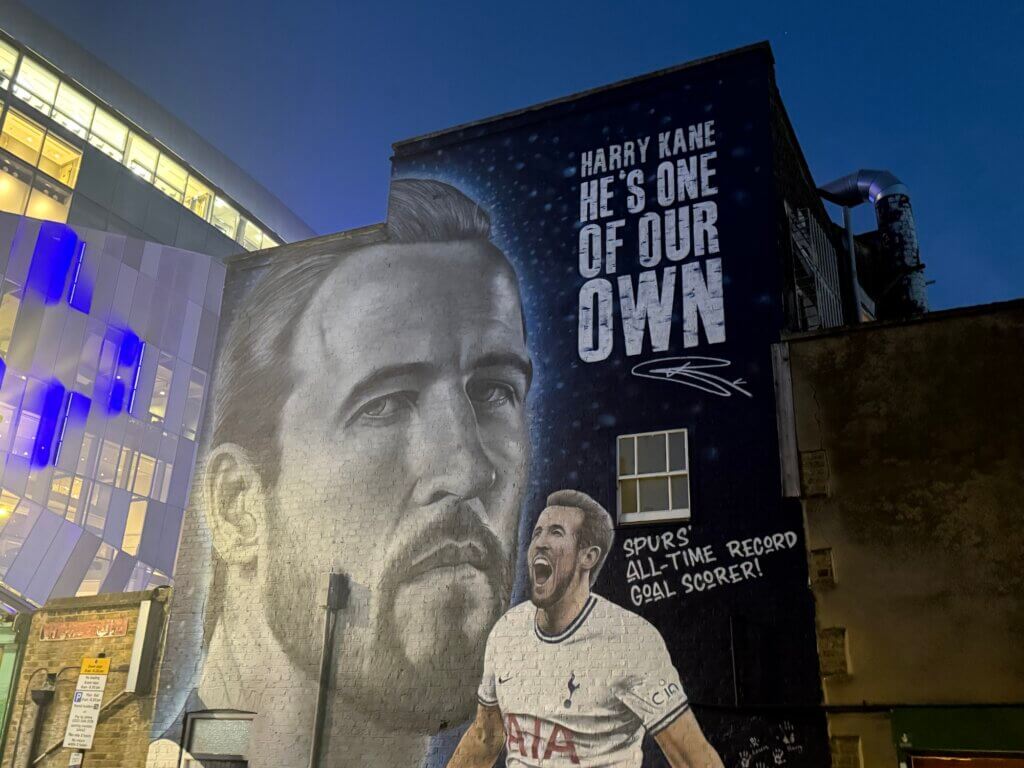
Over the decades, many of the club’s greatest players made White Hart Lane their stage and helped define its aura. Earlier generations watched the likes of Jimmy Greaves, whose extraordinary goal record at the ground set a standard for every Spurs forward who followed, while playmakers such as Glenn Hoddle brought a touch of artistry that supporters still talk about today. Later eras saw figures like Gary Lineker continue that goalscoring tradition, and more recently Harry Kane turned the Lane into a personal scoring domain before its closure, his goals in derbies and high-pressure games contributing to the stadium’s reputation as a place where big players rose to the moment. Walking into the new stadium at White Hart Lane for a Champions League tie against Atlético feels like stepping into that lineage, aware that the noise from the stands will echo all of those names and nights that came before.
Best access is with the Weaver Line from Liverpool Street Station to White Hart Lane (22 mins). No ticket needed, just tap in and out. On your way back, streets will be massively crowded. Best walk towards Seven Sisters to catch the Victoria line or a bus.
Tottenham Hotspur Stadium
White Hart Lane
London
England
United Kingdom
Loading map...
