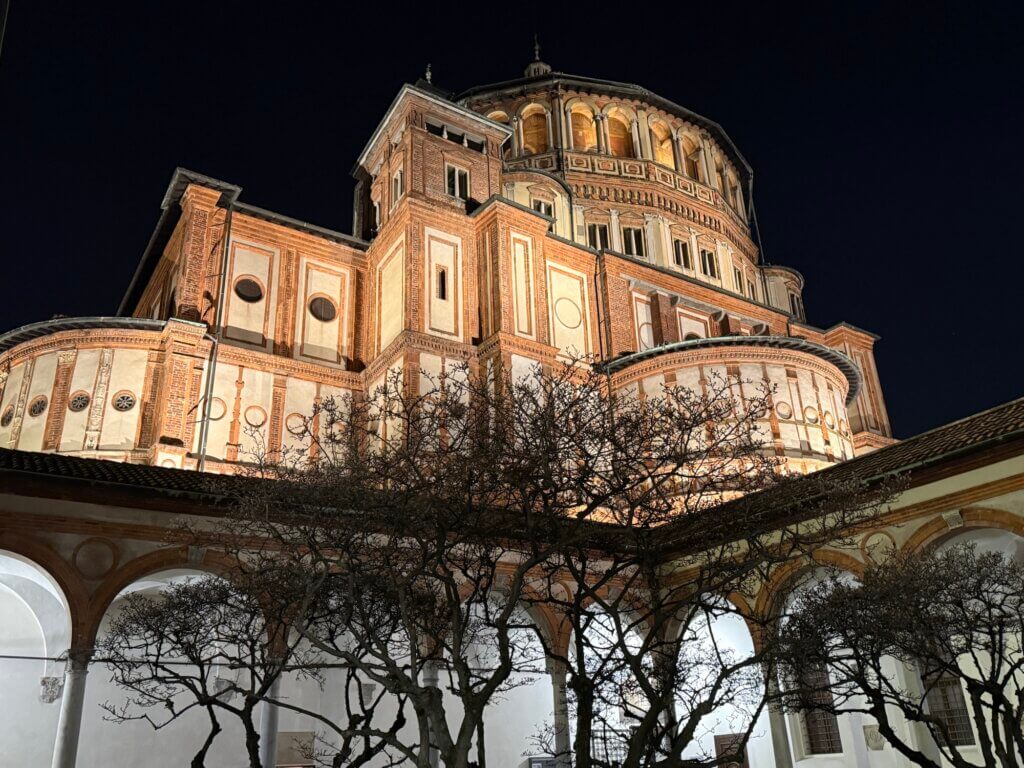
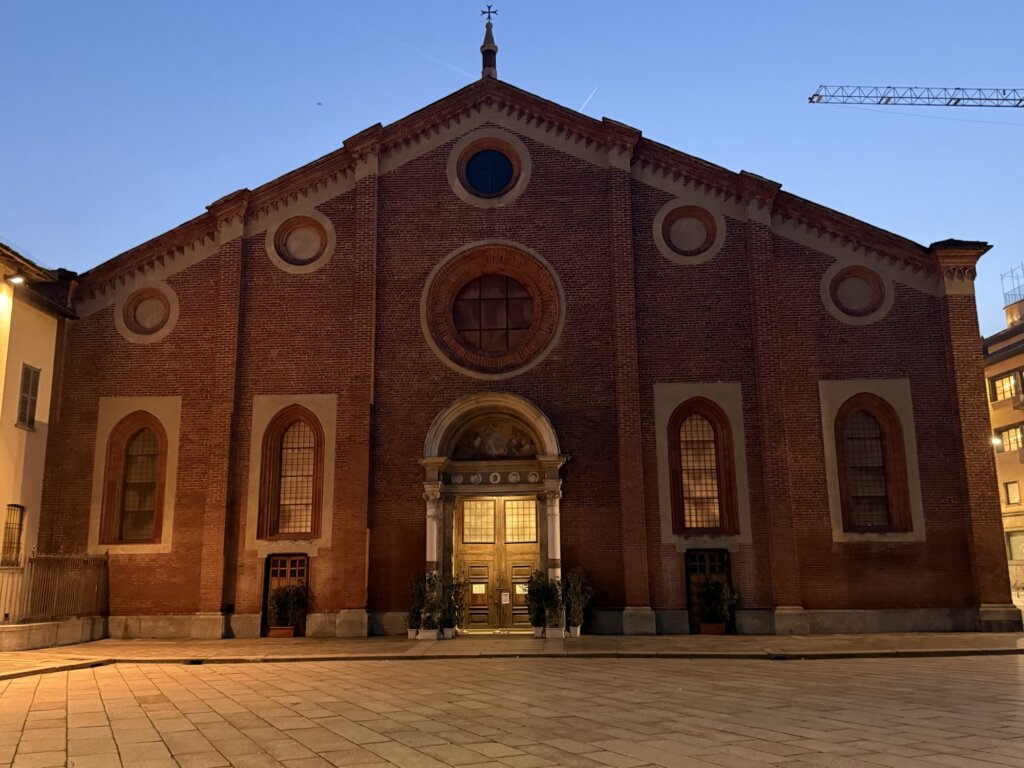
The church of Santa Maria delle Grazie in Milano is one of the finest examples of Renaissance architecture in northern Italy. Built initially for the Dominican order during the late 15th century, it occupies a quiet corner of the Corso Magenta district, offering a striking contrast to the city’s modern elegance. Its brick façade, modelled in the Lombard Gothic style, conceals a luminous interior remodelled under the patronage of Ludovico Sforza, Duke of Milan, who sought to turn this monastery into both a religious house and a dynastic mausoleum. Donato Bramante, one of the early masters of the High Renaissance, transformed the apse into a harmonious ensemble of light, colour, and proportion that typifies the transition from Gothic to humanist design.
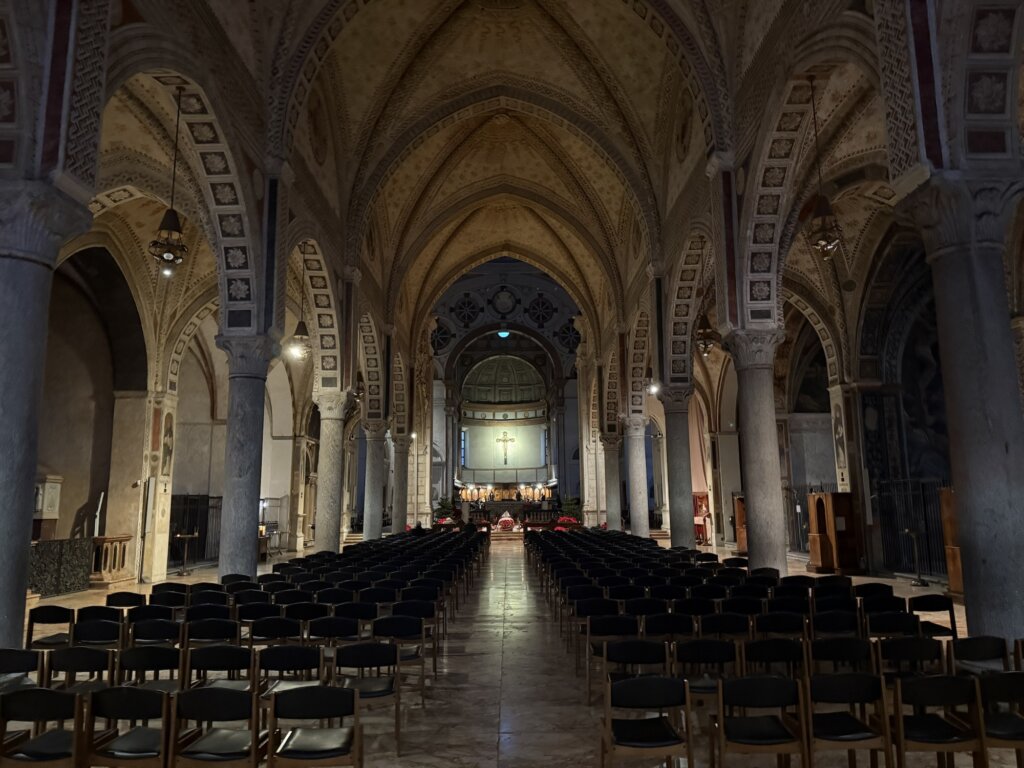
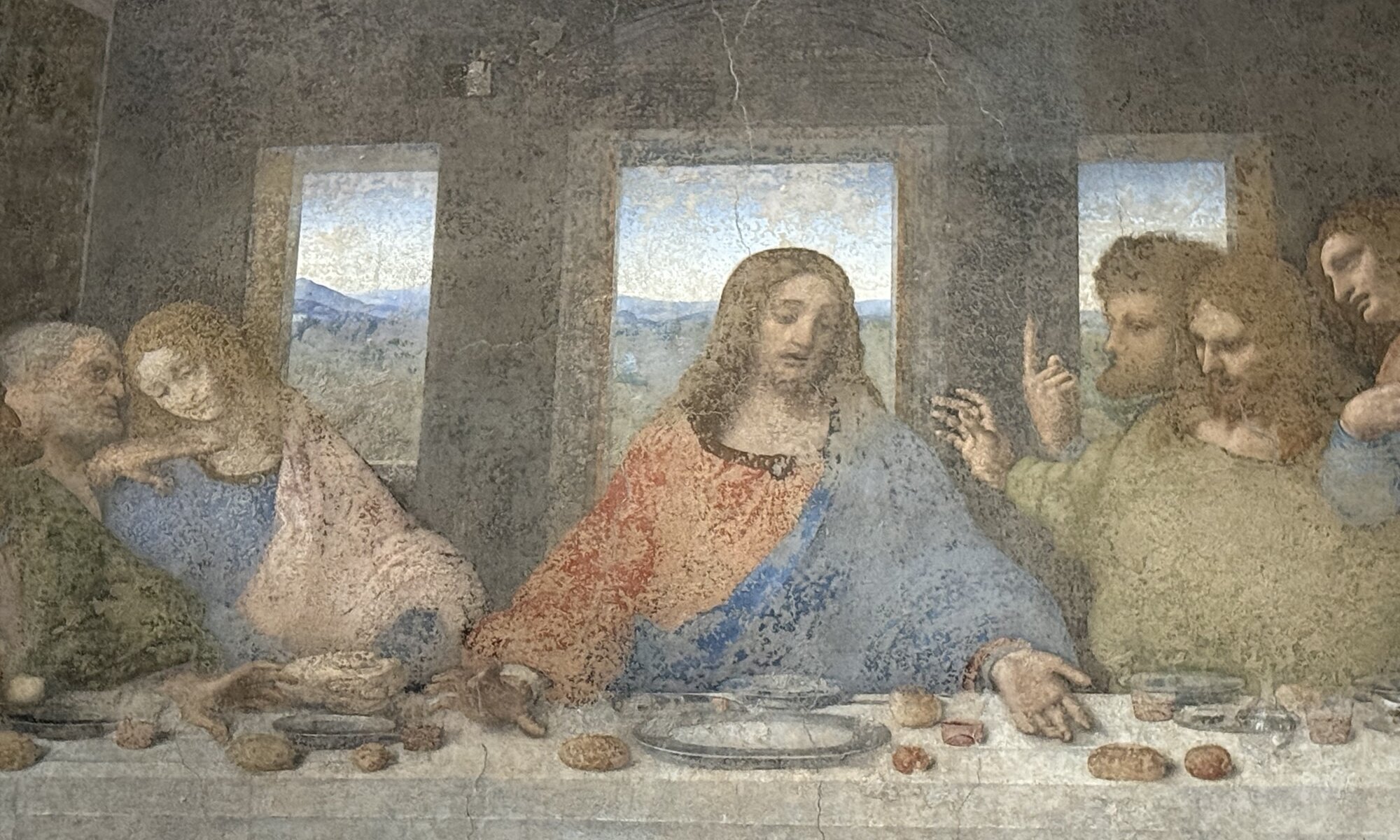
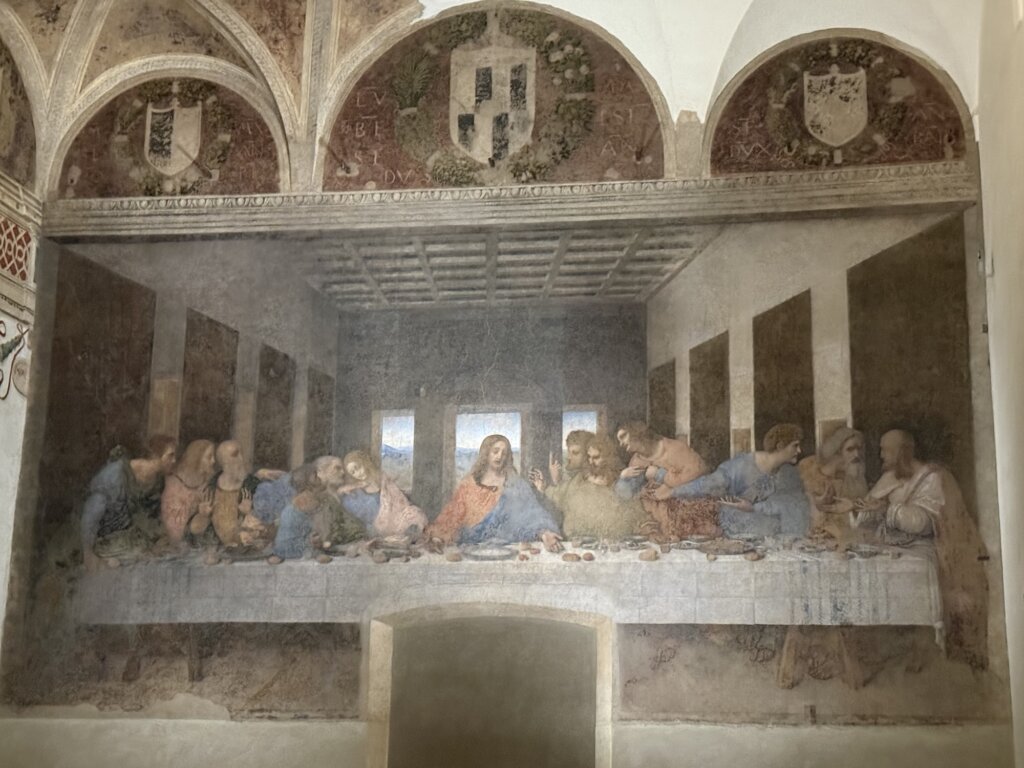
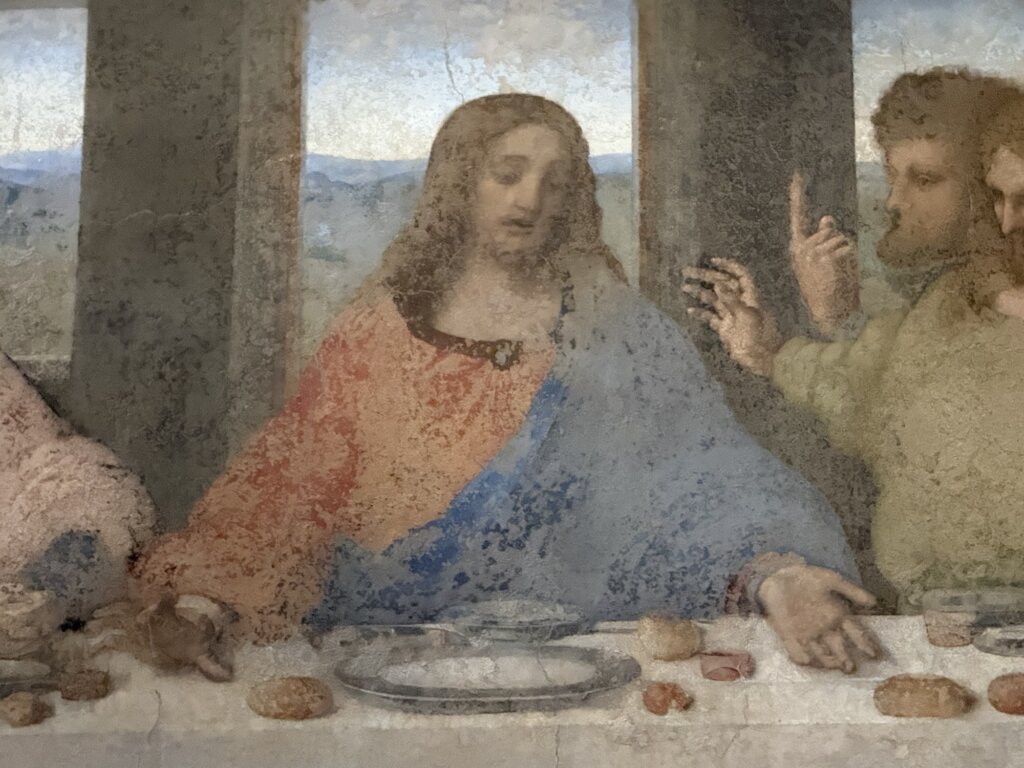
Santa Maria delle Grazie, though a church of modest size, enjoys a cultural immortality that surpasses many greater monuments. This is primarily because of the adjoining refectory, which houses one of the world’s most revered masterpieces of art – Leonardo da Vinci’s L’Ultima Cena, better known as The Last Supper. Painted between 1495 and 1498, the work was commissioned as part of the monastic complex’s decoration, and Leonardo’s innovative technique and composition transformed a traditional theme into a psychological drama of faith and betrayal. Unlike the static representations of earlier centuries, each apostle reacts individually to Christ’s words, creating a deeply human interpretation of the final meal before the crucifixion.
The mural itself has endured centuries of deterioration and restoration. Leonardo’s experimental use of tempera and oil on plaster, instead of the more durable fresco method, meant that the work began to decay soon after completion. Its survival through the turmoil of time – including the near destruction of the refectory during the Second World War – borders on miraculous. Today, meticulous conservation efforts have stabilised the painting, and strict environmental controls limit the number of visitors allowed inside. The experience of seeing it firsthand, in its dimly lit and contemplative setting, is therefore both delicate and deeply moving.
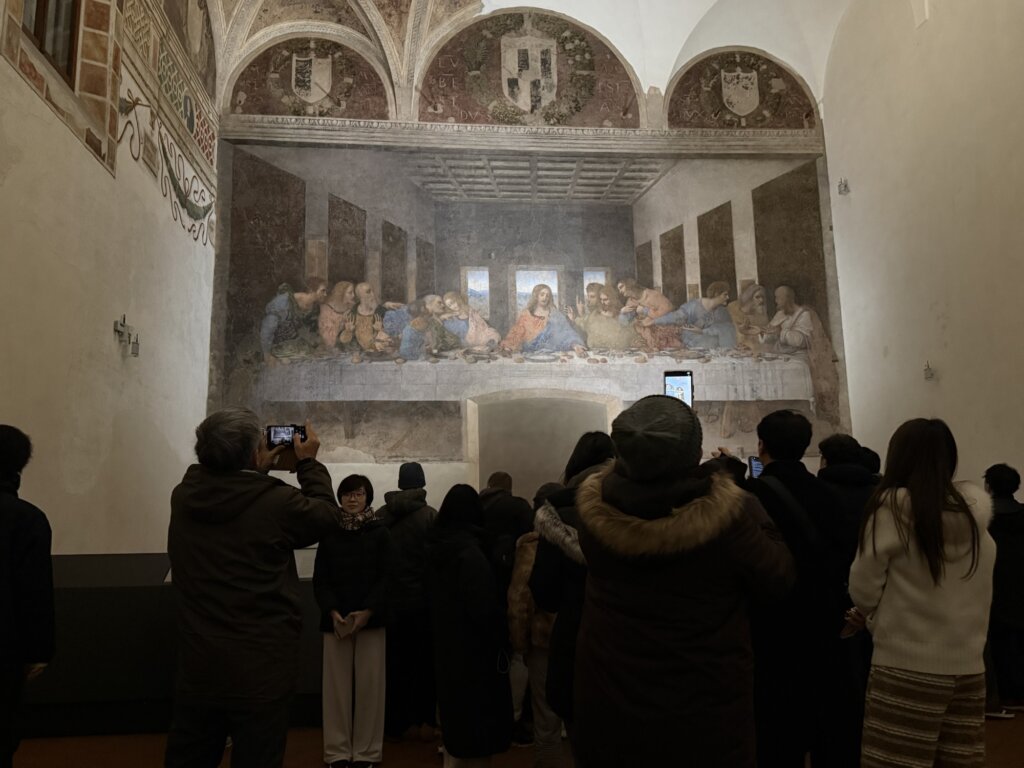
Because of its immense popularity and the need to preserve the fragile mural, obtaining tickets for The Last Supper can prove a real challenge. Access is restricted to small groups for brief fifteen-minute intervals, and tickets go on sale only one day three months in advance. These are usually snapped up within hours, especially in the high travel seasons. For those fortunate enough to secure entry, the combination of Bramante’s architectural grace and Leonardo’s timeless vision offers one of the most profound encounters with Renaissance art to be found anywhere in Europe.
L’Ultima Cena
Santa Maria delle Grazie
Milano
Italy
https://cenacolovinciano.org/en/story/saint-maria-delle-grazie/
Loading map...
