
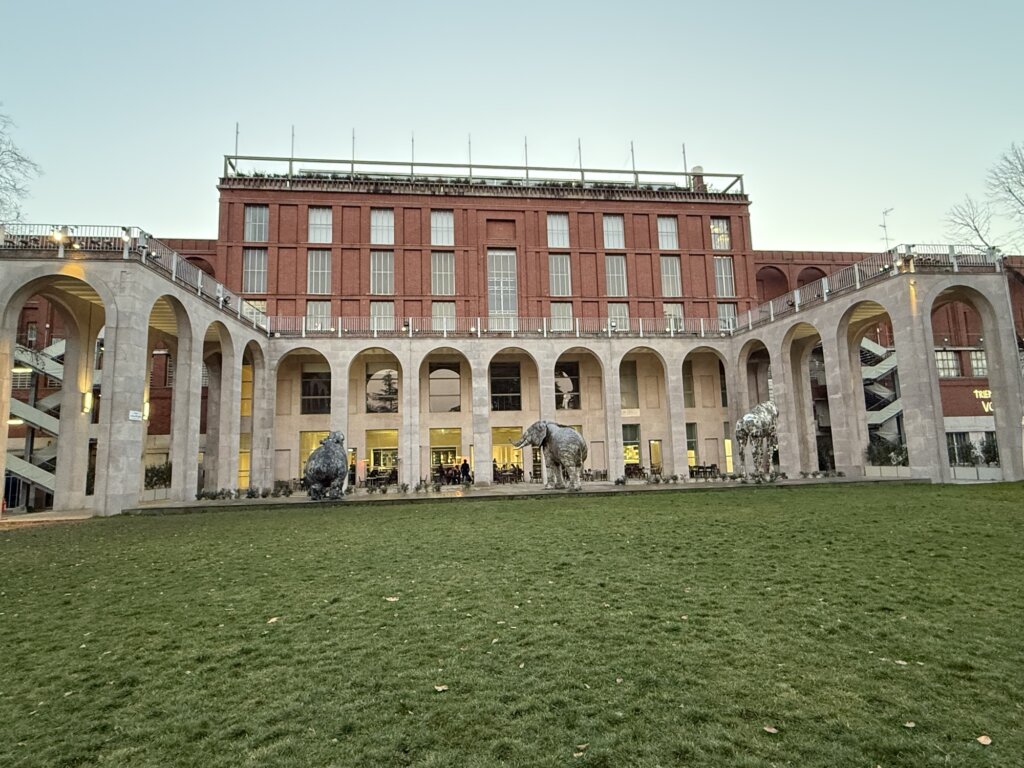
The Triennale di Milano stands as one of Italy’s foremost institutions dedicated to design, architecture, and contemporary culture. Founded in 1923 in Monza as the Biennale of Decorative Arts before moving permanently to Milano in 1933, it soon established itself as a reflection of Italy’s modern identity. Its home, the Palazzo dell’Arte in Parco Sempione, was designed by Giovanni Muzio and remains an architectural statement in itself – rational yet elegant, designed to accommodate large-scale exhibitions that connect art, design, and technology.
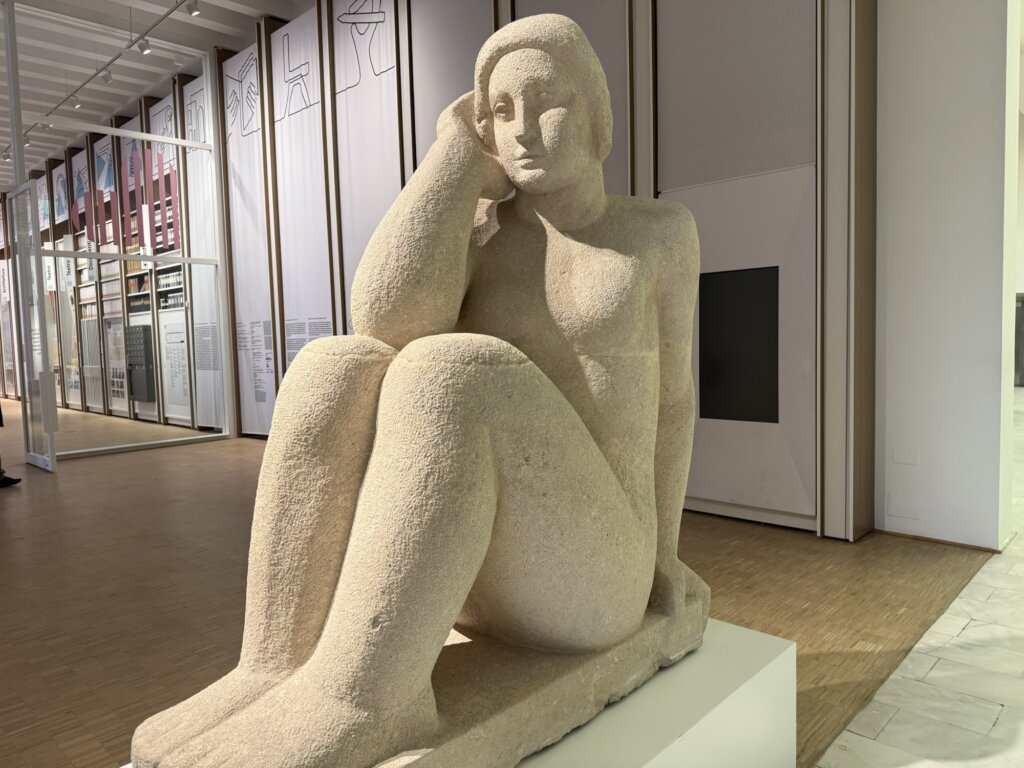

Over the decades, the Triennale has evolved far beyond its original focus on decorative arts. It became an international platform for industrial design and urban planning, particularly after World War II, when Italy emerged as a global centre of creativity and style. Designers such as Gio Ponti and Achille Castiglioni saw the Triennale as an essential stage for experimentation, where functional design met aesthetic refinement. Its periodic international exhibitions charted the changes in social and technical paradigms, consistently promoting innovation while remaining attuned to craftsmanship and material culture.
Today, the Triennale hosts a diverse programme that fuses permanent and temporary exhibitions. The Museo del Design Italiano on the ground floor showcases a chronological journey through Italian design from the 1940s to the 1990s, encompassing timeless creations from furniture and lighting to graphic design and appliances. Rotating exhibitions throughout the year explore themes such as sustainability, digital transformation, and global design dialogues. Visitors may encounter installations that blur the boundaries between disciplines – where architecture meets performance, or technology intersects with art.
Beyond exhibitions, the Triennale’s role as a cultural hub extends to conferences, film screenings, and educational programmes. The attached Teatro dell’Arte is devoted to avant-garde performance and experimental theatre, adding yet another layer to the institution’s identity as a place of constant reinvention. Its atmosphere embodies Milano’s broader spirit – creative, international, and forward-looking – making the Triennale not only a museum, but also a continuing conversation about how design shapes the way we live.
Triennale
Milano
Italy
https://triennale.org/en
Loading map...
