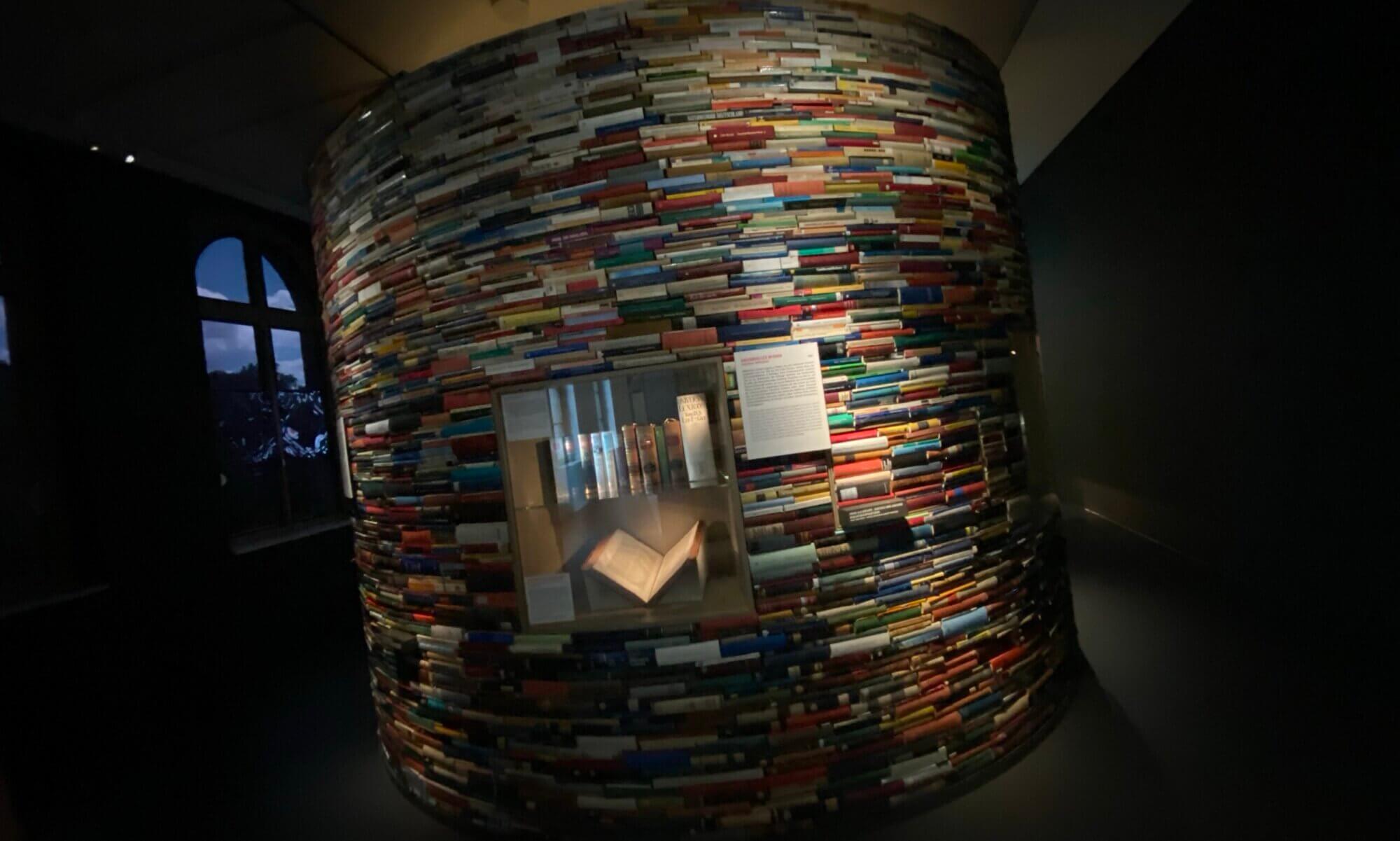
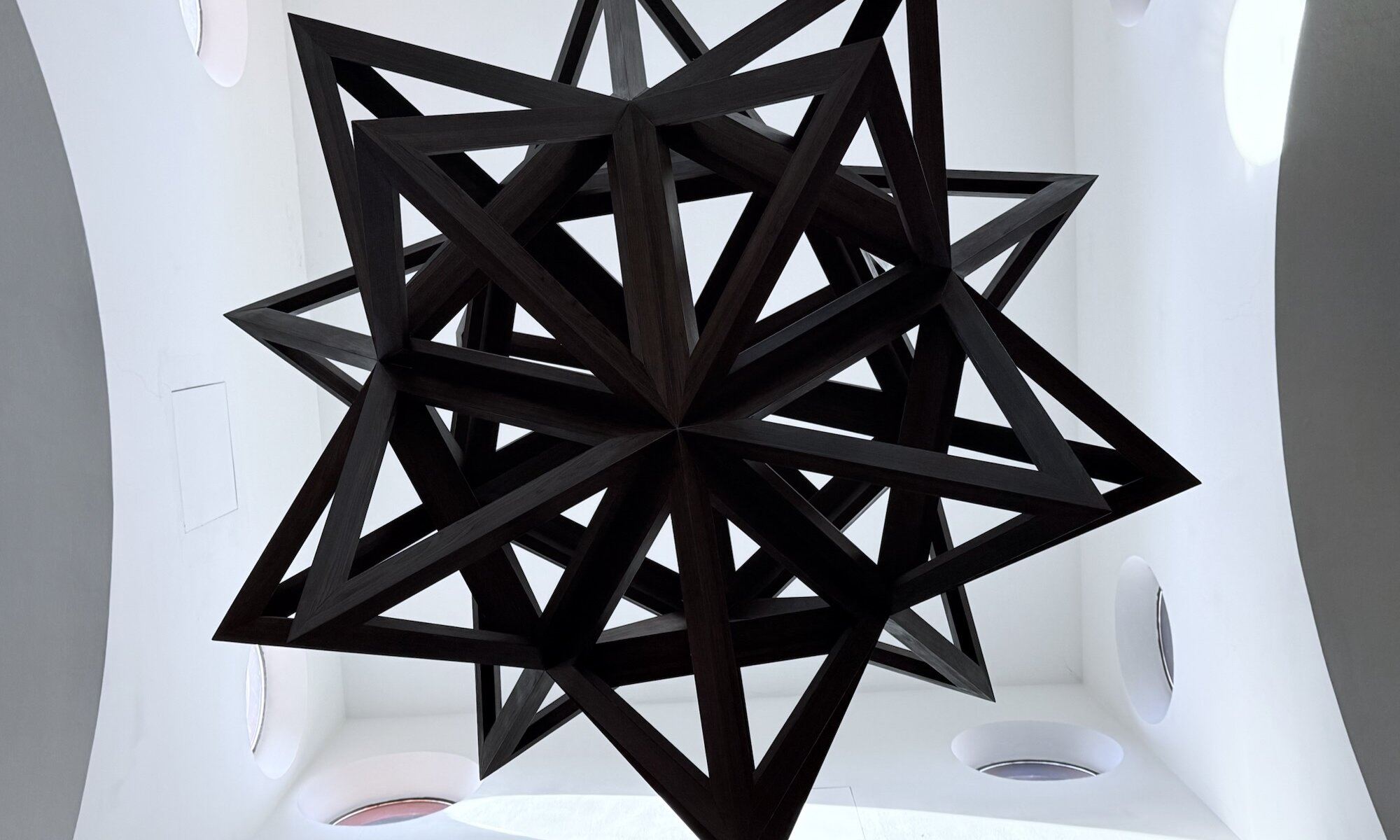
The Museo Nazionale della Scienza e della Tecnologia Leonardo da Vinci in Milano is one of Europe’s most compelling institutions dedicated to science, innovation, and engineering. Housed in a former Benedictine monastery near the Navigli district, the museum combines architectural charm with vast, modern exhibition spaces. Its focus lies not only on Leonardo’s extraordinary visions but also on Italy’s broader contributions to industrial and technological progress. Visitors find a seamless blend of history and modernity here, where centuries-old inventions are presented alongside cutting-edge scientific demonstrations.
One of the museum’s highlights is the section devoted to Leonardo da Vinci himself. This area showcases meticulous models based on his notebooks, translating his sketches of flying machines, war engines, and hydraulic devices into tangible form. Although most reconstructions are conceptual – since many of Leonardo’s designs were never built in his lifetime – they provide a fascinating window into the mind of the Renaissance polymath. Multilingual interactive displays help explain the mechanics and underlying theories, illustrating how his ideas anticipated later scientific developments.
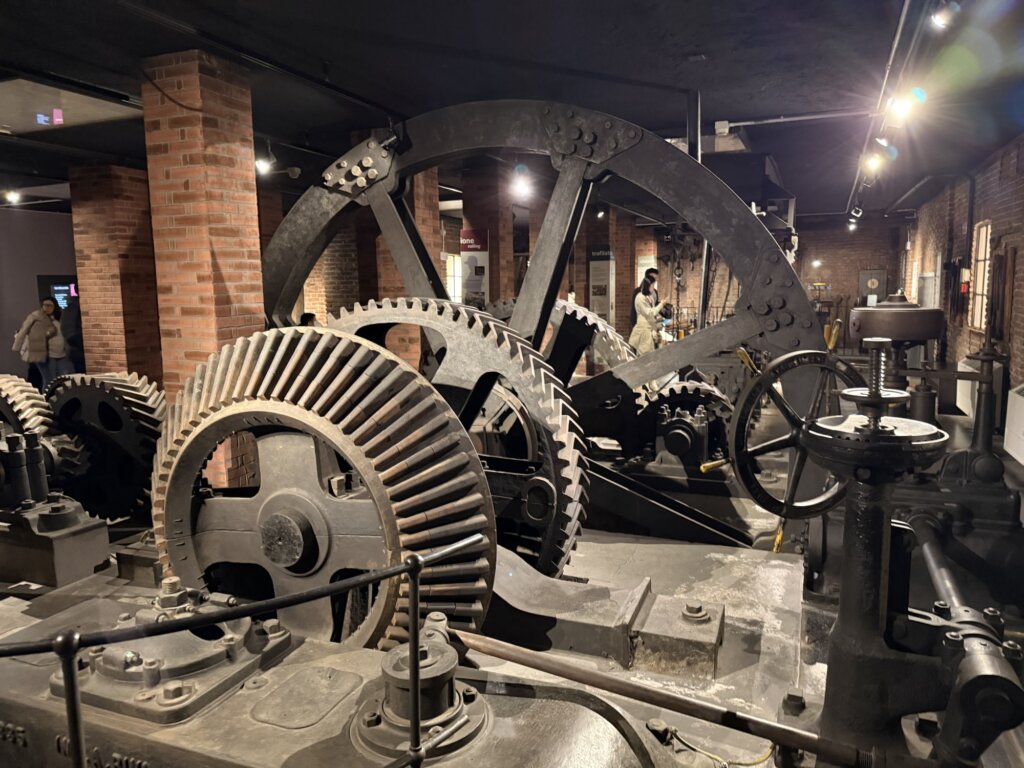
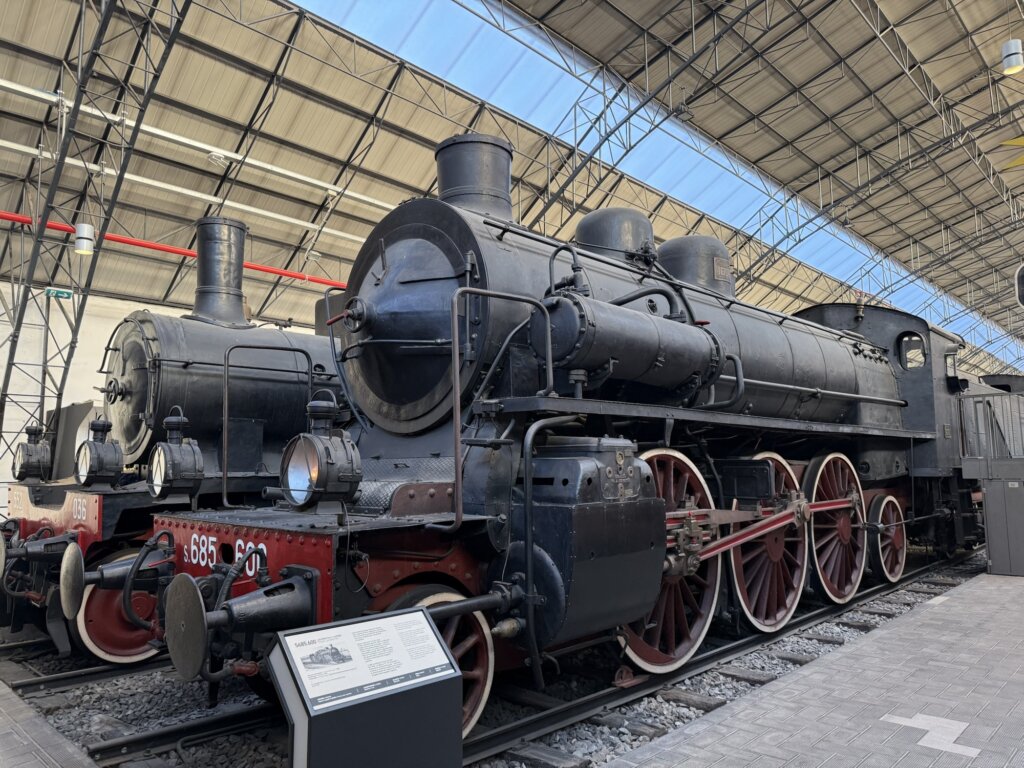
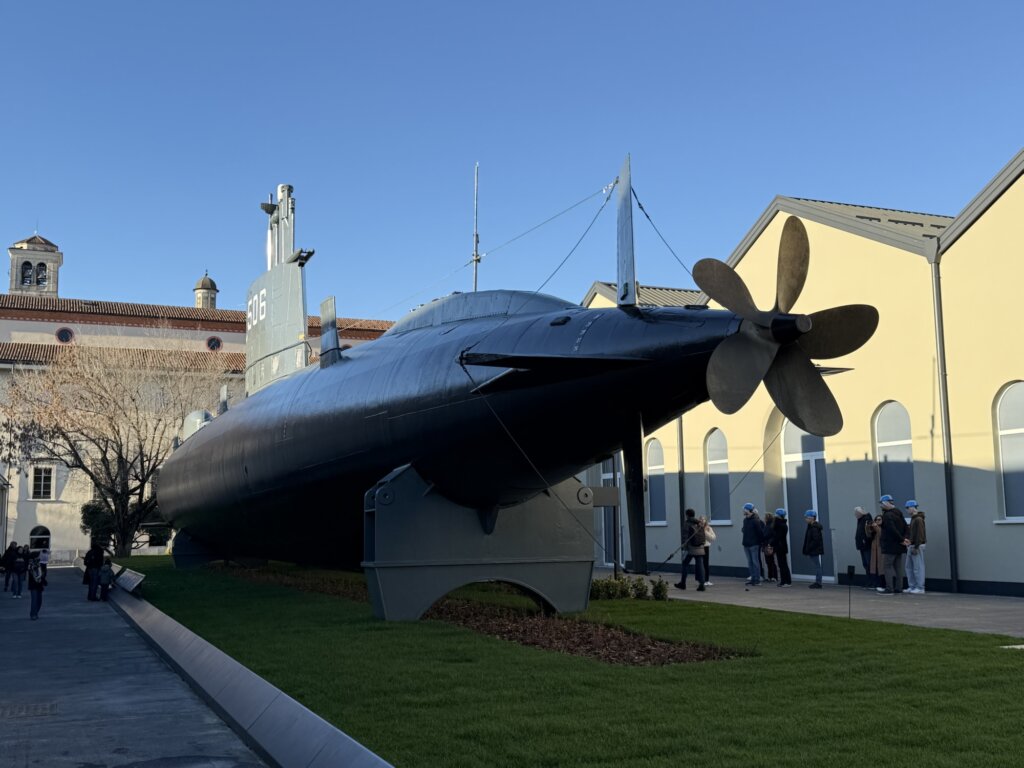
The museum also houses extensive collections devoted to transportation and industrial technology. In the aviation and maritime pavilions, full-sized aircraft, historic submarines, and ship replicas demonstrate Italy’s evolution as a nation of technical skill and exploration. A particularly striking exhibit is the preserved 1930s submarine Toti, accessible to visitors on guided tours. Nearby, vintage locomotives, early cars, and steam engines reflect the rise of modern Italian engineering, from the age of railways to contemporary high-speed trains.
Beyond its historical displays, the museum actively engages with science education and contemporary innovation. Its interactive laboratories cover everything from space exploration to renewable energy, robotics, and materials science. Young visitors can experiment with circuits or observe 3D printing in action, while researchers and enthusiasts enjoy the rotating exhibitions on artificial intelligence, sustainability, and medical imaging. Altogether, the museum is more than a repository of artefacts – it is a dynamic exploration of human ingenuity bridging Leonardo’s Renaissance imagination with twenty-first-century technology.
Leonardo da Vinci
Leonardo da Vinci stands among the most extraordinary figures of the Renaissance, embodying the era’s ideal of the universal man who excelled in multiple disciplines. Born in 1452 in the small Tuscan village of Vinci, he was the illegitimate son of a notary and a peasant woman. From an early age, his curiosity and keen powers of observation set him apart. He received his artistic training in Firenze under the guidance of Andrea del Verrocchio, where he quickly displayed prodigious talent not only in painting but also in mechanical design and anatomy. His restless intellect drove him to explore every field that could deepen his understanding of nature and the human condition.
Throughout his life, Leonardo moved between Firenze, Milano, and later France, working under the patronage of powerful rulers such as Ludovico Sforza and King Francis I. Despite his fame today as a painter, much of his career was dedicated to engineering, scientific inquiry, and the study of flight, optics, and hydraulics. His notebooks reveal a mind constantly at work, sketching inventions centuries ahead of their time – machines resembling helicopters, tanks, and even diving suits. Yet, Leonardo often left projects unfinished, as his insatiable curiosity led him from one fascination to the next. His approach to learning through direct observation and experiment was revolutionary, laying intellectual groundwork for future scientific methods.
Among his greatest artistic triumphs are masterpieces that continue to define Western art. The Last Supper, painted for the convent of Santa Maria delle Grazie in Milano, captures the emotional drama of Christ’s final meal with his disciples with unprecedented realism and psychological depth. Meanwhile, Mona Lisa, housed in the Louvre, remains one of the most studied and enigmatic portraits in history, celebrated for its lifelike subtlety and mysterious smile. Beyond art, Leonardo’s anatomical drawings, studies of proportion such as the Vitruvian Man, and vast designs for machinery secured his reputation as a visionary who seamlessly bridged art and science. His death in 1519 marked the end of an era, yet his intellect and imagination continue to inspire thinkers, artists, and engineers across the world.
Museo nazionale della scienza e della tecnologia Leonardo da Vinci
Milano
Italy
https://www.museoscienza.org/en
Loading map...
